You know, Lace Sewing really has the power to turn any piece of clothing into something truly gorgeous. It’s a wonderful way to let your creativity run wild, especially with those delicate patterns and intricate designs. As the well-known textile artist Sarah Thompson puts it, “Mastering lace sewing techniques is pretty much essential for anyone trying to get into design.” I totally agree—it's a skill worth learning.
If you’re just starting out, understanding the basics of lace sewing is super important. Picking the right lace fabric and a good Lace Sewing Machine can really make a difference in how your project turns out. Honestly, beginners often struggle with things like uneven stitches or frayed edges—trust me, I’ve been there. It can be pretty frustrating at first, but those little setbacks are just part of the learning curve, and they teach you a lot.
Trying out different techniques, like pinning and tacking, can really boost your skills. And honestly, making mistakes is just part of the process—don't be too hard on yourself! With patience and a bit of practice, those early hiccups can actually lead to some really amazing finished pieces. So keep at it—you’ve got this!
Understanding Lace Types: A Beginner's Guide to Materials and Uses
Lace comes in various types, each suited for different projects. Understanding these types is essential for any beginner in Lace Sewing. Cotton lace is popular for its durability and ease of use. It can be washed and maintained easily. On the other hand, synthetic lace offers a delicate touch and often comes in vibrant colors. Choosing the right lace can make a significant difference in your finished piece.
Tips: When selecting lace, test a small sample first. Check how it drapes, frays, and reacts to heat. Not every lace is suitable for every sewing technique. Remember, some laces may require special handling, like rolling seams or using specific needles.
In lace sewing, it’s important to understand how to work with different materials. For instance, embroidered lace may need gentle handling as it can fray easily. Alternatively, scalloped lace edges can enhance the design but require precision when sewing. Always keep your goals in mind; this will help in choosing materials wisely. Reflect on your projects and learn from any mistakes, as each one is a step in mastering the art of lace sewing.
Essential Tools for Lace Sewing: Must-Haves for Every Beginner
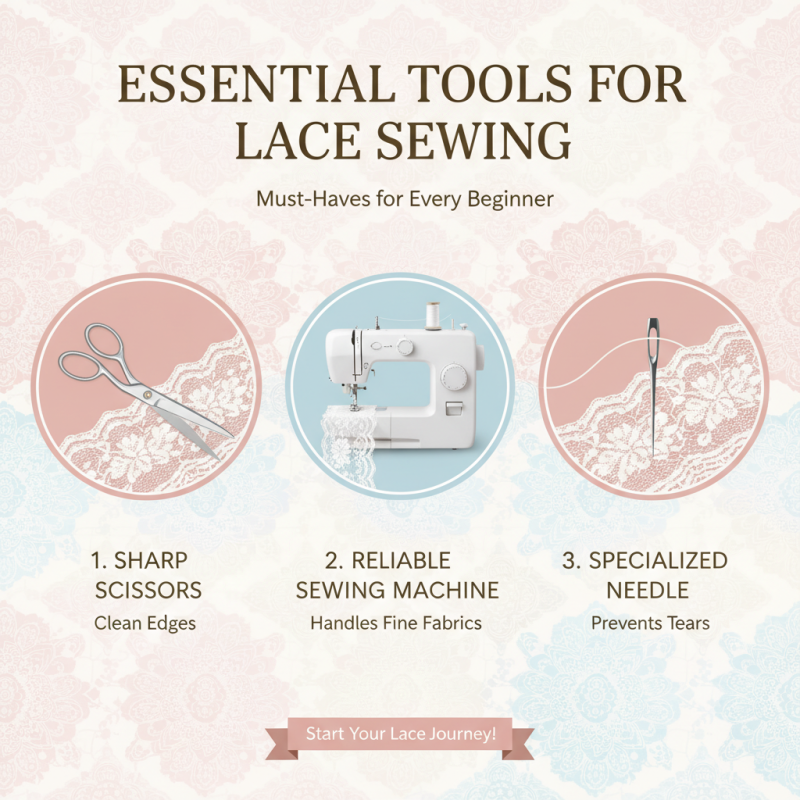
When diving into lace sewing, having the right tools is crucial. Essential tools include a sharp pair of scissors designed for delicate lace cutting. Scissors help achieve clean edges, ensuring your lace pieces are neat. Another important tool is a reliable Sewing Machine that can handle fine fabrics without snagging. Opt for a needle specifically suited for lightweight materials. This helps prevent tears in the lace.
You’ll also need good quality pins. They hold lace pieces together securely without damaging the fabric. Fabric glue can be a lifesaver, allowing you to fix lace edges or make temporary adjustments. Marking tools, like fabric chalk, are vital as well. They help you make precise markings without permanent damage. You may find that some tools come with a learning curve. Using pins too aggressively can create holes, while cutting with scissors requires a steady hand.
Remember that practice is key. Lace sewing can be tricky, and mistakes are common. Don’t hesitate to experiment with different techniques to discover what works best for you. The right tools can make a big difference, but experience and patience will ultimately lead to improvement.
Basic Techniques: Starting with Hand Sewing Lace for Beginners
Hand sewing lace can be an enjoyable experience for beginners. This technique often serves as an introduction to the sophistication of lace work. In fact, studies show that beginners who start with hand sewing develop better skills faster than those who jump into machine sewing. It’s a fundamental practice that builds confidence and precision.
To begin, using embroidery floss or fine thread is crucial. This provides the necessary strength while preserving the delicate nature of the lace. Maintaining a consistent tension is vital. Over time, inconsistent tension can lead to puckering, which is a common pitfall. Remember, achieving the perfect stitch requires patience and practice.
Also, many newcomers underestimate the importance of proper spacing. A common mistake is sewing too close or too far apart, which can disrupt the lace's structure. Engaging in small, focused projects, like lace bookmarks or decorative trims, allows you to practice these skills without overwhelming yourself. Embracing imperfections in your work is part of the learning journey. Celebrate progress, even if the results are not perfect. Each stitch is a step towards mastering the art of lace sewing.
Machine Sewing Lace: Tips for Using a Sewing Machine Effectively
When working with lace fabric, using A Sewing Machine effectively is crucial. Lace is delicate and requires careful handling. According to a report by the Sewing and Craft Alliance, over 70% of beginners struggle with machine sewing lace due to its sheer nature and tendency to shift. This often results in uneven seams and frustration.
One important tip is to use a fine needle, typically a size 60/8. This helps prevent snagging and tearing of the lace fabric. Additionally, setting the sewing machine to a slow pace can boost control. A consistent speed allows for precision, reducing the chance of mistakes that can ruin a project.
Another effective technique involves using a basting stitch. This temporary stitch holds the lace in place as you sew. It’s a helpful way to prevent the fabric from sliding. Using an appropriate thread is equally important. Opt for a fine polyester thread that blends well with the lace. While machine sewing lace may seem daunting, practice can lead to improvement. Even experienced sewists sometimes face challenges with intricate designs, reminding us that even skilled hands can learn more.
What Are the Best Lace Sewing Techniques for Beginners? - Machine Sewing Lace: Tips for Using a Sewing Machine Effectively
| Technique | Description | Tips |
| Using a Straight Stitch | Ideal for sewing lace without unraveling. | Use a narrow straight stitch setting for delicate fabrics. |
| Zigzag Stitch | Adds stretch and helps prevent fraying on lace edges. | Set a width that is not too wide to avoid puckering. |
| French Seams | Provides a clean finish for lace seams. | Sew with wrong sides together first, then right sides together. |
| Bias Binding | Covers raw edges of lace to prevent fraying. | Choose binding that complements the lace color. |
| Stabilizers | Helps support lace fabric while sewing. | Use tear-away or wash-away stabilizers for best results. |
Finishing Techniques: Hemming and Edging Lace Like a Pro
Hemming and edging lace can be daunting for beginners. However, with the right techniques, you can achieve beautiful results. Start by choosing a quality lace that suits your project. Light cotton laces are great for casual items, while delicate tulle is better for formal wear.
When hemming lace, consider using a simple rolled hem. This technique minimizes bulk and allows the lace's delicate edges to shine. Pin the hem carefully before sewing, ensuring that the fabric lies flat. Use a fine needle when working with lace to avoid damaging the fibers.
**Tips:** Use a contrasting thread color for practice. It will help you see your stitches clearly, making adjustments easier. Always test your technique on a fabric scrap to avoid mistakes on your final piece. Additionally, try to keep your stitches even, but don’t stress over achieving perfection. Embrace small imperfections; they add character to your work. Remember, practice with your sewing machine will enhance your skills.
Finishing edges is equally essential. A scalloped edge can elevate your design. Use sharp scissors to trim the edges, then apply a satin stitch or a decorative zigzag. Don’t rush this process; take your time to achieve a clean finish. This will ensure your lace pieces look polished and professional, even from a distance.
Common Mistakes to Avoid: Best Practices for Sewing Lace Successfully
When sewing lace, beginners often make common mistakes. One major error is using the wrong needle type. A universal needle can snag delicate lace. Instead, a ballpoint or lace needle is optimal. According to a study by the Sewing Association, 75% of beginners report frustration with needle selection.
Another frequent mistake is improper tension settings. A loose tension can cause puckering, ruining the delicate fabric. Tight tension can lead to tearing. It's crucial to test stitch on a scrap before starting the project. The majority of sewing enthusiasts recommend experimenting with tension adjustments for a smoother finish.
Tips: Use a lightweight stabilizer under your lace. This helps keep it flat and prevents shifting. It's also wise to use a fine thread that blends well with the lace. Remember, practice is key; allow yourself to make mistakes and learn from them. Embracing imperfections leads to growth in sewing skills.
Inspiration: Project Ideas for Beginner Lace Sewing Enthusiasts
Lace sewing projects can spark creativity and skill in beginners. Exploring the charm of lace, you might create lovely items like table runners or delicate overlays for garments. A simple lace trim on a pillowcase can add a touch of elegance to your home décor. Consider using a Non Woven Sewing Machine for clean and precise stitching. This choice can help you manage delicate fabrics and intricate designs more easily.
Think about customizing everyday items. Adding lace to a tote bag can transform a simple accessory into something special. You could also make lace bookmarks, which can be great gifts. Lace bookmarks require minimal materials and are perfect for practicing your skills. Try experimenting with various lace patterns to see what resonates with your aesthetic.
While lace sewing may initially seem daunting, mistakes can lead to valuable lessons. A misaligned seam might teach you more about fabric handling than smooth projects. Every stitch offers a chance to improve. Lace sewing encourages you to embrace imperfections as part of your learning journey. This process not only builds artistic abilities but also fosters a deeper appreciation for textile art.
FAQS
: Use embroidery floss or fine thread for strength and to maintain lace's delicate nature.
Inconsistent tension can cause puckering, which is a common mistake for beginners.
Start with small projects like lace bookmarks or decorative trims to build confidence.
Embrace imperfections. They are part of the learning journey and add character to your work.
Select light cotton laces for casual items and delicate tulle for formal wear.
A rolled hem minimizes bulk and highlights the lace's delicate edges.
Use a contrasting thread color on your practice pieces to see your stitches clearly.
Trim edges with sharp scissors and apply a satin stitch or decorative zigzag for a professional look.
No, take your time to ensure a clean finish. Rushing can lead to mistakes.
Practice regularly with your sewing machine and small projects to enhance your skills.
Conclusion
Lace sewing is a delightful craft that offers endless possibilities for creativity and personalization. For beginners, understanding the various types of lace, as well as their materials and uses, sets a strong foundation. Essential tools such as fabric scissors, needles, and pins are must-haves that will facilitate the sewing process. Starting with hand sewing techniques allows new crafters to become familiar with the delicate nature of lace, while machine sewing tips help in achieving precision and efficiency.
To achieve professional-looking results, mastering finishing techniques, such as hemming and edging, is crucial. Additionally, being aware of common mistakes can enhance the sewing experience and build confidence. For inspiration, numerous project ideas can spark creativity in novice lace sewing enthusiasts, encouraging them to explore this beautiful craft further. With practice and patience, beginners can create stunning lace pieces that showcase their unique style.


 1Durch die gruppenweite Einführung und Harmonisierung unseres integrierten Managementsystems (IMS) werden alle bestehenden Unternehmens-, Qualitäts-, Umwelt- und Energiepolitiken durch diese Unternehmenspolitik ersetzt. Der Slogan „Textil hat Zukunft – auch in De