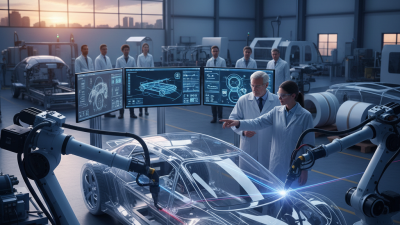
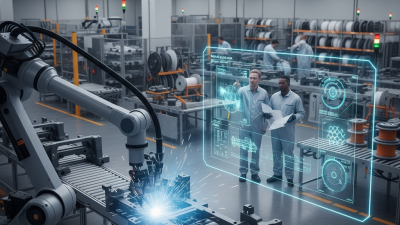
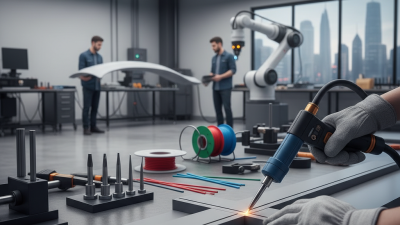
As we get closer to 2026, the world of Thermoplastic Weldingis changing pretty quickly. Industry reports are pointing to a steady demand growth of about 7% each year for thermoplastic materials. This bump in demand is mainly fueled by recent advancements in the automotive, aerospace, and packaging industries. Dr. William R. Adams, a top expert in the field, even says, "ThermoPlastic Welding isn’t just some process anymore; it’s a key part of innovation." That really shows how important this technique has become in modern manufacturing.
You’ll notice that the methods used for Thermoplastic Welding are becoming more diverse too. Techniques like ultraSonic Welding and laser welding are becoming more popular because they’re efficient and precise. But, with all these new developments, there are some hurdles too. Companies really need to focus on training their teams properly because, according to data from the Welding Institute, a shortage of skilled workers can slow down or even block the adoption of new tech. So, making sure your team is well-trained is more important than ever.
While all this tech growth is exciting, it’s also crucial to keep an eye on the reliability side of things. A lot of manufacturers still find it tricky to keep quality consistent. Industry analysts often point out that getting uniform results can be pretty challenging. Fixing these issues is definitely a key step if Thermoplastic Welding is going to have a solid future. As the industry keeps evolving, staying flexible and proactive will be the best way to handle all these challenges that come along with it.
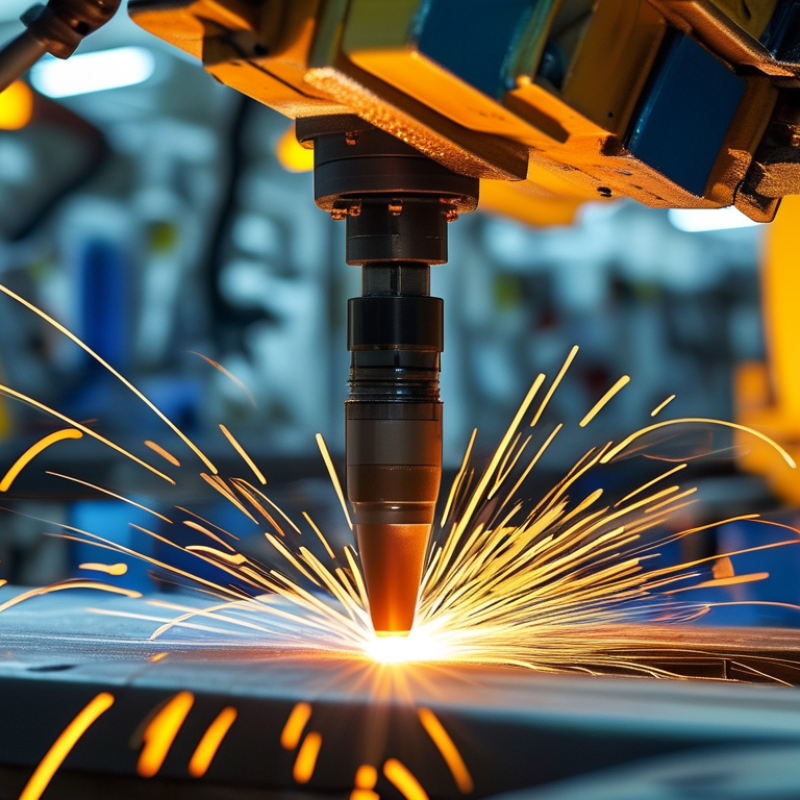
Emerging Thermoplastic Welding Techniques for 2026
As industries advance towards 2026, thermoplastic welding techniques are evolving rapidly. Emerging methods focus on efficiency and precision. Among these, the laser welding process is gaining traction. Reports indicate that laser welding can enhance joint strength by up to 30% compared to traditional methods. This trend is crucial as industries increasingly require reliable and durable connections, especially in automotive and aerospace sectors.
Another noteworthy technique is hot plate welding, which is becoming more sophisticated. The integration of advanced temperature control systems enhances process reliability. Some studies suggest that this method can reduce cycle times significantly, improving productivity. However, intricacies in temperature management can lead to inconsistencies if not carefully monitored.
Electronic Component Welding is also seeing innovative developments. The introduction of ultrasonic welding has transformed how components are joined. This technique offers strong, hermetic seals essential for electronic assemblies. However, challenges in achieving uniform weld quality persist. Continuous adaptation and training are vital for achieving favorable outcomes in complex applications. These emerging techniques mark a significant shift in thermoplastic welding, responding to the increasing demands for efficiency and quality.
Key Factors Influencing Thermoplastic Welding
When considering thermoplastic welding, several key factors influence its effectiveness. The choice of thermoplastic material significantly dictates the welding method used. Different materials have varying melting points, thermal conductivity, and chemical compositions. This diversity can lead to challenges, particularly in Dissimilar Materials Welding, where one must ensure compatibility to achieve strong bonds.
Another important aspect is the welding speed. Faster welding can reduce production time but may compromise joint quality. Slower welding allows for better control, but it can be counterproductive if the equipment does not maintain efficiency. Operators must find the right balance to optimize both speed and quality.
Environmental conditions also play a pivotal role. Humidity and temperature can affect the welding process and the final bond strength. High humidity can introduce moisture into the materials, while extreme temperatures might alter their properties. Knowledge of these influences is essential for technicians. Continuous evaluation and adaptation are necessary to ensure successful welding, especially when working with diverse materials.
Comparison of Traditional vs. Modern Welding Methods
In the evolving landscape of thermoplastic welding, understanding the contrast between traditional and modern methods is essential. Traditional welding techniques often rely on manual processes. These methods can be slow and may lead to inconsistencies. The skill level of the operator significantly impacts the outcome. Often, the results are not as clean as desired, which might lead to wasted materials.
On the other hand, modern welding techniques utilize advanced technology, improving efficiency and precision. For instance, laser welding can achieve tight tolerances and superior joint quality. Automated systems minimize human error, making the process more reliable. However, these technologies come with a steeper learning curve. Not all operators may adapt quickly. Furthermore, initial costs for modern equipment can be high, posing a challenge for small businesses.
Both methods have their pros and cons. Traditional techniques offer hands-on experience, while modern approaches emphasize innovation and quality. It's crucial for manufacturers to assess their specific needs and resources. Balancing quality, cost, and expertise remains a point of reflection in choosing the right welding approach.
Safety Considerations in Thermoplastic Welding
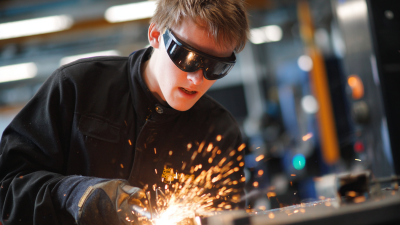
Thermoplastic welding involves specialized techniques that require a focus on safety. As manufacturers adopt new methods, understanding these safety considerations is essential. When welding thermoplastics, high temperatures are common. This generates risks like burns and inhalation of harmful fumes. Proper training and use of personal protective equipment (PPE) are critical for minimizing these risks.
Ventilation is another key consideration in thermoplastic welding. Inadequate airflow can lead to the accumulation of hazardous fumes. Workspaces must be well-ventilated to support safe operations. Operators should routinely check ventilation systems. Regular maintenance helps avoid unexpected breakdowns, ensuring continuous safety.
Proper fire safety measures are also vital. Since thermoplastics can ignite, having extinguishing equipment nearby is necessary. Workers must be trained in fire response protocols. Reflecting on previous incidents can provide valuable lessons in improving safety practices. Establishing a culture of safety awareness involves ongoing training and communication among team members.
Applications of Thermoplastic Welding in Various Industries
Thermoplastic welding has found a diverse range of applications across various industries. In the automotive sector, this technique plays a crucial role in assembling lightweight components to improve fuel efficiency. For example, joining interior parts through thermoplastic welding reduces weight. Moreover, it enhances the production speed, which is essential for meeting high demand.
In the medical industry, welds made using thermoplastics are vital for manufacturing devices and packaging. These joins ensure the integrity of sterile environments. Ultrasonic Welding Equipment is often employed here, providing precise and clean welds. The reliability of these techniques is crucial for patient safety and product effectiveness.
Challenges exist in achieving consistency across different materials. Variations in thickness and composition can lead to imperfect welds. Engineers must continually refine their techniques and equipment. This ongoing pursuit of precision underscores the need for expertise in thermoplastic welding. Each application requires careful consideration of material properties and welding parameters, demanding a high level of skill and knowledge.
Top Thermoplastic Welding Techniques for 2026 - Applications of Thermoplastic Welding in Various Industries
| Technique | Industry | Application | Advantages |
| Hot Air Welding | Construction | Joining sheets of thermoplastic membranes | Versatile and cost-effective |
| Ultrasonic Welding | Automotive | Joining plastic components in assembly | Fast, energy-efficient, and strong joints |
| Laser Welding | Electronics | Sealing of plastic enclosures | High precision and minimal thermal distortion |
| Vibration Welding | Consumer Goods | Joining of household plastic items | Strong joints and good cycle time |
| Thermal Dissolution Welding | Medical | Manufacturing of medical devices | High bond strength and clean process |
Future Trends in Thermoplastic Materials and Their Impact on Welding
The landscape of thermoplastic materials is evolving rapidly. Innovations in polymer science are introducing new blends and composites. This will significantly influence welding techniques in the coming years. The focus is shifting towards improving strength and durability while maintaining lightweight characteristics.
Current trends suggest a greater demand for environmentally friendly materials. Biodegradable thermoplastics are gaining traction. These materials may require specific welding methods to ensure optimal bonding without compromising performance. Understanding the interaction between different thermoplastics is essential for achieving effective welds.
Experts warn of potential challenges. Not all techniques will work for every thermoplastic. Adjustments in parameters like temperature and pressure are necessary. This adds complexity but also offers opportunities for innovation. Researching the behaviors of these materials will be crucial. It can help develop more efficient welding processes tailored to future applications.
Top Thermoplastic Welding Techniques for 2026
Training and Skill Development for Welding Professionals in 2026
As the industry prepares for advancements in thermoplastic welding techniques by 2026, the emphasis on training and skill development becomes crucial. Professionals must focus on understanding modern methodology to remain competitive. Familiarity with Consumer Electronics Welding is essential. This sector demands precision and proficiency, as small errors can lead to significant failures.
Hands-on training is not just beneficial; it's necessary. Workshops and practical sessions offer opportunities to practice under expert supervision. Real-world challenges often arise, and dealing with them requires both experience and education. Incorporating feedback from these sessions helps refine skills. It's vital to recognize that everyone can improve, even seasoned welders.
Furthermore, mentorship plays a key role in skill development. Junior professionals learning from veterans can gain insights that textbooks often miss. Sharing experiences, including mistakes, promotes a culture of continuous learning. Understanding emerging welding techniques and their applications can lead to innovation. The future of thermoplastic welding relies not just on technology, but on the capabilities of its people.
FAQS
: Traditional methods rely on manual processes, which can be slow and inconsistent. Modern techniques use advanced technology for better precision.
The skill level of an operator greatly impacts the results. Poor skills can lead to messy welds and wasted materials.
Modern techniques improve efficiency and precision, often resulting in superior joint quality and reduced human error.
Yes, modern methods come with a steeper learning curve and high initial equipment costs, which may hinder small businesses.
The interaction between different thermoplastics affects weld effectiveness and requires specific methods for optimal bonding.
There's a growing demand for biodegradable materials which necessitate unique welding techniques to maintain performance.
Not all welding methods suit every thermoplastic, requiring adjustments in temperature and pressure for effective results.
Manufacturers should reflect on balancing quality, cost, and available expertise when choosing between traditional and modern methods.
Conclusion
The article "Top Thermoplastic Welding Techniques for 2026 What You Need to Know" explores the latest advancements and techniques in Thermoplastic Welding expected to emerge in 2026. It identifies key factors influencing the effectiveness of these techniques, such as material properties and environmental conditions, while providing a comprehensive comparison between traditional and modern welding methods.
Additionally, the piece emphasizes the importance of safety considerations in Thermoplastic Welding and highlights its diverse applications across various industries, from automotive to aerospace. As the field evolves, future trends in Thermoplastic materials will significantly impact welding practices. Finally, training and skill development for welding professionals are essential to adapt to these advancements, ensuring they are equipped to handle the upcoming challenges in the industry.


 1Durch die gruppenweite Einführung und Harmonisierung unseres integrierten Managementsystems (IMS) werden alle bestehenden Unternehmens-, Qualitäts-, Umwelt- und Energiepolitiken durch diese Unternehmenspolitik ersetzt. Der Slogan „Textil hat Zukunft – auch in De