
Request a Quote
asdsd3
Leave Your Message
0%

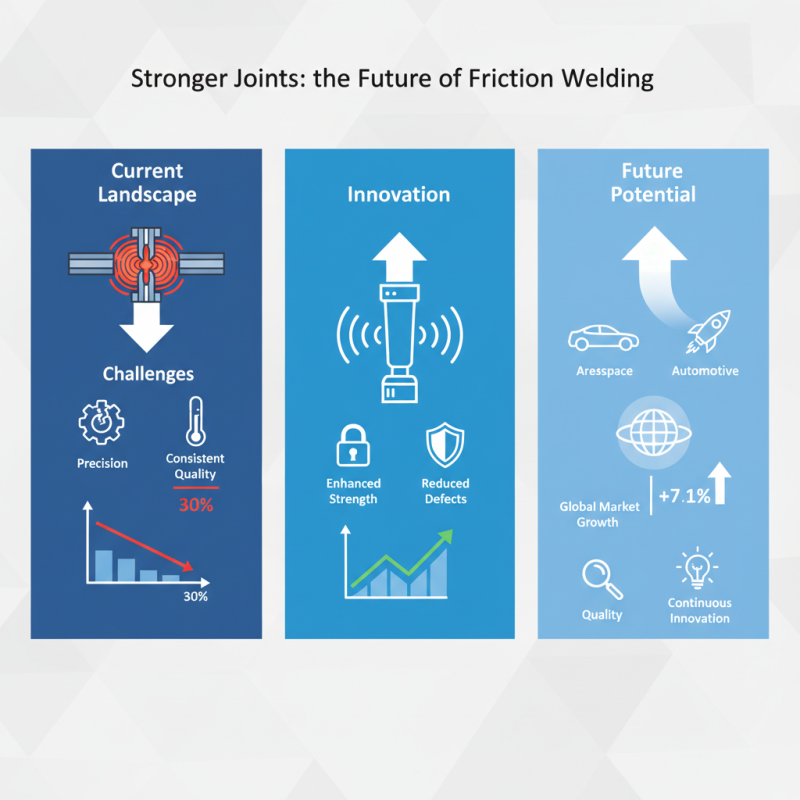
You know, Friction Welding is really changing the game in manufacturing. It’s a pretty cool process where strong, lasting joints are made by generating heat through mechanical friction—kind of like rubbing two pieces together until they melt and bond. According to the International Friction Welding Association, the global market for it’s expected to grow around 7.1% every year. Industries like aerospace and automotive are really pushing this demand, and for good reason.

That said, it’s not all smooth sailing. Maintaining the right parameters with pinpoint accuracy can be tricky, and some companies struggle with getting those joints just right. For example, WeldTech did a study and found out that about 30% of their early friction welds didn’t quite meet industry standards. That just shows we need to get better, maybe by adopting new techniques like Ultrasonic Vibration Friction Welding. Using ultrasonic energy could boost the strength of the joints and cut down on defects.

All in all, friction welding has huge potential for lots of applications. But to really make the most of it, companies need to focus on top-notch quality control and keep pushing for innovations. The future looks bright, but only if the industry keeps addressing these challenges head-on. Otherwise, we might not fully unlock what this technology can do.

How to Use Friction Welding for Stronger Joints?

Understanding Friction Welding: Principles and Mechanisms

How to Use Friction Welding for Stronger Joints?

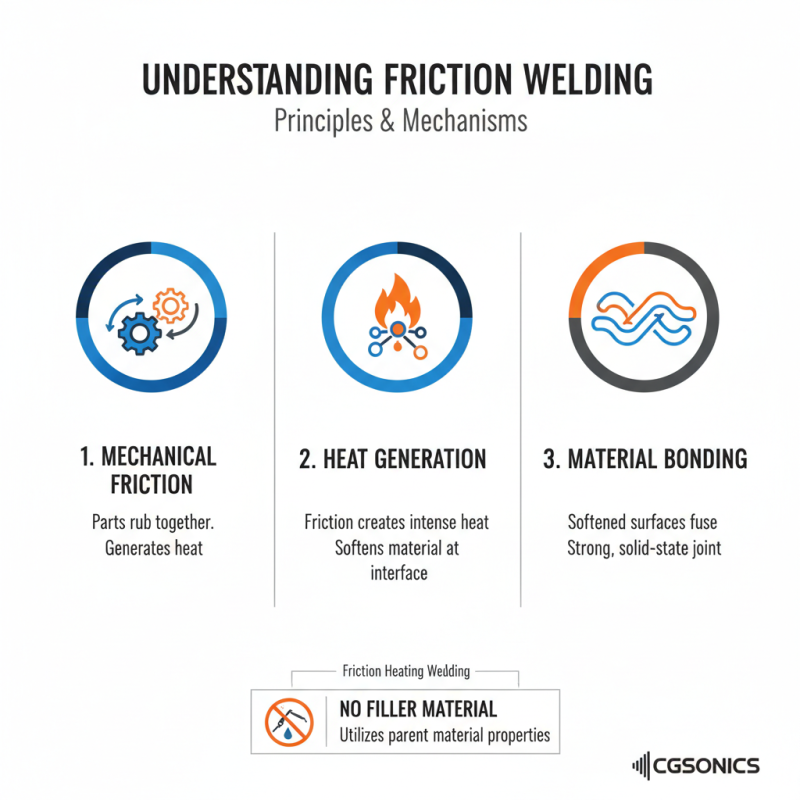
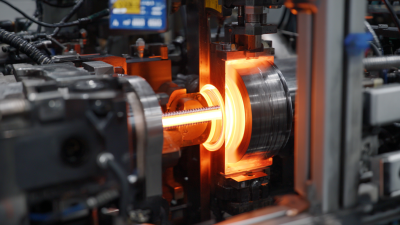
Friction welding is a fascinating process. It relies on mechanical friction to generate heat. This heat softens the materials, allowing them to bond. The Friction Heating Welding technique eliminates the need for additional material. It creates a strong joint by using the materials’ own properties.

The process generally occurs in two phases. First, the materials are brought into contact while rotating. As they rub together, friction generates intense heat. This heat is crucial for a successful weld. After reaching the necessary temperature, the rotation stops. The materials then press together under significant force. This method can produce strong, durable joints.

Friction welding demands precision. Improper alignment can lead to weak spots. Materials must be compatible. Different compositions might not perform well together. It is essential to test and evaluate each setup. Understanding these intricacies helps in improving outcomes. It reduces the likelihood of unexpected failures. Friction heating welding is effective but needs careful consideration.

Types of Friction Welding Techniques and Their Applications

Friction Welding techniques play a vital role in the manufacturing sector. They are known for creating strong joints between metals. There are several types of friction welding, each with unique benefits. Rotary friction welding is one of the most common methods. It uses rotational motion to generate heat, which helps in bonding materials.

Another technique is linear friction welding. This method allows for precise control over the process. It is particularly useful in aerospace applications, where weight and strength are critical. Reports indicate that friction welding applications are expected to grow by 7% annually. This growth reflects the increasing demand for durable materials in various industries.

Often, the challenge lies in selecting the right technique. Many engineers struggle with this choice. Understanding the properties of the materials involved is crucial. Not every method is suitable for every application. For example, friction stir welding may not work well with certain alloys. There is a need for further research to improve these processes continually. New techniques emerge, but existing challenges remain.

Preparing Materials for Effective Friction Welding

Preparing materials for effective friction welding requires attention to detail and preparation. Start by selecting compatible materials. Ensure their surface is clean and free from contaminants. This includes grease, rust, and dirt. Any unwanted particles can weaken the joint. Consider machining the surfaces before welding. A rough surface can increase the friction, but excessive roughness might lead to uneven welding.

Next, inspect the materials for defects. Small cracks or blemishes can compromise the strength. Use a magnifying glass if needed. If you discover flaws, it’s best to discard those materials. The goal is to ensure optimal contact during the welding process. After surface preparation, properly align the pieces. Misalignment can cause uneven heating. This leads to weak spots in the joint. It's vital to secure them in place.

Lastly, keep a record of the preparation steps. This helps in reflecting on the process later. Often, small deviations can produce different results. Tracking these changes can lead to improvements. Experimenting is essential. Friction welding can be challenging, but with diligent preparation, stronger joints are within reach.

The Friction Welding Process: Step-by-Step Guide

Friction Welding is a technique that creates strong joints between materials. It uses heat generated by friction to join two pieces. The process begins with two parts positioned together. One part rotates while the other remains stationary. As they come into contact, heat builds up. This heat softens the materials, allowing them to bond.

After sufficient heat is generated, the rotation stops. Pressure is applied to consolidate the joint. This pressure forces the softened material to flow together. Cooling occurs, strengthening the joint. It is a simple yet effective process. However, controlling the parameters is crucial. If the temperature is too low, the weld could fail. An excessively high temperature might weaken the material.

Precision is essential in the friction welding process. It requires careful monitoring of speed and pressure. Each situation may present unique challenges. Variability in materials can impact the outcome. Understanding these factors is vital for achieving strong joints. Reflection on past projects can guide improvements. By analyzing successes and failures, better results in future welds can be achieved.

Evaluating Joint Quality Post-Friction Welding

Evaluating joint quality post-friction welding is crucial for ensuring durability. After welding, inspecting the joint is essential. Visual inspections can reveal surface defects like cracks or misalignment. These are red flags that need attention.

Testing can involve ultrasonic or X-ray methods. These techniques uncover internal flaws that aren't visible externally. However, accessibility to proper testing equipment can be an issue. Costs may restrict what smaller operations can do.

Furthermore, the criteria for assessing quality may vary. One might focus on strength, while another prioritizes ductility. It's important to define the evaluation criteria clearly. This can lead to varying interpretations of a joint’s quality. Documenting observations is often overlooked but necessary for improvement. Regular evaluations can enhance welding processes over time.

Common Challenges and Solutions in Friction Welding

How to Use Friction Welding for Stronger Joints?

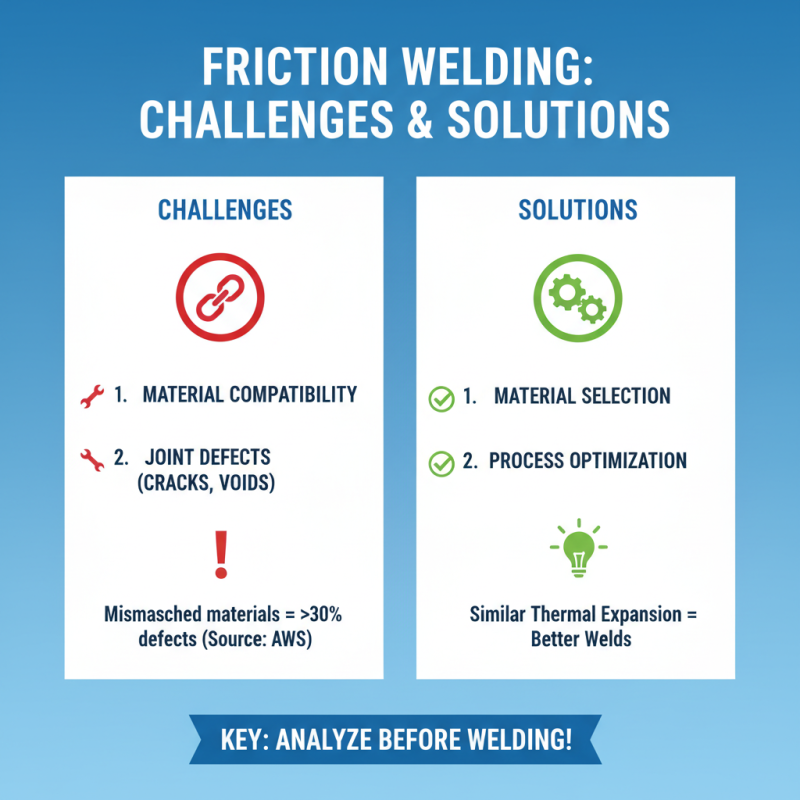
Friction welding presents distinct challenges, particularly regarding material compatibility and joint quality. Many studies have shown that proper selection of materials can enhance the welding process. For example, using metals with similar thermal expansion coefficients often yields better results. A report from the American Welding Society indicates that mismatched materials can lead to defects in over 30% of welded joints. This highlights the importance of careful material analysis before starting the process.

Another common issue is maintaining consistent friction pressure. Variations can affect the quality and strength of the joint. It's critical to monitor friction levels meticulously. Research shows that optimal pressure can significantly increase joint strength, with some reports noting improvements up to 20%. Additionally, operators must account for distortion. Thermal effects during welding can lead to warping, causing misalignment. This is particularly relevant in industries like aerospace and automotive, where precision is vital.

In the realm of Electronic Component Welding, controlling these variables is essential. Connections must withstand rigorous thermal and mechanical stress. Inadequate joint quality can lead to failures. Therefore, understanding the intricacies of friction welding is crucial. Continuous training and troubleshooting can help alleviate these challenges, ensuring more reliable results in the production process.

Future Trends and Innovations in Friction Welding Technology

Friction welding is evolving rapidly. New technologies are emerging, promising stronger and more efficient joints. Innovations in sensors and automation enhance precision. These advancements lead to improved quality and reduced costs in manufacturing processes.

Tips: Always keep an open mind about your welding techniques. Experiment with different parameters. This can yield unexpected insights.

Robotics are being integrated into friction welding. This allows for greater consistency and speed. However, the learning curve is steep. Companies must invest in training. Balancing automation's advantages with human experience is crucial.

Tips: Analyze your current setup. Are you using the best practices? Regularly assess your equipment. Small tweaks can make significant differences.

One exciting trend is using advanced materials. These can withstand extreme conditions. Testing these materials will be essential. Innovation in friction welding could lead to entirely new applications. Exploring these opportunities may require a reevaluation of traditional methods.

FAQS

: What are the common types of friction welding techniques?

: There are several types, including rotary and linear friction welding. Each has unique benefits for different applications.

Why is rotary friction welding popular?

It uses rotational motion to generate heat, creating strong joints between metals efficiently.

What is the advantage of linear friction welding?

This technique allows precise control over the welding process, crucial in aerospace applications.

How important is joint quality evaluation after welding?

It is vital for ensuring durability and performance. Inspections help identify defects early.

What methods are used to inspect joint quality?

Visual inspections, ultrasonic testing, and X-ray methods uncover potential flaws that need addressing.

What challenges do smaller operations face in testing?

Accessibility to testing equipment can be limited, and costs may restrict their evaluation capabilities.

Why is it essential to define evaluation criteria for joints?

Different priorities, like strength or ductility, can lead to varying interpretations of quality. Clarity is key.

What common oversight occurs during evaluations?

Documenting observations is often neglected, but it is crucial for tracking improvements.

How can regular evaluations benefit welding processes?

They can enhance overall quality and refine techniques over time through systematic reviews and adjustments.

Conclusion

Friction Welding is an advanced joining technique that leverages the heat generated by friction to create strong and durable joints between materials. The process involves understanding the fundamental principles and mechanisms that govern the technique, as well as exploring various friction welding methods and their specific applications across different industries. Preparing materials properly is crucial for achieving effective welding results, while the step-by-step friction welding process ensures precision and reliability.

Post-welding evaluation of joint quality is essential to ensure optimal performance and durability, addressing common challenges that may arise during the process. As technology advances, new trends and innovations in Friction Welding are emerging, enhancing the efficiency and effectiveness of this joining method. Overall, Friction Welding stands out as a vital technology for producing robust joints in a wide range of engineering applications.

Sophia

Sophia

Sophia is a dedicated marketing professional with over 20 years of experience in the field of ultrasonic Plastic Welding. She is deeply knowledgeable about the extensive range of products offered by her company, including ultrasonic welding systems, ultrasonic cutting equipment, ultrasonic lace......
Previous 5 Compelling Reasons Why Best Wire Harness Welding is Essential for Your Business Success