You know, in the ever-changing world of manufacturing, **Wire Harness Welding** really stands out as a crucial step—especially in the automotive and electronics fields. I came across a report from MarketsandMarkets that says the global market for wire harnesses is expected to jump from about $35 billion in 2021 all the way to $50 billion by 2026. That’s pretty significant, and honestly, it shows how much more we’re relying on reliable, efficient connections in complex machinery. Dr. Emily Rosenthal, a top expert in welding tech, put it well when she said, “Efficient welding techniques are key to making wire harnesses more durable and dependable.” Yeah, she’s spot on about that.
Now, there’s also some exciting tech on the horizon, like **Ultrasonic Wire Harness Welding**, which is a real game-changer. It offers quicker, more precise results—no doubt about it. But, of course, bringing new methods into existing workflows isn’t always smooth sailing. Companies often find themselves caught between holding onto their tried-and-true methods and trying out the latest innovations. At first, it can slow things down because everyone’s gotta learn the ropes. But honestly? In the long run, the benefits totally outweigh the initial hassle.
If you want to stay competitive these days, jumping on the latest welding tech is pretty much a must. Industries are raising their standards for quality, and that means we need expert advice and top-notch equipment more than ever. Still, it’s super important to recognize where our current methods fall short—and work on fixing those gaps. The push for better, smarter wire harness production isn’t slowing down anytime soon. It’s all about ongoing research, innovation, and keeping up with the latest in welding technology—important stuff for sure.
Key Considerations in Wire Harness Welding Solutions
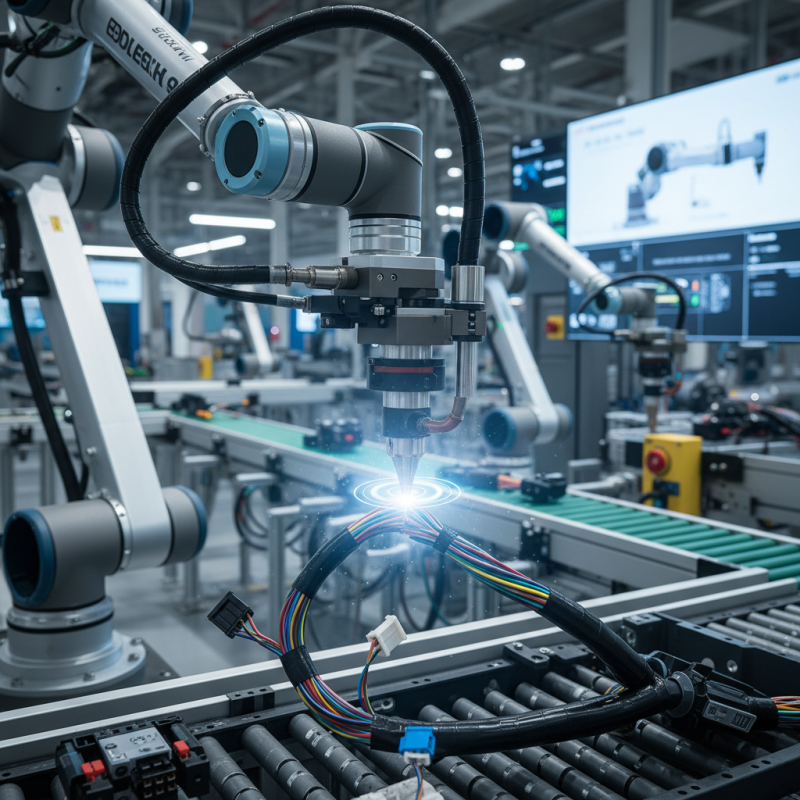
Wire harness welding is critical in industries like automotive and electronics. A well-constructed wire harness ensures reliability and performance. A key consideration is welding technology. Ultrasonic Wire Harness Welding Machines are gaining traction. They offer precision and speed, which are essential in high-volume production. Reports indicate that Ultrasonic Welding processes reduce cycle times by up to 50%. This increase in efficiency makes them a top choice for global buyers.
Material compatibility is another important factor. Different wire materials respond differently to welding techniques. Ensuring the right match can prevent weak joints and failures. Research shows that improper welding can lead to a 30% increase in defect rates. Additionally, training staff on the operating procedures of these machines is crucial. Workers must understand the technology to maximize its potential. Many companies overlook this aspect, leading to underutilized equipment and higher operational costs.
Cost is always a concern, but investing in advanced machines can save money long-term. Initial expenditures can be high, yet the decrease in labor costs and waste often offsets this. There is, however, a learning curve. Some businesses struggle during the transition to new technologies. It’s vital to ensure proper integration into existing workflows, as this can influence overall productivity. Evaluating these considerations will help buyers make informed decisions on welding solutions.
Types of Wire Harness Welding Techniques and Their Benefits
Wire harness welding techniques are essential for various industries, including automotive and electronics. These methods ensure the durability and reliability of electrical connections. Among the popular welding techniques are ultrasonic welding, laser welding, and resistance welding. Each technique has unique advantages.
Ultrasonic welding uses high-frequency vibrations to join materials. This method is efficient and creates a strong bond without additional materials. It’s ideal for lightweight assemblies. However, the initial setup can be costly. It requires precise alignment and proper equipment to avoid defects.
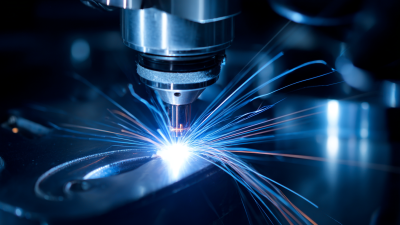
Laser welding, on the other hand, offers high accuracy. It is perfect for dense wire bundles and intricate designs. The heat generated is focused, minimizing damage to surrounding components. Still, this technique requires skilled operators. Errors can lead to significant rework or material waste.
Resistance welding is known for its speed and consistency. It works well for thicker wires and larger harnesses. While it’s generally straightforward, proper maintenance of equipment is crucial. Over time, wear and tear can lead to inconsistent results.
**Tip:** When choosing a welding technique, consider the materials and project scale. Consult with experts to determine the best fit for your needs.
**Tip:** Keep an open line of communication with your welding team. Regular feedback helps identify potential issues early.
Precision in wire harness welding is vital. Flaws can lead to serious failures. Therefore, reviewing processes regularly can lead to continuous improvement.
Top Global Suppliers of Wire Harness Welding Equipment
In the growing landscape of manufacturing, wire harness welding stands out as a crucial process. Suppliers globally are stepping up to meet rising demands. Recent industry reports indicate that the wire harness market is projected to reach $57 billion by 2025, growing at a CAGR of approximately 10%. This surge highlights the need for efficient welding solutions.
Key factors drive buyers to seek advanced equipment. Precision and durability are essential. High-quality welding machines increase production efficiency. Manufacturers report a 25% reduction in errors with automated welders. Robots are transforming traditional methods, offering speed and consistency.
Despite advancements, challenges persist. Many suppliers struggle with training operators on the latest technologies. A lack of skilled workforce can lead to inconsistent results. Quality control measures also vary significantly across regions. Effective communication between buyers and suppliers is critical to ensure standards are met. Investing in both technology and talent remains paramount for success in this evolving sector.
Innovative Technologies in Wire Harness Welding
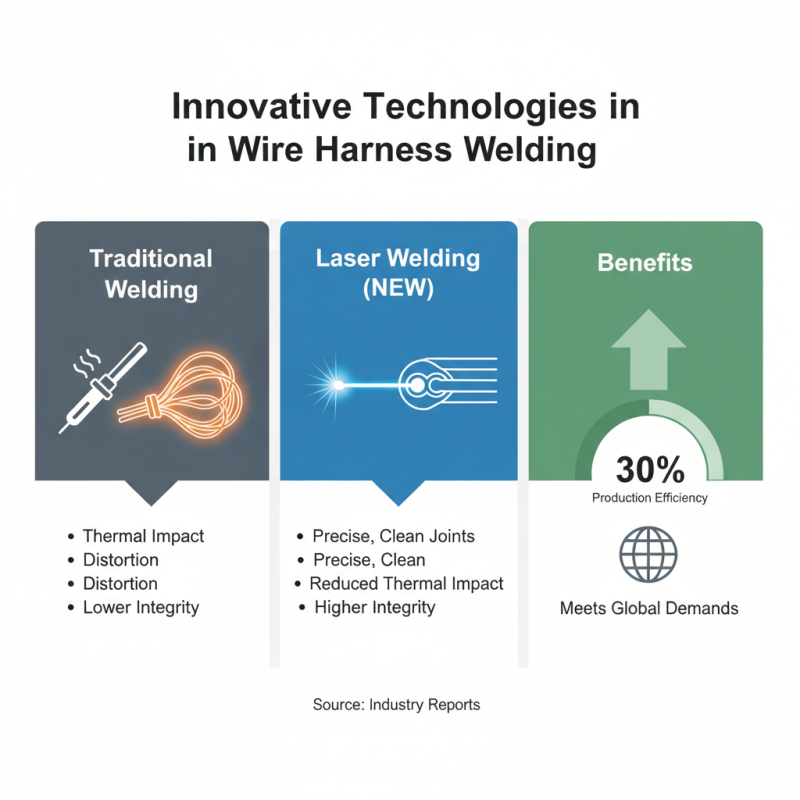
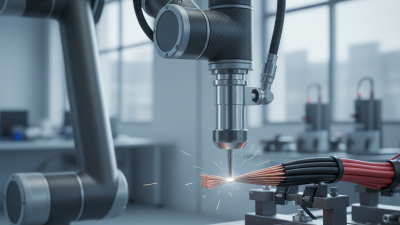
The field of Wire Harness Welding is experiencing significant advancements driven by innovative technologies. Recent industry reports highlight the increasing adoption of laser welding techniques, which provide precise and clean joints. Laser welding reduces thermal impact, resulting in less distortion and higher integrity in wire harness assemblies. Studies estimate that laser welding can improve production efficiency by up to 30%, allowing manufacturers to meet the growing global demands.
Moreover, automation plays a crucial role in enhancing the consistency and quality of wire harness production. Advanced robotics are being integrated into production lines, facilitating faster and more accurate welding processes. The International Federation of Robotics reported a substantial rise in industrial robot installations, with a projected growth of 12% per year. This shift towards automation not only raises productivity but also reduces human error, addressing common challenges in traditional wire harness welding methods.
However, adopting these technologies is not without challenges. Manufacturers must invest in training employees to operate advanced machines and troubleshoot issues that arise. The initial costs of upgrading equipment can be daunting. Despite the hurdles, the long-term benefits of improved product quality and reduced scrap rates may outweigh these concerns. In the evolving landscape of Wire Harness Welding, continuous improvement and adaptation are essential for staying competitive.
Quality Control Measures in Wire Harness Production
Quality control in wire harness production is critical for ensuring product reliability and safety. According to industry reports, up to 30% of wire harness failures can be traced back to poor quality control measures. These failures often result from inadequate testing during the manufacturing process. The implementation of rigorous testing protocols can significantly reduce failure rates.
Visual inspections, automated testing, and environmental stress testing are essential techniques. Each harness should undergo multiple checks at different production stages. A recent survey indicated that manufacturers employing comprehensive quality controls saw a 25% decrease in warranty claims. This not only enhances customer satisfaction but also strengthens brand reputation.
However, many manufacturers still overlook essential aspects. Some fail to integrate advanced technologies that facilitate real-time quality monitoring. Data from the International Wire & Cable Symposium shows that companies adopting automated systems can boost efficiency by 40%. The need for continuous improvement is evident. Emphasizing preventative measures can help mitigate risks associated with wire harness failures.
Cost-Effectiveness of Different Welding Solutions
When exploring welding solutions for wire harnesses, cost-effectiveness is often a major concern. Different techniques offer varying benefits and drawbacks. For instance, laser welding is precise, which reduces the risk of damage. However, it often comes with higher initial costs. Meanwhile, resistance welding is commonly used. It provides a solid connection at lower costs but can sometimes produce inconsistent results.
Investing in the right technology is crucial. A lower-cost method may seem appealing, but it could lead to higher repair costs later. Therefore, buyers should assess durability and reliability. The reliability of Automobile Wiring Harness Welding is critical. A reliable connection ensures the safety and efficiency of electrical systems in vehicles. Neglecting this can result in significant issues down the line.
Evaluating the complete life-cycle cost of welding solutions can shed light on their overall value. Consider maintenance requirements and the potential need for repairs. Cutting corners on welding solutions could lead to long-term expenses. Focus on solutions that balance affordability with performance longevity. This approach will provide better outcomes and may reduce headaches in the future.
Future Trends in Wire Harness Welding for Diverse Industries
The landscape of wire harness welding is rapidly evolving, influenced by advancements in technology and shifting industry demands. Industries such as automotive and aerospace are increasingly adopting innovative methods. One of the notable trends is the rise of ultrasonic welding machines for copper wire. These machines offer precise and efficient welding, minimizing thermal damage to the components. The ability to join materials without filler also leads to stronger connections, which is essential in high-performance environments.
With a focus on automation, manufacturers are integrating smart solutions into their processes. Data analytics and machine learning are becoming essential in optimizing welding parameters. This shift not only enhances production efficiency but also reduces waste and improves overall product quality. However, it raises concerns about job displacement and the need for skilled workers to manage these advanced systems. Adapting to these changes can be a challenge, as the industry grapples with a shortage of adequately trained professionals.
Looking ahead, sustainability will play a crucial role in wire harness welding. Companies strive to use eco-friendly materials and reduce energy consumption in production. Such initiatives often require reevaluation of traditional methods and a commitment to continuous improvement. As industries adapt to these trends, the intersection of innovation and responsibility will define the future of wire harness welding.
Top Wire Harness Welding Solutions for Global Buyers
| Industry | Welding Method | Typical Applications | Future Trends | Cost Efficiency |
| Automotive | Laser Welding | Wire Harness Assembly | Increased automation | High efficiency, lower wastage |
| Electronics | Ultrasonic Welding | Connector Assembly | Miniaturization of components | Reduced operational costs |
| Aerospace | Resistance Welding | Wire Harness in Aircraft Systems | Focus on safety and reliability | High initial investment, but long-term savings |
| Renewable Energy | TIG Welding | Solar Panel Connections | Enhanced sustainability practices | Cost-effective for mass production |
| Medical Devices | Micro-Plasma Welding | Implant Production | Focus on precision and cleanliness | High accuracy, justifying cost |
FAQS
: Laser welding offers precise and clean joints. It reduces thermal impact and increases the integrity of wire assemblies.
Studies suggest laser welding can boost efficiency by up to 30%, meeting growing global demands.
Automation enhances consistency and quality in production. It helps reduce human error and increases productivity.
Yes, manufacturers face hurdles like high initial costs and the need for employee training on advanced machines.
Ultrasonic welding machines are gaining popularity for copper wires, offering precise connections and minimal thermal damage.
Data analytics help optimize welding parameters, increasing efficiency while reducing waste and improving product quality.
Job displacement is a concern as advanced systems require skilled workers who are currently in short supply.
Companies aim to use eco-friendly materials and reduce energy consumption, necessitating a reevaluation of traditional methods.
Continuous improvement and adaptation to new technologies are crucial for competitiveness in wire harness welding.
Investing in comprehensive training programs can help employees adapt to advanced welding technologies effectively.
Conclusion
Wire Harness Welding is a critical process in the manufacturing of electrical components, ensuring efficient connections and reliability in various applications. When selecting welding solutions, buyers must consider factors such as the types of welding techniques available—each offering distinct advantages—and the importance of innovative technologies that enhance overall efficiency. Additionally, quality control measures are essential to guarantee the durability and performance of the wire harnesses produced.
As the industry evolves, future trends suggest a shift towards more cost-effective and automated welding solutions to meet the growing demands across diverse sectors. Understanding the leading suppliers of wire harness welding equipment and their contributions can also provide insight into the most effective practices in the field. Ultimately, wire harness welding plays a pivotal role in the advancement of reliable electrical systems globally.


 1Durch die gruppenweite Einführung und Harmonisierung unseres integrierten Managementsystems (IMS) werden alle bestehenden Unternehmens-, Qualitäts-, Umwelt- und Energiepolitiken durch diese Unternehmenspolitik ersetzt. Der Slogan „Textil hat Zukunft – auch in De