




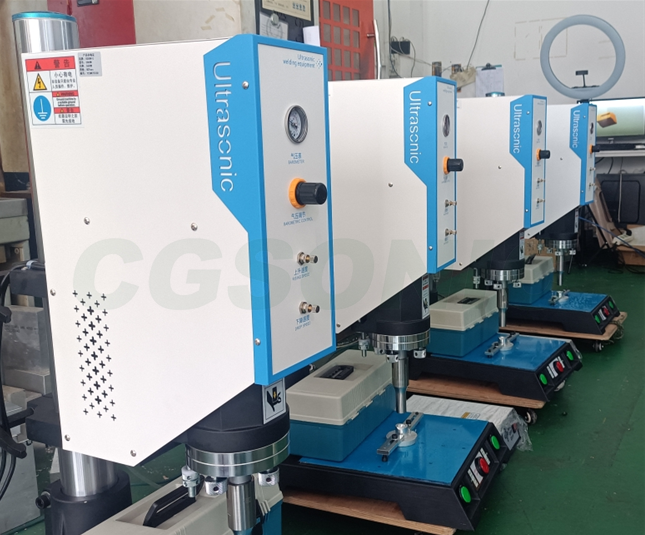



Basic knowledge and troubleshooting of ultrasound
2026-01-06
I. What is ultrasound?
Ultrasonic waves are a technique that uses the energy generated by high-frequency vibrations to act on the surface of a workpiece, thereby achieving the bonding of metal parts together.
II. Working Principle of Ultrasonic Waves
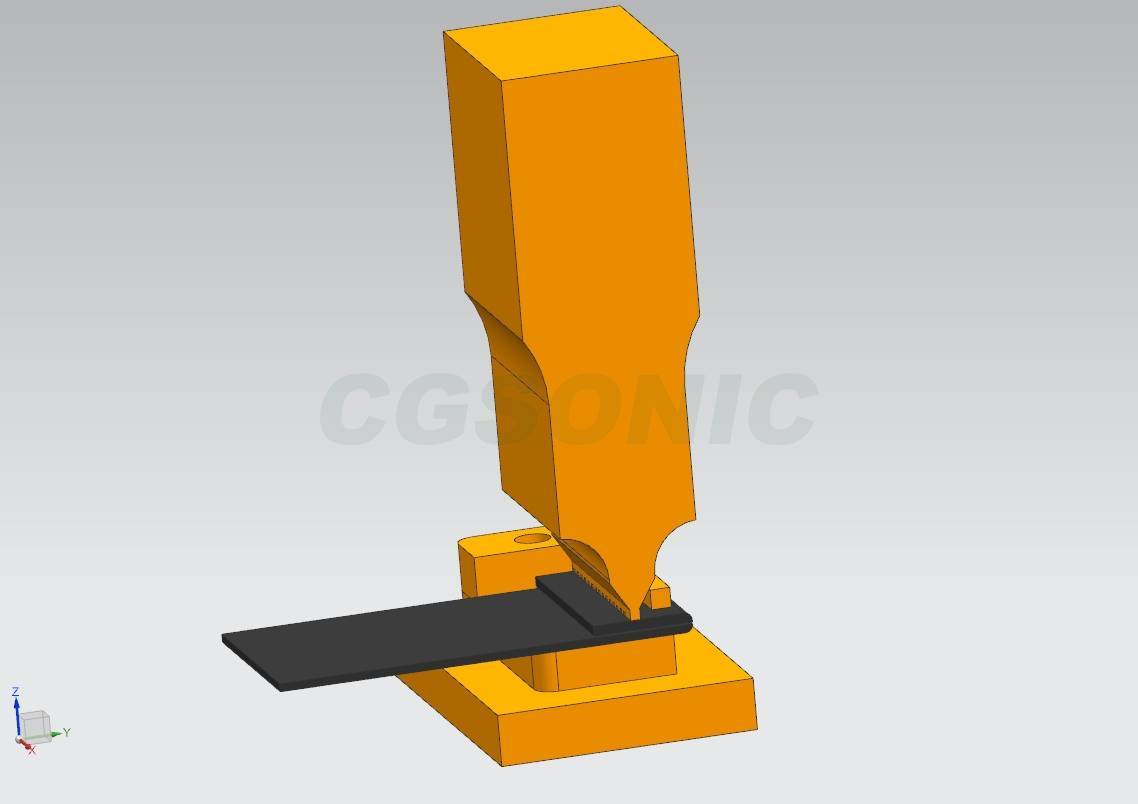
- Electrical energy is converted into high-frequency mechanical vibration, which is then transmitted to the welding nozzle through an acoustically tuned welding head. The upper and lower workpieces rub against each other under pressure cycles of 20,000 or 40,000 times per second. The combined effect of high-frequency vibration and pressure disperses the thin layer of material and oxides on the workpiece surface, forming a clean and controllable diffusion weld. Through the recombination of atoms between the workpieces, a reliable metallurgical fusion layer is ultimately formed.
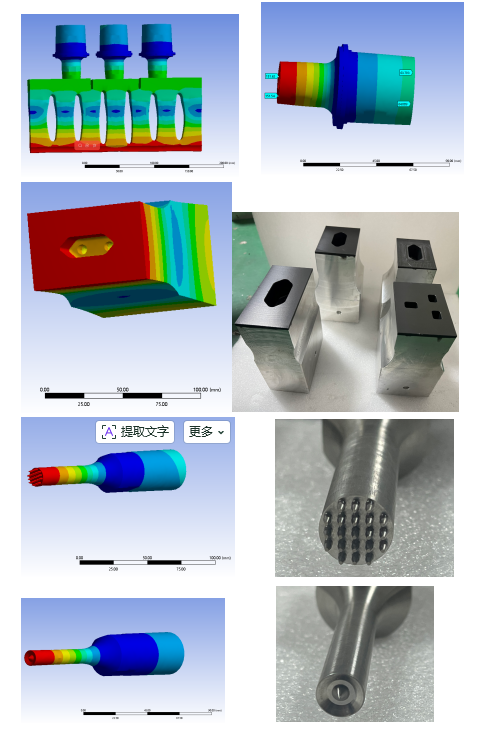
- Low-frequency current is converted into high-frequency current by a generator. The high-frequency current is then converted into mechanical vibration by a transducer. The amplitude modulator and welding head are responsible for adjusting the vibration amplitude. Under a certain static pressure, the molecular structures on the metal surface rub and collide with each other, achieving intermolecular interpenetration, thereby completing the welding.
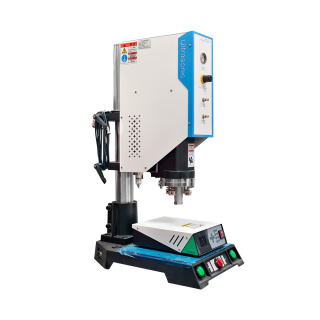
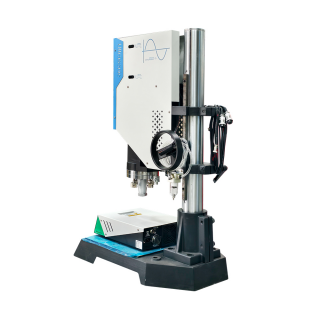
Basic knowledge and troubleshooting of ultrasound
III. Common Faults in Ultrasonic Welding
(a) Incomplete soldering
- Insufficient welding output power: insufficient pressure, insufficient amplitude, or the base is not securely fixed.
- Insufficient welding energy: The formula for calculating output energy is E=P×T=F×V×T=μN×A×f×T (where E is energy, P is power, V is speed, μ is the coefficient of friction, N is pressure, A is amplitude, f is frequency, and T is time). Insufficient energy will lead to poor welding.
- Oil or oxide layers on the surface of the material can affect the welding bonding effect.
- If the teeth are too sharp, they can easily penetrate the weldment during welding.
- The surface of the weldment has a coating of material that is not suitable for ultrasonic welding.
- The materials being welded are not suitable for ultrasonic welding.


(ii) Welding head base
Cause : When the welding head or welding base comes into contact with the material, excessively high temperatures are generated, causing molecular penetration between the material and the welding head or base, resulting in adhesion.
Solution :
- Inspect the teeth of the welding head and base. If the wear is severe, it will cause the temperature to rise, and it needs to be dealt with in time.
- While ensuring welding results, the power can be appropriately increased and the welding time shortened to reduce excessive energy exchange between the welding head and the material.
(iii) Weld cracks
- Cracking around the weld joint: When welding multiple layers of material, the edge of the weld joint forms a slope. When the welding head vibrates, it will exert a pulling force on the edge, which can easily cause cracking.
- Solution : Perform special treatment on the edge of the weld joint to ensure even stress distribution and mitigate the tensile force generated by vibration.
- Cracks near the solder joint: Vibration of the soldering head causes the material to move back and forth. For example, when aluminum foil is connected to a battery, pulling can easily cause breakage.
- Solutions : ① Change the direction of the tooth pattern (e.g., use diagonal patterns) to adjust the direction of force on the material; ② Appropriately lengthen the tab to create a buffer space between the battery and the solder joint.
(iv) Large fluctuations in output power
Reason : There are many factors that affect output power, and they need to be checked one by one.
Solution :
- Inspect the installation of the triple unit, check for any damage, and reassemble it if necessary.
- Check that the base screws are tightened securely.
- Check for gaps at the location of the base clamp.
- Inspect the welding fixtures to confirm that the welding positions are consistent each time.
- Check the surface of the material for oxidation or oil stains.
- Confirm that the specifications of the incoming materials are consistent (when the welding head stroke is fixed, differences in the thickness and hardness of the materials will cause fluctuations in output power).
- Check the stability of the factory's air supply and observe whether there are fluctuations in the intake air pressure gauge.
- Check if the ultrasonic output of the power supply box is stable.
(v) Overload
Causes include two situations: power overload and frequency overload.
Solution :
- Reduce welding parameters appropriately.
- Limit the depth of the welding head descent to ensure a certain gap is maintained between the welding head and the base.