




How Does Ultrasonic Plastic Welding Work? Bonding Principle Explained
How does ultrasonic plastic welding work? It bonds plastic through high-frequency mechanical vibration, not glue. The ultrasonic generator converts mains power into a high-frequency electrical signal, the transducer turns it into mechanical vibration, the booster amplifies the amplitude, and the sonotrode (ultrasonic horn) delivers that vibration to the joint interface of the plastic parts. The two contact surfaces rub against each other tens of thousands of times per second, friction heat builds up within 0.1–2 seconds, and the plastic at the interface melts. Under preset pressure, the polymer chains of the molten surfaces interdiffuse and entangle; when vibration stops, the melt cools and solidifies almost instantly, and the parts become one piece. No adhesive, no solvent, no screws — this is molecular fusion of the plastic itself.
1. The Core Answer: What Actually Creates the Bond
EN: Three things create an ultrasonic weld: vibration (energy), friction heat (melting) and pressure (fusion). Vibration supplies energy at 20kHz or 15kHz; the friction heat is generated only at the interface, so only the joint surface melts while the rest of the part stays cool; pressure then holds the two molten surfaces together so polymer chains can cross the boundary and re-entangle. Remove any one of the three and the bond fails — vibration without pressure gives a weak surface tack, pressure without heat gives no fusion at all. That is why amplitude, weld pressure and weld time are always tuned together, never separately.
✅ The four-step bonding sequence
- EN: Step 1 — Energy conversion: the ultrasonic generator turns 50/60Hz mains power into a 20kHz (or 15kHz) electrical signal, driving the piezoelectric transducer.
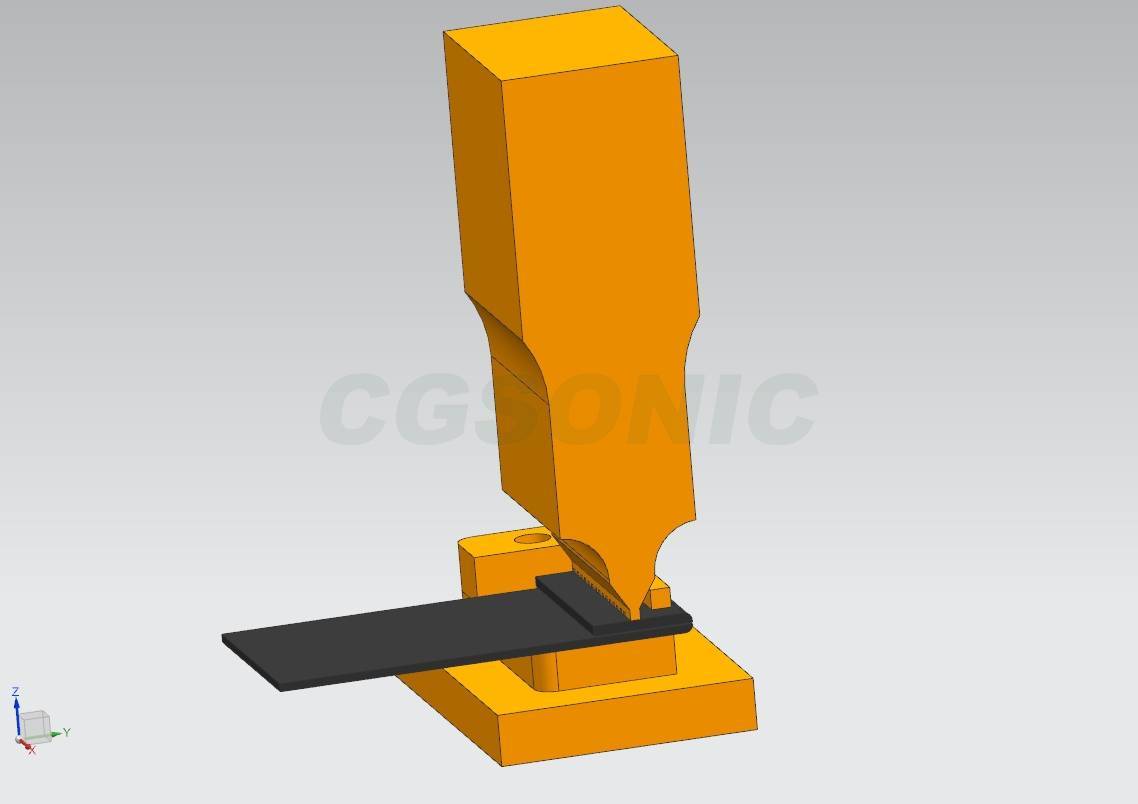
- EN: Step 2 — Vibration delivery: the transducer creates mechanical vibration, the booster amplifies the amplitude, and the sonotrode presses it into the upper part.
- EN: Step 3 — Friction melting: the interface rubs at ultrasonic frequency, friction heat melts a thin layer of thermoplastic in 0.1–2 seconds.
- EN: Step 4 — Pressure fusion & cooling: under hold pressure the polymer chains interdiffuse; vibration stops and the melt solidifies into a single part.
2. The Four Core Components of an Ultrasonic Welding System
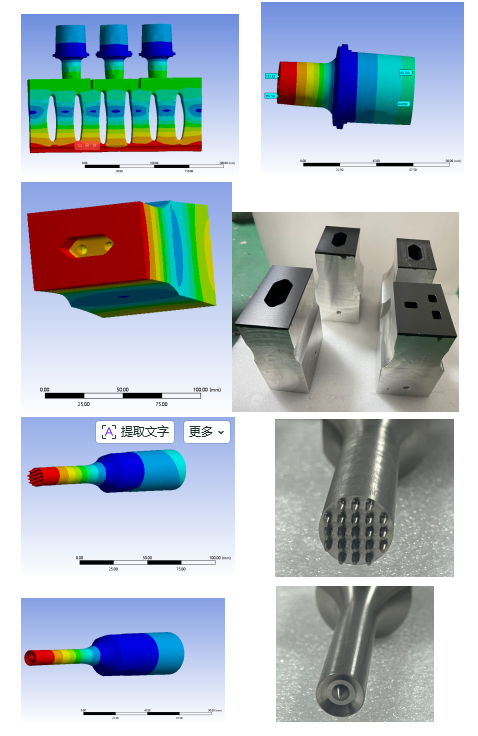
EN: A standard ultrasonic plastic welding system consists of an ultrasonic generator (power supply), a transducer (piezoelectric converter), a booster (amplitude amplifier) and the sonotrode / horn. Together they are called the ultrasonic stack. Understanding each part helps you diagnose bonding problems: a weak or inconsistent weld is far more often a horn or amplitude problem than a generator problem.
| Ultrasonic Generator | Converts 50/60Hz mains into 20kHz/15kHz high-frequency electrical power; auto frequency tracking keeps output stable. | Energy source |
| Transducer | Piezoelectric ceramics convert the electrical signal into mechanical vibration at ultrasonic frequency. | Electro-mechanical conversion |
| Booster | Amplifies or reduces the vibration amplitude to the level the application needs; also a mechanical mounting point. | Amplitude control |
| Sonotrode / Horn | Delivers vibration and pressure directly to the plastic part; its face geometry must match the part contour. | Energy delivery to joint |
| Pneumatic Press & Control | Applies weld pressure and hold pressure, triggers the cycle and controls weld time / energy mode. | Pressure & cycle control |
3. Which Plastics Can Be Ultrasonically Welded?
Ultrasonic plastic welding only works on thermoplastics — materials that melt when heated and solidify when cooled. Thermoset plastics (epoxy, phenolic, vulcanised rubber) do not melt; they decompose or burn instead, so they cannot be ultrasonically welded. Common weldable materials include ABS, PC, PP, PE, PVC, acrylic (PMMA), nylon PA, POM and TPU. Material hardness, modulus, melt point and hygroscopicity all affect the result: amorphous plastics are easier to weld, while semi-crystalline plastics (PP, PE) need higher amplitude, longer weld time and tighter parameter control because they have a sharp melting point and high energy demand.
✅ Material weldability quick reference
| Material | Weldability | Notes |
| ABS | Excellent | Amorphous, low energy demand; the easiest common material to ultrasonically weld. |
| PC / PMMA | Excellent | Amorphous and rigid; watch moisture absorption — dry before welding. |
| PA (Nylon) | Good | Hygroscopic; moisture causes bubbles and weak welds. Dry parts before welding. |
| PP | Fair | Semi-crystalline, high energy demand; needs higher amplitude and near-field welding. |
| PE | Fair | Semi-crystalline, soft; requires careful amplitude and energy director design. |
| POM | Fair | Releases formaldehyde if overheated; keep weld time short and well controlled. |
| Thermoset | Not weldable | Does not melt — decomposes instead. Cannot be ultrasonically welded. |
4. Bonding Principle: Ultrasonic vs Hot Plate vs Adhesive
EN: All three methods join plastic, but the bonding mechanism is fundamentally different. Ultrasonic welding is molecular fusion of the base material itself; hot plate welding is also fusion but heats a much larger area; adhesive bonding is surface attachment through a third substance, not fusion of the plastic body.
| Item | Ultrasonic Welding | Hot Plate Welding | Adhesive Bonding |
| Bonding mechanism | Molecular fusion — polymer chains interdiffuse | Fusion, but heat applied from outside | Surface adhesion by adhesive layer |
| Heated area | Only the joint interface | Whole contact surface on a hot | Bond line only, but adhesive covers surface |
| Cycle time | 0.1–2 seconds | 10–60 seconds | Minutes to hours of curing |
| Consumables | None | None | Adhesive, primer, cleaner |
| Weld strength | Close to base material | Close to base material | Limited by adhesive strength |
| Cleanliness | Clean, no VOC, no flash residue | Melt stringing and flash on the surface | VOC, aging, glue overflow |
| Automation | Excellent, stable and repeatable | Moderate | Hard to automate, curing bottleneck |
In short: ultrasonic welding wins on speed, cleanliness and repeatability. It needs no consumable, produces a weld strength close to the parent material, and fits high-volume automated production. That is why it has become the default joining method for automotive parts, electronic housings, medical disposables and consumer packaging.
5. Key Parameters That Determine Bond Quality
Bond quality is decided by the whole ultrasonic system working together: frequency, amplitude, weld pressure, weld time, hold time and trigger mode. Part design matters just as much — the energy director (a small triangular ridge moulded on the joint face) concentrates vibration energy at one point so melting starts quickly and the weld forms consistently.
| Parameter | Typical Range | Why It Matters |
| Frequency | 20kHz / 15kHz (30–40kHz for small precision parts) | Higher frequency = finer control and smaller parts; lower frequency handles larger parts. |
| Amplitude | Typically 20–60 μm at the horn face | Too low = no melt; too high = part damage, flash and burn. Set by booster + generator. |
| Weld Pressure | Set per material and joint area | Transmits vibration and holds the melt together; too low gives a cold weld, too high squeezes melt out. |
| Weld Time | 0.1–2 s typical | Energy mode (constant energy) is more repeatable than pure time mode across part tolerances. |
| Hold Time | 0.2–1 s typical | Must last until the melt solidifies, or the joint springs back and loses strength. |
| Trigger Mode | Time / Energy / Power / Distance (collapse) | Collapse-distance trigger compensates part size variation best for tight-tolerance parts. |
| Energy Director | 60° triangular ridge, 0.3–0.6 mm high | The single most effective part-design feature for consistent ultrasonic bonding. |
6. Will Ultrasonic Welding Burn the Whole Part?
EN: No. The heat in ultrasonic plastic welding is generated only at the interface where the two parts touch, and it is generated so fast — usually 0.1–2 seconds — that it has no time to conduct into the body of the part. Non-weld areas stay at room temperature, so cosmetic surfaces, printed logos and nearby electronics are not damaged. This localised heating is exactly why ultrasonic welding can be used on assembled products and near sensitive components. If you are concerned about visible marks on the appearance surface, read our dedicated article on whether ultrasonic welding damages product appearance.
7. Equipment Types: From Handheld to Automated Lines
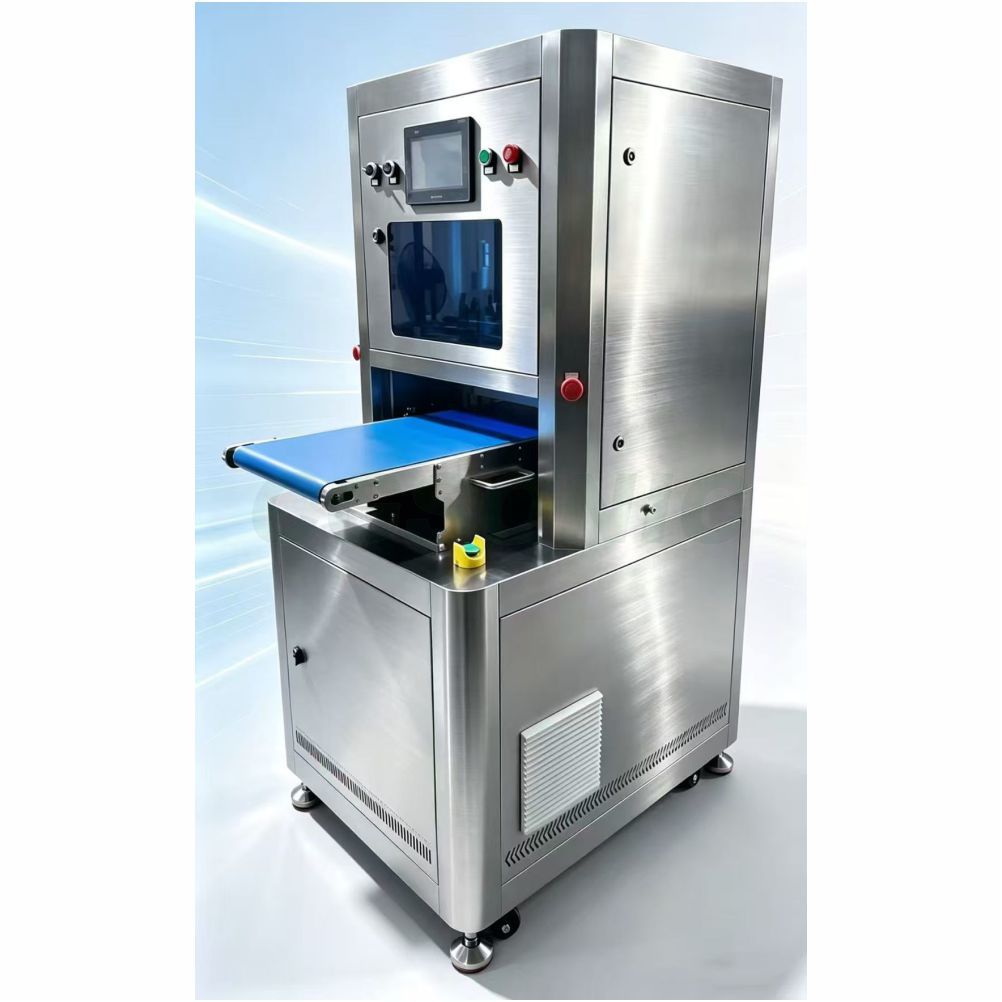
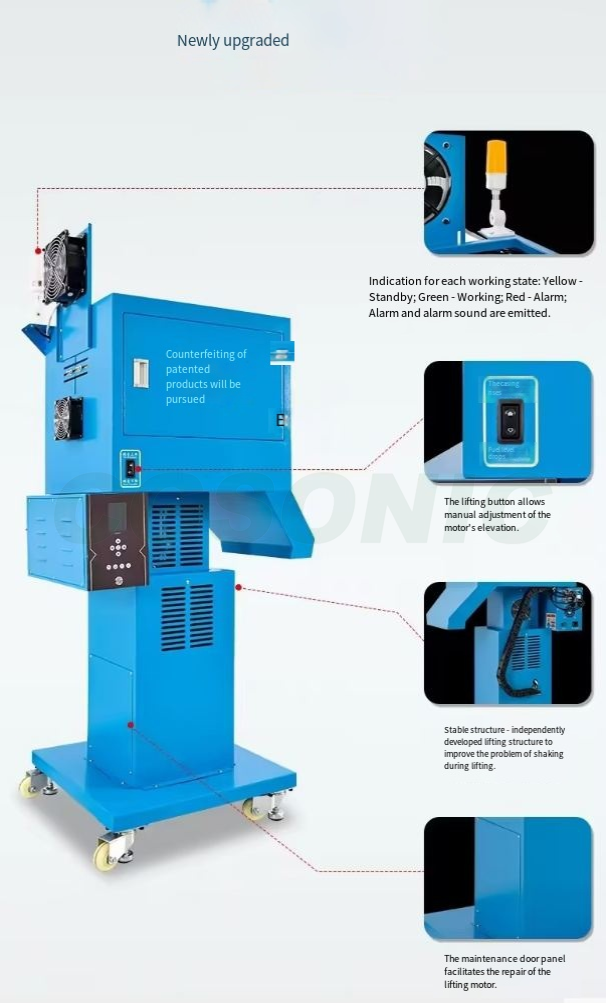
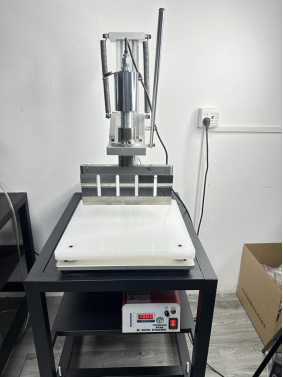
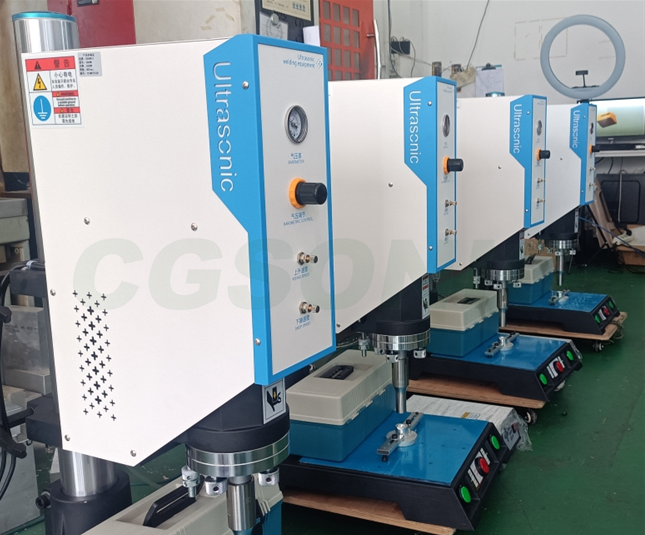
EN: The same bonding principle scales across machine formats. Handheld ultrasonic welders suit repair, prototypes and large parts that cannot be moved; benchtop ultrasonic plastic welders are the standard choice for small and medium batch production; multi-station and automated ultrasonic welding equipment integrates into production lines with rotary tables or robot cells. Specialised variants cover wire harness welding (metal), nonwoven welding, ultrasonic cutting and ultrasonic spot welding.
- Handheld ultrasonic welder — portable, for spot repairs, prototypes and oversized parts.
- Benchtop ultrasonic plastic welder — the most common format for small and medium batches.
- EN: Automated / multi-station systems — rotary table or robot integration for high-volume lines.
- EN: Specialised machines — wire harness welders, nonwoven welders, ultrasonic spot welders, ultrasonic cutters.
8. Is Ultrasonic Weld Strength Reliable?
EN: Yes, when the joint design and parameters are correct. An ultrasonic weld is not a surface tack — the polymer chains of the two parts actually interpenetrate and entangle, so weld strength can approach the strength of the parent material itself. With a properly designed joint (energy director plus a shear or tongue-and-groove geometry), ultrasonic welding reliably produces watertight and airtight seals, which is why it is standard in automotive components, electronic housings, medical consumables and daily-use packaging. If strength falls short, the cause is almost always parameter drift, a worn horn, or a joint design without an energy director — all of which are covered in our welding defects guide.
9. Beyond Plastic Welding: Other Ultrasonic Applications
EN: Ultrasonic technology is not limited to plastic fusion. The same high-frequency vibration platform powers ultrasonic wire harness welding (metal wire splicing), ultrasonic cutting, ultrasonic lace sewing, ultrasonic spot welding, ultrasonic insertion (embedding nuts and inserts), ultrasonic riveting and ultrasonic gate cutting (sprue removal).
- Ultrasonic metal / wire harness welding — splices copper and aluminium wires without heat damage.
- Ultrasonic cutting — clean, crumb-free cutting for food, rubber and synthetic fabric.
- Ultrasonic lace sewing — needle-free sealing, cutting and embossing of textiles.
- Ultrasonic insertion & riveting — embeds metal nuts or rivets into plastic bosses.
- Ultrasonic spot welding & gate cutting — localised spot joints and sprue removal.
10. FAQ | 常见问题(
Q1: Does ultrasonic plastic welding need glue, solvent or any consumable?
A: No. Ultrasonic plastic welding is a no-glue joining process — the bond comes from the plastic itself. High-frequency vibration creates friction heat at the joint interface, the surface layer melts, and under pressure the polymer chains of both parts interdiffuse and re-entangle as one. There is no adhesive, no solvent, no screw and no thread, which means zero consumable cost, no VOC emission, no curing wait and no aging of a glue layer. The only 'consumable' over years of service is mechanical wear of the horn face, which is why horns are made of titanium or hardened aluminium and can be re-machined.
Q2: Why can't thermoset plastics be ultrasonically welded?
A: Because the bonding principle depends on melting. Thermoplastics (ABS, PC, PP, PE, nylon) soften and melt when heated and solidify when cooled, so the interface can fuse and re-solidify. Thermoset plastics (epoxy, phenolic, vulcanised rubber) have a cross-linked molecular network — they do not melt at all; when you push ultrasonic energy into them they scorch, char or crack instead of forming a melt layer. For thermoset parts, mechanical fastening, adhesive bonding or insert moulding are the practical alternatives. A quick rule of thumb: if the material can be remelted by a soldering iron, it can usually be ultrasonically welded.
Q3: How long does an ultrasonic weld take, and can it be watertight?
A: The actual weld takes 0.1–2 seconds, and with part handling the full cycle is typically 2–6 seconds — far faster than adhesive curing. Ultrasonic welds can absolutely be watertight and airtight: with an energy director plus a shear or tongue-and-groove joint, the melt completely fills the joint line and weld strength approaches the parent material, so sealed housings, filters, IV components and liquid containers are routinely ultrasonically welded. Achieving a hermetic seal requires the joint to be designed for it from the start — retrofitting a seal onto a butt joint rarely works.
Q4: How do I choose between ultrasonic welding and hot plate welding?
A: Choose ultrasonic welding when cycle time, cleanliness and automation matter: 0.1–2 second welds, no consumables, no VOC, and repeatable results on a production line. Choose hot plate welding when the part is very large, the joint geometry is complex or non-planar, the material is hard to weld ultrasonically (large PP/PE parts), or when you need very high weld strength over a long joint line. As a rough guide: parts under roughly 250 mm in the weld dimension and high-volume production favour ultrasonic; large, low-volume, structurally critical parts favour hot plate. For a parameter-by-parameter decision framework, see our ultrasonic welding equipment selection guide.