






How should one choose between an ultrasonic spot welder and a handheld spot welder—and how do you decide whether a benchtop or a handheld model is the right choice?
How should one choose between an ultrasonic spot welder and a handheld spot welder—and how do you decide whether a benchtop or a handheld model is the right choice?
When you source an ultrasonic spot welding machine for a plastics workshop, the first real decision is not brand or price — it is form factor: do you buy a handheld ultrasonic spot welder or a benchtop ultrasonic spot welder? There is no universal answer. The right ultrasonic spot welder depends on five variables: workpiece size, weld point layout, daily output, how often you change models, and your budget for jigs. This guide compares both machines across twelve dimensions, gives you a seven-step decision flow, and lists exactly what to send a supplier before you ask for a quote — including free ultrasonic welding sample tests and custom ultrasonic horn and fixture service.
✅ Key Takeaways
- A handheld ultrasonic spot welder wins on flexibility: big, irregular, hard-to-clamp parts and scattered or curved weld points.
- A benchtop ultrasonic spot welder wins on repeatability: fixed weld positions, high volume, and strict requirements on pull strength, airtightness and appearance.
- Weld consistency on a handheld unit depends on the operator's force, angle and skill; on a benchtop unit it is locked by pressure, time and stroke settings.
- Benchtop machines normally need a custom jig, which adds cost and lead time for every new product — budget for it before you compare quotes.
- If you run small-batch, multi-variety production or need on-site repair welding, choose handheld; if you run standardized mass production, choose benchtop.
1. 30-Second Decision Table
If you only have thirty seconds, use this table. Find the line that matches your situation and it will point you to the right ultrasonic spot welder in most cases.
| Your Situation | Choose | Why |
| Workpiece is bulky, oversized or cannot be moved | Handheld | You bring the welding gun to the product, not the product to the machine |
| Weld points are scattered, on curved surfaces or on edges | Handheld | Free movement covers irregular layouts a fixed stand cannot reach |
| Small-batch, multi-variety, frequent model change | Handheld | Few or simple fixtures, fast changeover |
| On-site assembly or after-sales repair welding | Handheld | Portable, install anywhere on the line or in the service area |
| Weld positions fixed, part is small and regular | Benchtop | Custom jig locates the part, horn presses vertically every cycle |
| High volume, standardized continuous production | Benchtop | One-touch cycle, short weld time, easy line integration |
| Strict pull strength, airtightness or appearance standards | Benchtop | Parameters saved and recalled, minimal human variation |
2. Handheld Ultrasonic Spot Welder
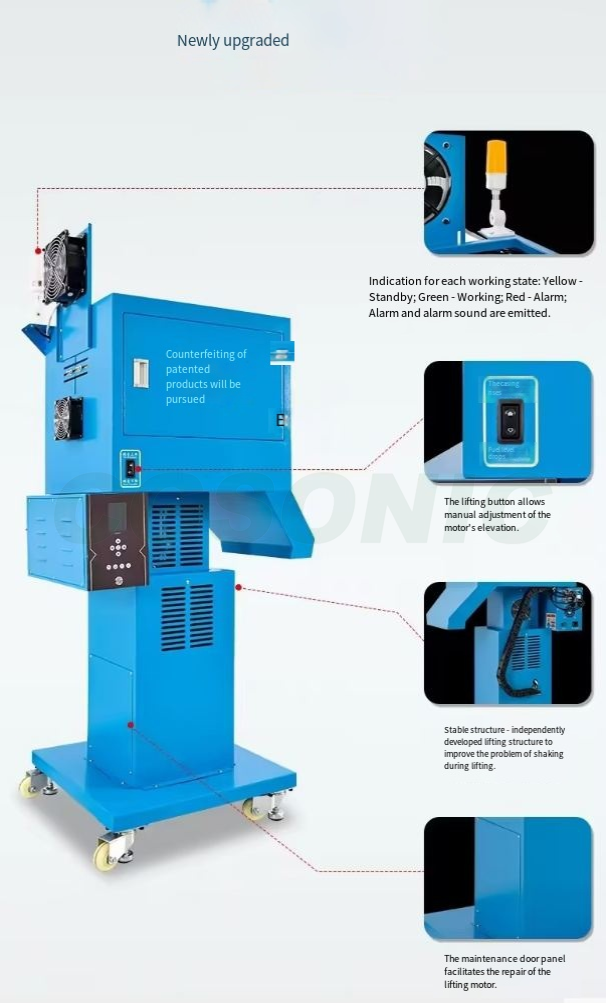
EN: A handheld ultrasonic spot welder — also called a portable ultrasonic spot welding machine — uses a split design: the ultrasonic generator sits in a cabinet or on a trolley, and the operator holds a welding gun connected by a cable. The operator moves the ultrasonic horn to wherever the weld point is, which is why this configuration dominates large-part and irregular-part applications.
✅ Core Advantages
- Super flexible: ideal for oversized, irregular and hard-to-clamp workpieces — no need to carry heavy products to the machine.
- Lightweight and space-saving: easy to move and install on assembly lines, workstations or temporary production sites.
- Wide welding compatibility: perfect for scattered weld points, edge sealing and secondary reinforcement welding after assembly.
- Quick setup: requires few or no custom fixtures, supports fast model change for multi-product production.
✅ Limitations
- Weld consistency is affected by the operator's force, angle and skill.
- Not the best option for high-volume, fixed-point mass production.
- Long continuous operation brings fatigue, which can show up as quality drift late in the shift.
3. Benchtop Ultrasonic Spot Welder
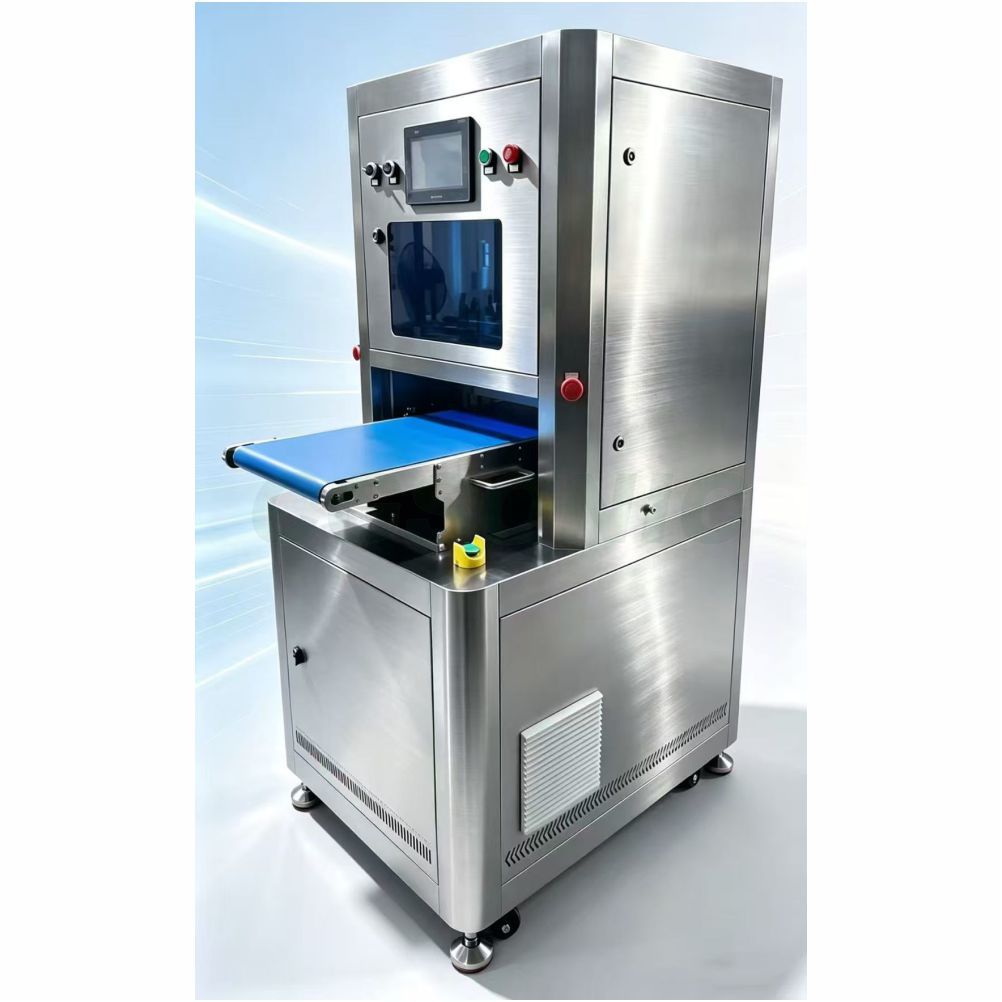
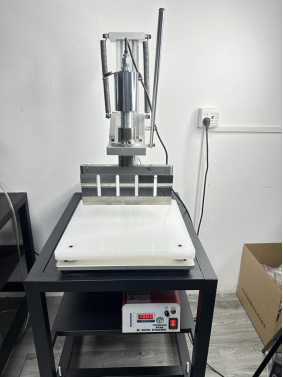
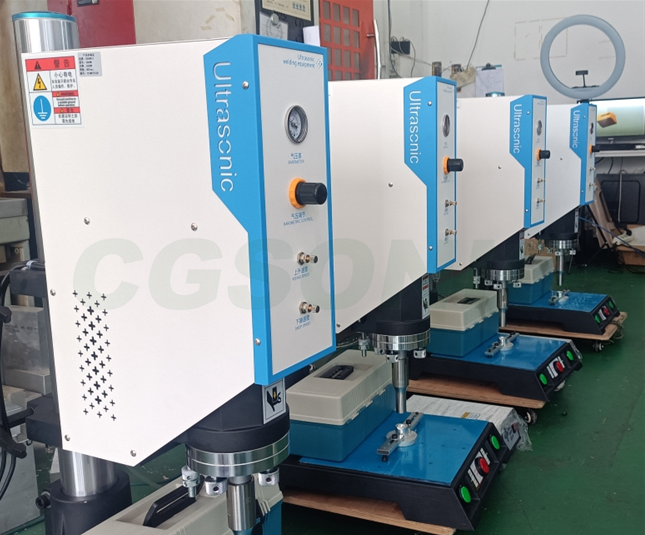
A benchtop ultrasonic spot welder — also called a desktop ultrasonic spot welding machine — integrates the ultrasonic generator, a fixed stand and a pneumatic driving structure in one frame. The workpiece is positioned by a custom jig and the ultrasonic horn presses vertically to complete the weld. Because pressure, weld time and stroke are fixed, every cycle is essentially identical.
✅ Core Advantages
- Stable and repeatable weld quality: fixed pressure, weld time and stroke minimize human error.
- High output for mass production: one-touch trigger, short weld cycle, easy integration into automatic lines.
- Convenient quality control: weld parameters can be saved and recalled for different plastic products.
- Low operation difficulty: workers only load and unload parts, no skilled hand control required.
✅ Limitations
- Weld range is restricted by stand stroke and throat depth; it cannot handle extra-large immovable workpieces.
- A custom jig is usually required, adding cost and lead time for every new product.
- Less flexible if you frequently switch many different product models.
4. Head-to-Head Comparison: 12 Dimensions
The table below is the comparison most buyers actually need. It covers not just the machine, but the total cost of running it — including fixtures, training and changeover.
| Dimension | Handheld Ultrasonic Spot Welder | Benchtop Ultrasonic Spot Welder |
| Structure | Split generator + welding gun, hand-held operation | Generator + fixed stand + pneumatic press in one frame |
| Workpiece size | Large, heavy, immovable parts | Small to medium parts that fit the stand |
| Weld point layout | Scattered, curved surfaces, edges, after-assembly reinforcement | Fixed and regular positions |
| Weld consistency | Depends on operator force, angle and skill | Locked by pressure, time and stroke; parameters saved |
| Output & cycle | Suited to intermittent and low-volume work | Short cycle, one-touch, suited to continuous mass production |
| Fixture requirement | Few or simple fixtures | Custom jig normally required |
| Changeover | Fast, low cost | Slower — new jig and parameter set-up |
| Operator skill | Higher — needs trained hand control | Lower — load and unload only |
| Automation integration | Limited; mostly manual station | Easy to integrate with conveyor and robot |
| Quality traceability | Weak — hard to tie output to parameters | Strong — parameters stored per product |
| Up-front cost | Lower machine cost, almost no jig cost | Higher — machine plus jig design and build |
| Best for | Small-batch multi-variety, on-site repair, large parts | Standardized mass production with strict quality standards |
5. Seven-Step Selection Process
Work through these seven questions in order. By step four you will usually know which ultrasonic spot welder you need, and by step seven you will have everything a supplier needs to quote accurately.
| Step | Question to Answer | Decision Impact |
| 1 | Can the workpiece be moved and placed on a table? | No → handheld; Yes → continue |
| 2 | Are weld points fixed and repeatable, or scattered? | Scattered or curved → handheld; Fixed → benchtop |
| 3 | What is your daily or shift output? | Low/hundreds → handheld or standalone benchtop; High/thousands → benchtop inline |
| 4 | How often do you change product models? | Frequent → handheld; Rare → benchtop with dedicated jig |
| 5 | Do you need documented pull strength or airtightness? | Yes → benchtop with saved parameters |
| 6 | What is your material and joint design? | Drives frequency, amplitude and horn design |
| 7 | What is your budget for jigs and lead time? | Low budget / short lead time → handheld first |
6. Technical Parameters to Specify
Whether you choose handheld or benchtop, four parameters decide whether the ultrasonic spot welding machine actually welds your part. State them explicitly in your enquiry so suppliers quote on the same basis.
| Parameter | Typical Range | How to Choose |
| Frequency | 20 kHz / 28–30 kHz / 35–40 kHz | 20 kHz for larger parts and bigger weld points; 28–30 kHz for general small and medium plastic parts; 35–40 kHz for precision, thin-wall and heat-sensitive parts |
| Power | Handheld gun typically 100–800 W; benchtop typically 800–2,000 W | Match power to weld area and material, not to part size. Validate by sample test |
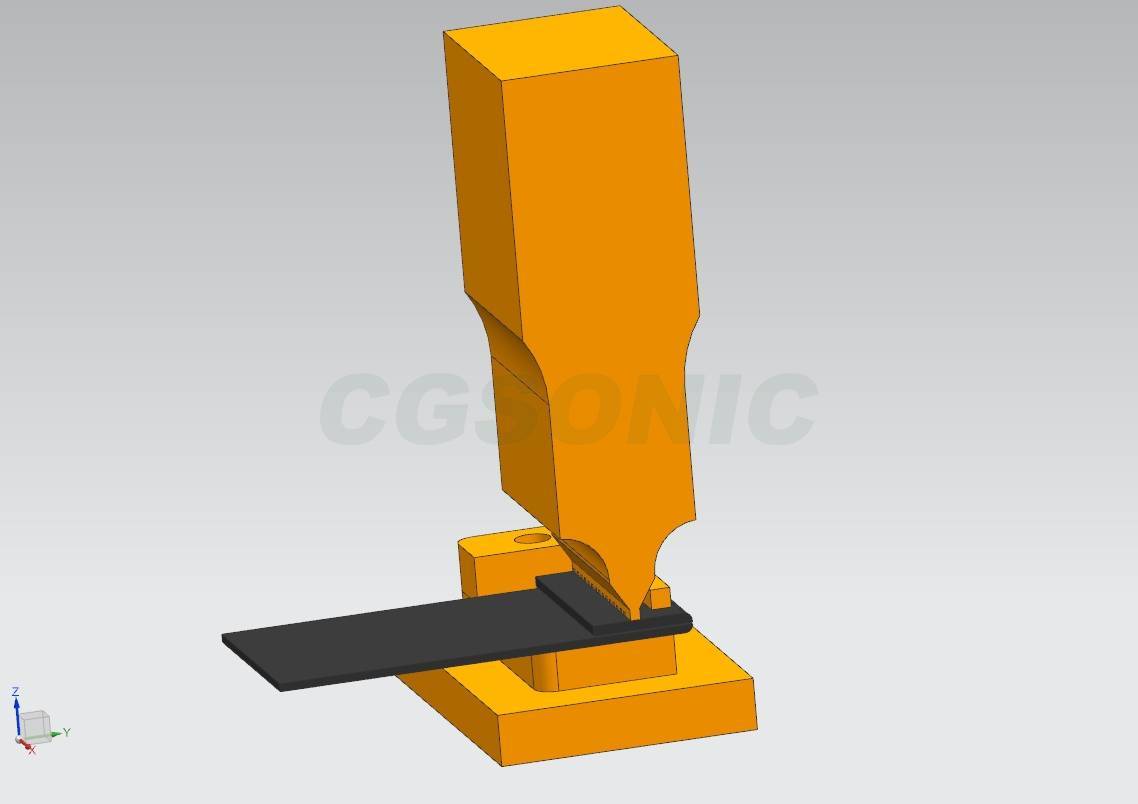
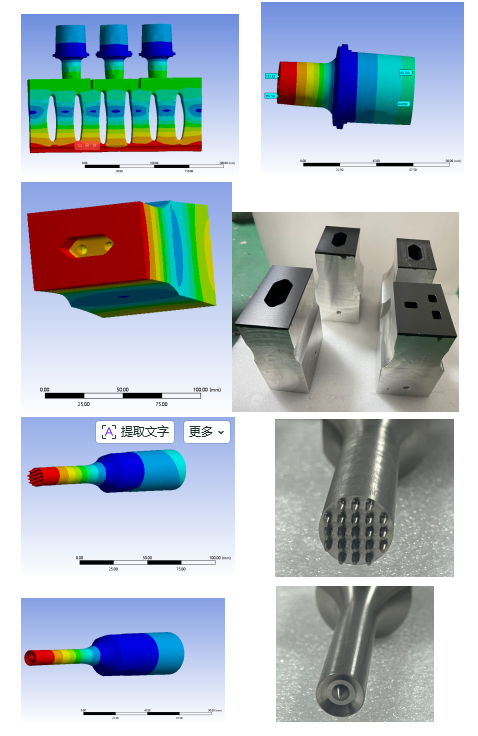
| Ultrasonic horn | Custom-designed per product | Horn geometry determines energy delivery and weld pattern; a custom ultrasonic horn is normal, not an upgrade |
| Pneumatics & control | Benchtop: pneumatic press with adjustable pressure, weld time and hold time | Ask whether weld time, hold time and trigger mode are stored per product |
7. Cost and Lead Time Comparison
Machine price is only part of the number. When you compare a handheld ultrasonic spot welder with a benchtop one, compare the full first-year cost: machine, jigs, training, changeover time and scrap from inconsistent welds.
| Cost Item | Handheld | Benchtop | Comment |
| Machine | Lower | Higher | Benchtop includes stand and pneumatic system |
| Custom jig | Usually not required | Required per product | Main hidden cost of benchtop |
| Custom horn | Required | Required | Both need a product-specific horn |
| Training | More — operator skill matters | Less — load and unload | Affects consistency in month one |
| Changeover | Low | Higher — new jig and parameters | Matters in multi-variety production |
| Lead time | Shorter | Longer — jig design adds time | Plan jig lead time into your launch date |
8. Common Misconceptions
These five mistakes account for most dissatisfaction after an ultrasonic spot welder is installed. Avoiding them costs nothing at the enquiry stage.
| Misconception | Reality |
| “Higher power welds better.” | Excess power on a small weld point causes flash, burn marks and appearance damage. Power must match weld area and material |
| “One machine welds everything.” | The generator can serve many products, but the horn and jig are product-specific. Plan for horn changes |
| “Handheld is always the cheaper option.” | For high-volume fixed-point work, handheld labour cost and inconsistency usually exceed the benchtop jig cost |
| “Benchtop means no operator influence.” | Benchtop removes hand control, but loading accuracy, jig wear and parameter drift still need control |
| “We can skip the sample test.” | Material grade, glass fibre content, moisture and joint design change the result. Always weld samples first |
9. Industry Application Mapping
Different industries lean clearly to one form factor. Use this mapping as a sanity check against your own product family.
| Industry | Typical Parts | Recommended |
| Automotive interiors | Door panels, pillar trims, interior clips | Handheld for large panels; benchtop for small clips |
| Non-woven & filtration | Filter elements, non-woven bags, mask layers | Handheld for large items; benchtop for standard filters |
| Packaging | Large packaging bags, edge sealing | Handheld |
| Electronics & appliances | Housings, small brackets, wire clips | Benchtop |
| Medical & lab consumables | Small precision parts requiring airtight welds | Benchtop with saved parameters |
| Toys & consumer goods | Multi-variety small plastic parts | Handheld for variety; benchtop for a stable best-seller |
| After-sales & repair stations | Reinforcement welding, on-site rework | Handheld |
10. RFQ Checklist: What to Send Before You Ask for a Quote
Send these eight items with your enquiry and you will receive a comparable, actionable quotation instead of a generic price range.
| Information to Provide | Why It Matters |
| Product photos and a drawing with weld point locations | Determines reach, horn shape and whether a jig is needed |
| Material grade of both parts (e.g. ABS, PP, PC, PA with glass fibre) | Material compatibility is the single biggest weldability factor |
| Weld area or weld point size, and number of points per part | Drives power and frequency selection |
| Required pull strength or airtightness, if any | Determines whether parameters must be stored and traceable |
| Daily or shift output and target cycle time | Separates manual stations from automated cells |
| Product mix: how many models on the same machine | Drives changeover design and jig quantity |
| Available compressed air, power supply and floor space | Affects pneumatic benchtop models and layout |
| Sample parts for welding test | The only way to confirm the result before ordering |
11. FAQ
Q: Should I buy a handheld or benchtop ultrasonic spot welder?
A: Choose a handheld ultrasonic spot welder if your workpiece is bulky or immovable, if weld points are scattered or on curved surfaces, or if you run small-batch multi-variety production and need on-site repair welding. Choose a benchtop model if weld positions are fixed, you run standardized mass production, and you have documented requirements on pull strength, airtightness and appearance.
Q: What is the main difference between a handheld and a benchtop ultrasonic spot welder?
A: The handheld unit separates the generator from a hand-held welding gun, so the operator brings the horn to the part; consistency depends on operator technique. The benchtop unit integrates generator, stand and pneumatic press, locates the part with a custom jig, and locks pressure, weld time and stroke so every cycle is repeatable.
Q: Is a handheld ultrasonic spot welder consistent enough for production?
A: Yes for low-volume, large-part and repair work, but consistency depends on the operator's force, angle and skill. If your customer requires documented pull strength or airtightness on every part, a benchtop machine with stored parameters is the safer choice.
Q: Does a benchtop ultrasonic spot welder always need a custom jig?
A: In most cases yes. The jig locates the part and supports it against the welding force, which is what makes the weld repeatable. Budget for jig cost and lead time when you evaluate a benchtop machine — it is the largest hidden cost difference between the two configurations.
Q: Can one ultrasonic spot welding machine weld different products?
A: The generator can serve multiple products, but the ultrasonic horn and any jig are product-specific. Switching products usually means changing the horn, reloading saved parameters, and on a benchtop machine possibly changing the jig. Confirm changeover time with a multi-product sample test before you buy.
Q: Which frequency should I choose for an ultrasonic spot welder?
A: As a general guide, 20 kHz suits larger parts and larger weld points, 28–30 kHz suits general small and medium plastic parts, and 35–40 kHz suits precision, thin-wall and heat-sensitive parts. The final choice should be confirmed by a welding sample test on your actual material.
Q: Will ultrasonic spot welding damage the appearance of my product?
A: It should not when the machine is correctly specified. Appearance problems such as flash, burn marks or visible witness marks usually come from excessive power, wrong amplitude, a poorly matched horn face or a worn jig — not from the process itself. A sample test on your parts will show the cosmetic result before you commit.
Q: Can I test before I buy?
A: Yes. Send product photos, material details and sample parts, and the supplier should recommend a configuration and arrange a free ultrasonic welding sample test so you can verify weld strength and appearance before placing an order.
12. Final Summary and Our Service
There is no universally best ultrasonic spot welder — only the one that fits your workpiece, weld layout, output and changeover reality. Pick a handheld ultrasonic spot welder for flexibility, large parts and variety; pick a benchtop machine for repeatability, volume and documented quality. Whichever you choose, the decision should be validated by a welding sample test on your real parts before the order is placed.
Shenzhen Chengguan Intelligent Ultrasonic Equipment Co., Ltd. supplies the full ultrasonic spot welding range, including handheld and benchtop models, together with custom ultrasonic horns, custom welding fixtures, technical training and after-sales support. Send us your product photos, material details and welding requirements, and our engineering team will recommend the right configuration and arrange a free ultrasonic welding sample test so you can verify the result before ordering.