



How to Choose Ultrasonic Welding Equipment: A 7-Step Selection Guide and Pitfall Checklist (2026 Edition)
About This Article
Compiled by Li Yong, an ultrasonic welding process engineer at Shenzhen Chengguan Intelligent Ultrasonic Equipment Co., Ltd. With 22 years of experience in production-line commissioning and yield improvement, he has delivered more than 10,000 welding projects covering over 100,000 welded products. The content of this article is based on real production-line cases and parameter validation.
Table of Contents
- Confirm the materials to be welded — the No. 1 factor in selection
- Choose the right working frequency — 20kHz / 35kHz / 40kHz
- Match power to welding area — avoiding cold welds and over-welds
- Choose the machine type by production volume — pneumatic / servo / custom
- Focus on the generator's core functions — the brain of the machine
- Horn and tooling fixtures — what ultimately determine weld quality
- Evaluate supplier strength and after-sales service
- Selection decision flowchart
- Equipment comparison quick-reference table
- Common selection mistakes and pitfall checklist
- Frequently Asked Questions (FAQ)
- Summary
Choosing ultrasonic welding equipment is one of the most critical decisions a plastics manufacturer makes before putting a line into production. Choose well and you get a stable line, high yield, and low maintenance costs. Choose poorly and you face cold welds, over-welds, and frequent breakdowns — the downtime losses far outweigh the price difference between machines.
This guide breaks the selection process into 7 core steps, from material confirmation to supplier evaluation. It explains the decision logic and the points to watch at every stage, and closes with a selection decision flowchart and an equipment comparison quick-reference table to help you make the right call before purchasing.
1. Confirm the materials to be welded — the No. 1 factor in selection
Material is the first factor in selection. Different plastics differ greatly in melting point, elastic modulus, and thermal conductivity, which directly determine the frequency, power, and horn design the equipment needs.
Key decision points
- Identify the material to be welded: rigid plastics such as ABS and PC need greater energy output; soft plastics such as PP and PE need less energy but demand tighter amplitude control.
- Confirm the welding quality requirements: must the weld strength meet tensile-test standards? Is sealing required (air-tight / water-tight)? Must the appearance be free of pressure marks, burn marks, and flash?
- Determine whether dissimilar materials are being joined: the melting points of the two materials must be within 20°C of each other, otherwise reliable fusion is hard to achieve. Some combinations (e.g., PTFE with any plastic) are virtually impossible to ultrasonically weld.
|
Material |
Welding difficulty |
Energy required |
Notes |
|
ABS |
Low |
Medium |
Easiest to weld; highly versatile |
|
PC (polycarbonate) |
Medium |
High |
High melting point; needs high power |
|
PS (polystyrene) |
Low |
Low |
Easy to weld but prone to brittle cracking |
|
PP (polypropylene) |
High |
Low–Medium |
Highly elastic; needs high frequency and small amplitude |
|
PE (polyethylene) |
High |
Low–Medium |
Low melting point but poor heat conduction |
|
PA (nylon) |
Medium–High |
High |
Highly hygroscopic; dry the material before welding |
|
POM (acetal) |
Medium |
Medium–High |
Very stiff; requires precise amplitude |
|
PMMA (acrylic) |
Medium |
Medium |
Cosmetic parts need bubble prevention |
|
PTFE (Teflon) |
Extremely difficult |
- |
Virtually impossible to ultrasonically weld |
Tip: when you are not sure whether a material can be welded, sending samples in for a free welding trial is the lowest-cost way to find out. Any reputable supplier should offer this service.
2. Choose the right working frequency — 20kHz / 35kHz / 40kHz
Frequency directly determines vibration performance. Ultrasonic welding equipment commonly comes in three frequency tiers — 20kHz, 35kHz, and 40kHz — each with its own sweet spot.
|
Frequency |
Amplitude characteristics |
Suitable products |
Advantages |
Limitations |
|
20kHz |
Large amplitude, high energy |
Medium-to-large plastic parts, thick-walled products, automotive components, appliance housings |
Most versatile; the mainstream machines on the market; parts are easy to source |
Prone to over-welding and pressure damage on delicate small parts |
|
35kHz |
Medium amplitude |
Medium-sized cosmetic parts, electronics accessories, medical devices |
Balances power and precision; reduces cosmetic damage |
Fewer machine options than 20kHz |
|
40kHz |
Small amplitude, fine and precise |
Small thin-walled parts, precision electronics, micro sensors, cosmetic packaging |
Less burn damage and pressure marking; finer weld spots |
Limited energy; not suitable for large parts |
Rule of thumb: pick low frequency (20kHz) for large parts and high frequency (35kHz/40kHz) for fine, small parts. If your product sizes span a wide range, consider dual-frequency equipment or several machines of different frequencies.
3. Match power to welding area — avoiding cold welds and over-welds
Getting the power wrong is one of the most common selection mistakes. Too little power causes cold welds; too much causes over-welding and burn marks. Both produce batch defects.
|
Welding area size |
Recommended power |
Typical applications |
|
Within 50mm |
800–1200W |
Small electronics housings, sensor packaging, toy parts |
|
50–100mm |
1200–1500W |
Automotive sensors, charger housings, battery covers |
|
100–150mm |
1500–2600W |
Appliance housings, medical devices, automotive interior parts |
|
Above 150mm |
2600–3000W+ |
Automotive bumpers, large water tanks, industrial containers |
Tip: for continuous batch production, leave a 20% power margin. Running at full load invites generator overload alarms and shortens component life. For example, for a part with a 120mm welding area, choose a 2000W machine rather than one that is barely 1500W.
4. Choose the machine type by production volume — pneumatic / servo / custom
Production batch size directly determines whether you should go with a standard pneumatic machine or a servo precision machine — and the budget difference is significant.
|
Machine type |
Drive method |
Precision |
Suitable scenarios |
Price range |
|
Benchtop pneumatic ultrasonic welder |
Cylinder-driven |
±0.05mm |
Small-batch prototyping, pilot runs, R&D validation |
Low |
|
Servo ultrasonic welder |
Servo motor-driven |
±0.01mm |
High-volume production, products with strict quality requirements |
Medium–High |
|
Custom integrated ultrasonic system |
Custom-built |
Designed to requirement |
Automated lines, multi-station simultaneous welding |
High (quoted per project) |
Key differences
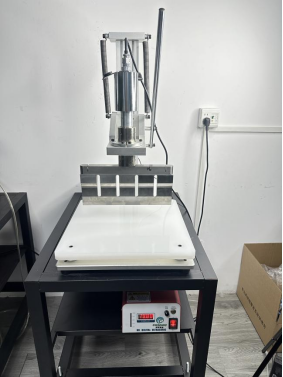
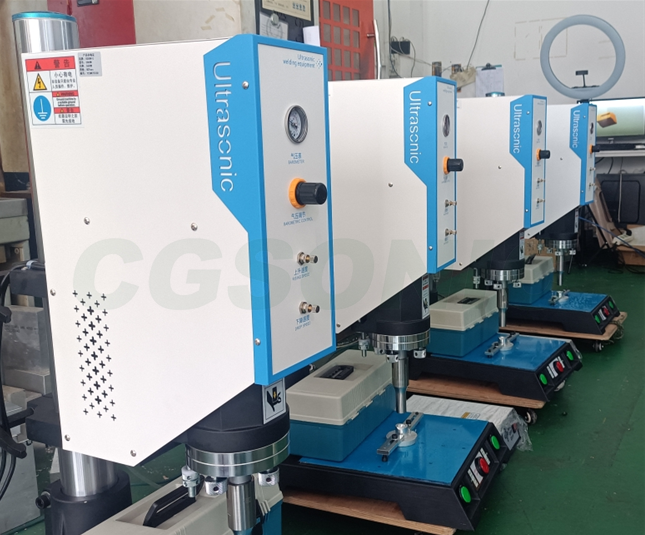
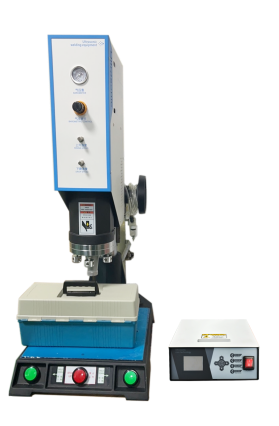
- Pneumatic type: presses down on cylinder pressure. Simple structure, easy to operate, low maintenance cost. But welding depth is affected by air-pressure fluctuations, so consistency is limited. Suited to annual volumes below 50,000 pieces.
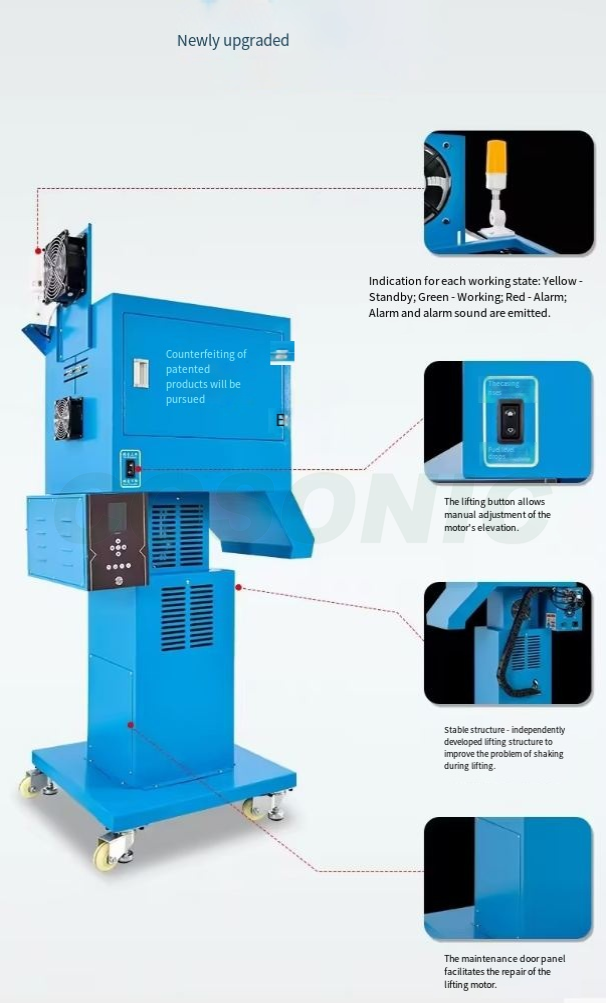
- Servo type: a servo motor precisely controls the downstroke distance and speed, achieving welding-depth precision of 0.01mm. It supports multi-stage welding profiles (fast approach → slow press → hold → gradual release) and delivers excellent consistency — suited to annual volumes above 100,000 pieces or strict quality demands (medical devices, automotive safety parts, etc.).
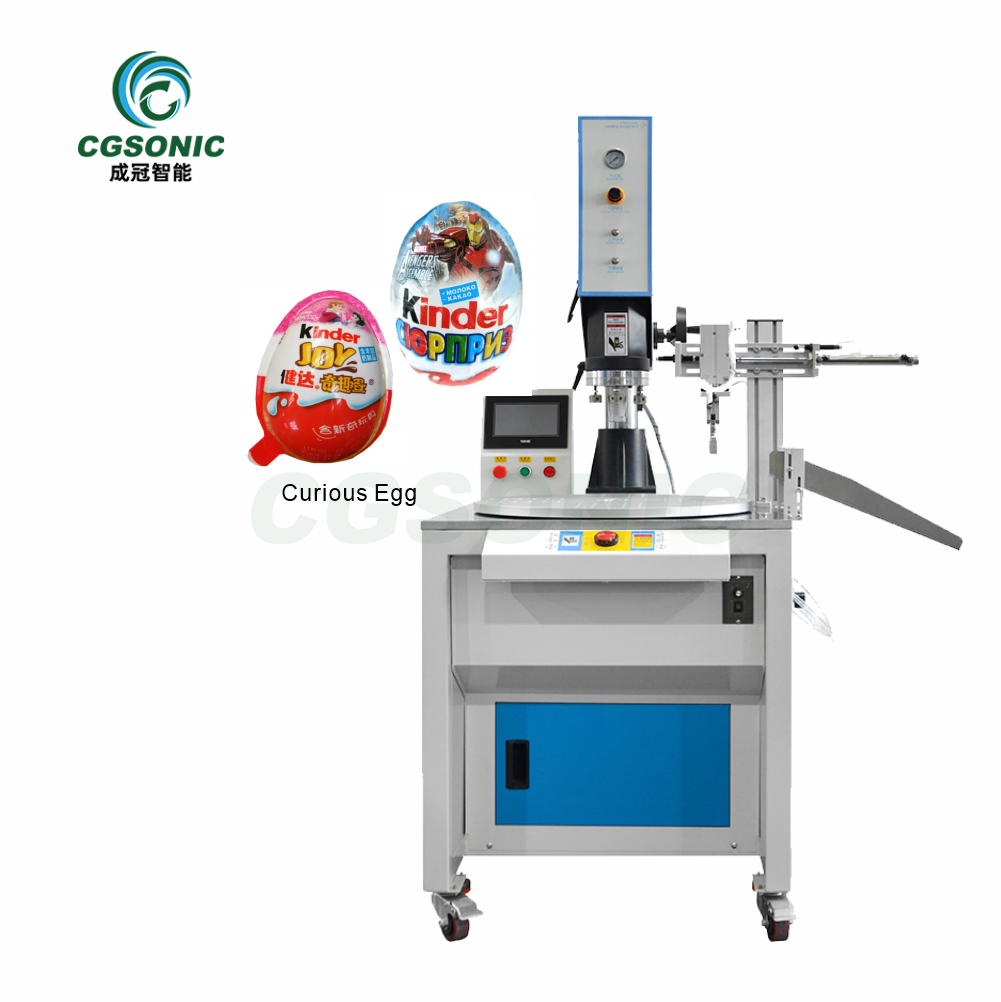
- Custom integrated type: embeds the ultrasonic welding module into an automated line, combined with robots, rotary tables, and vision inspection for fully automatic production. Suited to large-scale manufacturing with annual volumes above 500,000 pieces.
Tip: don't blindly chase high-end machines. A pneumatic machine is perfectly adequate for simple, low-volume products — over-buying servo machines only adds budget pressure and maintenance complexity. Conversely, running a pneumatic machine on high-volume precision products makes yield unstable, and the downtime losses far outweigh the price difference.
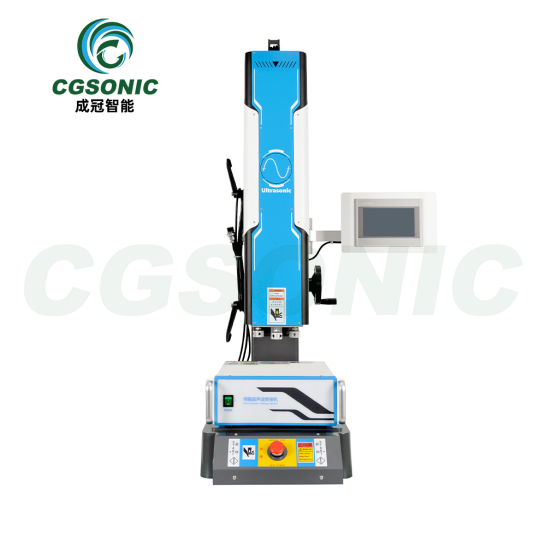
5. Focus on the generator's core functions — the brain of the machine
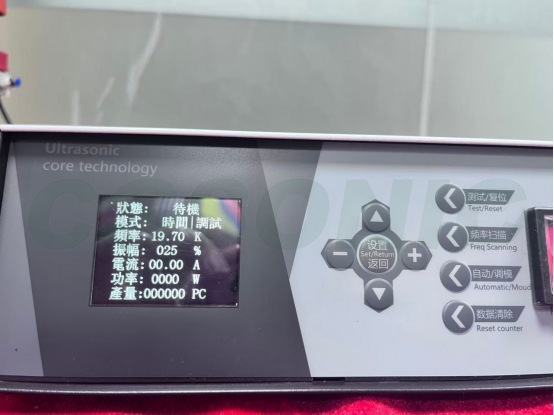
The generator is the brain of an ultrasonic welder: it converts mains power into a high-frequency electrical signal to drive the transducer. The performance gap between new and old generators is large and directly determines welding stability.
Generator functions you must confirm before buying
- Auto frequency tracking (digital generator): automatically locks onto the transducer's resonant frequency, keeping performance stable over long runs. Old analog units need manual tuning, drift during production, and deliver hit-or-miss weld quality.
- Multiple welding modes:
- Time mode: stops at a preset time — suited to routine products with stable materials
- Energy mode: stops at a preset energy — compensates for material batch variation and steadies yield
-
Depth mode: stops at a preset welding depth — suited to products with tight dimensional requirements
- Parameter recipe storage: parameters for different products are stored separately and recalled with one key when switching products, avoiding repeated tuning. Choose a machine that can store at least 10 recipes.
- Overload alarm and protection: automatically shuts down and protects the machine when a welding anomaly occurs (horn striking the fixture, missing material, etc.), preventing damage to the horn and transducer.
- Welding data output: high-end generators can output energy, time, and depth data for every weld, supporting MES integration for quality traceability.
Tip: firmly avoid old analog generators. They are 20%–30% cheaper, but they have poor noise immunity, frequent parameter drift, and no data traceability. In mass production, the scrap losses from unstable welding far exceed the price difference.
6. Horn and tooling fixtures — what ultimately determine weld quality
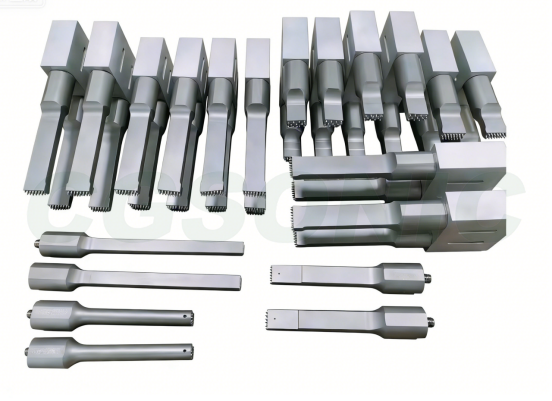
Even the best main unit cannot make good parts without a good horn and fixture. The horn (sonotrode) and tooling fixtures are the most easily overlooked part of selection, yet they have an enormous impact on weld quality.
Horn material comparison
|
Material |
Service life |
Price |
Suitable scenarios |
|
Aluminum alloy |
Medium (100,000–300,000 cycles) |
Low |
Small-to-medium batches, prototyping |
|
Titanium alloy |
Long (500,000–1,000,000+ cycles) |
Medium–High |
Continuous high-volume production, high fatigue-strength requirements |
|
Alloy steel |
Long |
Medium |
Special high-wear scenarios, but heavy and hard to machine |
Horn and fixture selection points
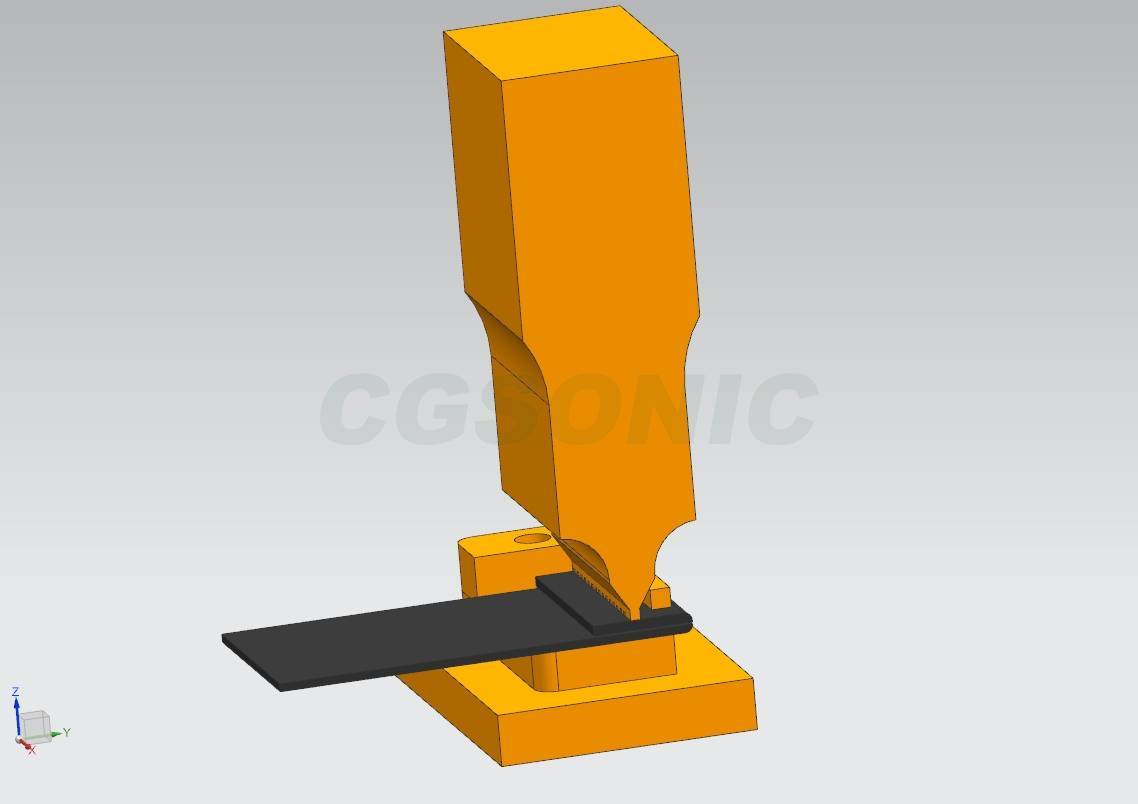
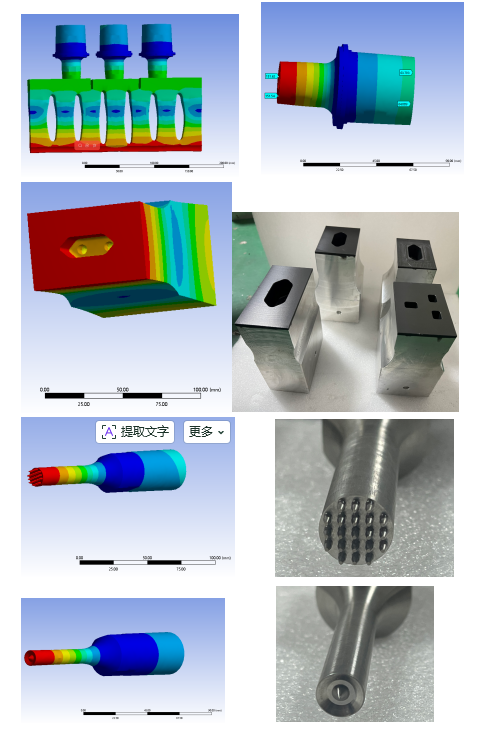
- Irregular products mostly need custom horns and positioning fixtures: standard horns only suit flat, regular welding faces; curved, stepped, or multi-point products must be custom designed. Confirm the supplier's custom-horn capability before purchasing.
- For continuous high-volume production, choose titanium horns first: titanium's fatigue life is 3–5 times that of aluminum, so although the unit price is higher, the per-part cost is actually lower, and horn-change downtime is reduced.
- Fixture (nest) precision is just as critical: nest positioning accuracy directly affects weld alignment. CNC-machined nests are recommended, combined with locating pins or vacuum hold-down for the part.
- Horn design and frequency matching: a 20kHz horn is fairly large (about 130–250mm overall length) while a 40kHz horn is smaller (about 50–90mm); the design must ensure half-wavelength resonance precision.
Tip: before purchasing, confirm whether the supplier can design custom horns and fixtures from your product drawings, and ask for the horn's finite element analysis (FEA) report to verify the resonant frequency and amplitude-distribution uniformity.
7. Evaluate supplier strength and after-sales service
Cheap equipment saves money up front but tends to fail frequently in mass production, causing downtime losses. Supplier evaluation is the last gate of the selection process — and the easiest place to fall into a trap.
Supplier evaluation checklist
|
Evaluation item |
Key question |
Qualification standard |
|
Pre-sales prototyping |
Can you provide sample welding tests? |
Free or low-cost prototyping with a test report |
|
Warranty period |
How long is the warranty on core components (generator, transducer)? |
≥12 months, including on-site repair |
|
Parts supply |
What is the lead time for consumables such as horns and transducers? |
Standard parts ≤7 days; custom parts ≤15 days |
|
Technical support |
Is online commissioning guidance available? On-site training? |
24/7 online + free on-site visits in the first year |
|
Custom development |
Is custom development supported for non-standard projects? |
In-house design team that can produce solution drawings |
|
Industry experience |
Are there success stories in the same industry? |
Customer references or on-site visits available |
|
Certifications |
Does the equipment carry CE / ISO certification? |
CE certification is mandatory for exported products |
Tip: compare at least 3 suppliers and get a prototyping test report from each before deciding. Never compare price alone — a few thousand yuan saved on the machine can be wiped out by a single line stoppage that costs tens of thousands.
Selection decision flowchart
Confirm welding materials & quality requirements
→
Decide whether the material can be ultrasonically welded
→
Select frequency by product size
→
Select power by welding area
→
Select machine type by production volume
→
Confirm generator functions
→
Confirm horn and fixtures
→
Evaluate suppliers
→
Place the order
Follow this flow step by step — each step has clear decision criteria, so nothing important gets
|
Selection dimension |
Basic configuration |
Standard configuration |
High-end configuration |
|
Frequency |
20kHz |
20kHz / 35kHz |
20kHz + 40kHz dual frequency |
|
Power |
800–1200W |
1500–2600W |
3000W+ (with margin) |
|
Drive method |
Pneumatic |
Pneumatic / Servo |
Servo (multi-stage profiles) |
|
Generator |
Digital frequency tracking |
Digital tracking + multiple modes |
Digital + data output + MES integration |
|
Horn material |
Aluminum alloy |
Titanium alloy |
Titanium alloy + FEA-optimized design |
|
Fixture |
Standard nest |
CNC-custom nest |
Vacuum hold-down + vision positioning |
|
Applicable volume |
<50,000 pieces/year |
50,000–500,000 pieces/year |
>500,000 pieces/year |
|
Budget reference |
Low |
Medium |
High |
Common selection mistakes and pitfall checklist
Mistake 1: Comparing prices only, without welding tests on physical samples.
Even with identical specs, equipment from different suppliers can differ greatly in actual welding results. Numbers on a spec sheet cannot replace real prototype validation. Right approach: ask at least 3 suppliers to run welding tests on your actual samples and compare weld strength, appearance, and yield.
Mistake 2: Squeezing the budget and choosing underpowered equipment.
Insufficient power causes persistent cold-weld defects and a stubbornly high scrap rate. The few thousand yuan saved on the machine can be eaten up by scrap costs within a month. Right approach: match power to welding area and leave a 20% margin.
Mistake 3: Focusing only on the main machine's price while ignoring horn and fixture quality.
Horns and fixtures are what determine final weld quality. A poor-quality horn has uneven amplitude distribution, causing localized over-welding and localized cold welds. Right approach: include horn and fixture costs in the total budget and require the supplier's horn FEA report.
Mistake 4: Blindly buying high-end servo machines for simple, low-volume products.
Servo machines are precise, but for simple products that precision is overkill. The extra budget would be better spent on a better horn or spare parts. Right approach: match the machine type to your volume and quality requirements and avoid paying for unused capability.
Mistake 5: Not evaluating the supplier's after-sales capability — nobody to fix the machine when it fails.
In mass production, every hour of downtime can cost thousands of yuan. If the supplier cannot promptly provide parts or technical support, losses keep compounding. Right approach: confirm warranty terms, parts lead times, and technical-support response times before signing.
Frequently Asked Questions (FAQ)
Q1: What is the difference between 20kHz and 40kHz ultrasonic welding machines?
A 20kHz machine delivers high vibration energy, suited to medium-to-large plastic parts and thick-walled products — it is the mainstream machine on the market. A 40kHz machine has a smaller amplitude, suited to small thin-walled parts, cosmetic parts, and electronics accessories, reducing burn damage and pressure marks. In short: low frequency for large parts, high frequency for fine, small parts.
Q2: How do I choose ultrasonic welding power?
Choose 800–1200W for welding areas within 50mm, 1500–2600W for regular medium-sized plastic products, and 3000W or above for large, complex workpieces. For continuous batch production, leave a 20% power margin to prevent generator overload alarms.
Q3: What is the difference between servo and pneumatic ultrasonic welders?
A pneumatic welder is cylinder-driven: simple to operate and cost-effective, suited to small-batch prototyping and pilot runs. A servo welder controls welding depth with a servo motor, achieving 0.01mm precision with excellent consistency — suited to high-volume production and products with strict quality requirements.
Q4: Which material is best for ultrasonic horns?
Aluminum alloy horns are cost-effective and suit small-to-medium batch production; titanium alloy horns have 3–5 times the fatigue life of aluminum and suit continuous high-volume production; alloy steel horns are wear-resistant but heavy, for special high-wear scenarios. Before purchasing, confirm that the supplier can customize horns from your product drawings.
Q5: Should I do a welding prototype test before buying ultrasonic welding equipment?
Strongly recommended. Welding results vary greatly across materials and structures, and spec sheets alone cannot tell you how the welds will actually turn out. Reputable suppliers should offer free or low-cost sample welding tests; place the formal order only after the prototype passes.
Q6: What is the difference between digital and analog generators?
A digital auto-tracking generator automatically locks onto the transducer's resonant frequency and stays stable over long runs; it supports time/energy/depth welding modes and can store parameter recipes. Analog generators have poor noise immunity, drift easily in production, and deliver hit-or-miss weld quality — they are gradually being phased out.
Q7: Which plastics are not suitable for ultrasonic welding?
Soft plastics such as PP and PE can be welded, but they need low energy and are hard to weld; materials like PTFE (Teflon) are virtually impossible to weld ultrasonically; for dissimilar-material welding, confirm the two melting points are within 20°C of each other, otherwise reliable fusion is difficult. When in doubt, sending samples for a prototype test is the safest approach.
Summary
There is no universally perfect ultrasonic welding machine — only the machine that fits your product. Start selection from the material: determine whether it can be welded and what the quality requirements are. Then choose frequency by product size, power by welding area, and machine type by production volume. Next, take a close look at generator functions and custom horn/fixture capability. Finally, verify the supplier through prototype testing.
- Core principle: spec sheets are only a reference — physical prototype testing is the truth. Complete sample welding validation before placing the formal order, so you know the machine can consistently produce qualified products.