






How Ultrasonic Food Cutting Reduces Production Waste and Improves Yield
How Ultrasonic Food Cutting Reduces Production Waste and Improves Yield
Ultrasonic food cutting is one of the most direct ways to reduce production waste and improve yield on a modern food processing line. Conventional knives, wire cutters and band saws separate food by compression and sawing force, which triggers sticking, smearing, crumbling, deformation and unstable portion weight — every one of those defects raises the scrap rate and pushes the qualified product rate down. This guide explains what ultrasonic food cutting is, the six mechanisms through which it cuts waste and lifts yield, how it compares with traditional cutting, how much yield improvement a plant can realistically expect, and how to calculate the payback before you invest.
Key Takeaways
- Ultrasonic food cutting separates food with 20–40 kHz micro-amplitude vibration instead of compression, so it is a low-pressure, low-friction, near-cold cutting process.
- The three biggest waste reducers are: no sticking or smearing on the blade, a much narrower kerf loss, and stable portion weight.
- Most bakery, dairy and confectionery plants report a 1%–4% yield gain after switching to an ultrasonic food cutter; high-value products recover the investment fastest.
- Because the product needs only mild chilling instead of deep freezing, energy cost and freeze-induced quality loss both drop.
- Ultrasonic cutting protects layered and aerated structures, so rejects caused by collapse, layer shifting and filling squeeze-out drop significantly.
1.What Is Ultrasonic Food Cutting?
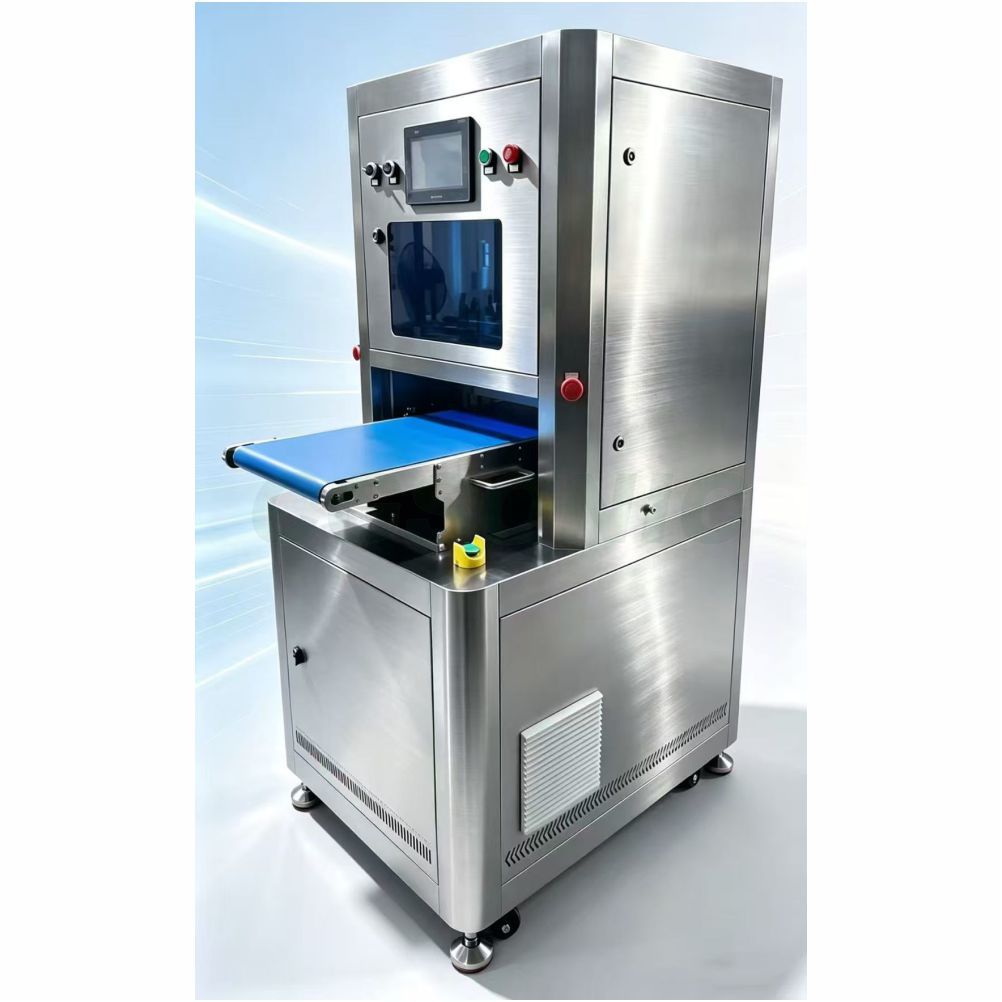
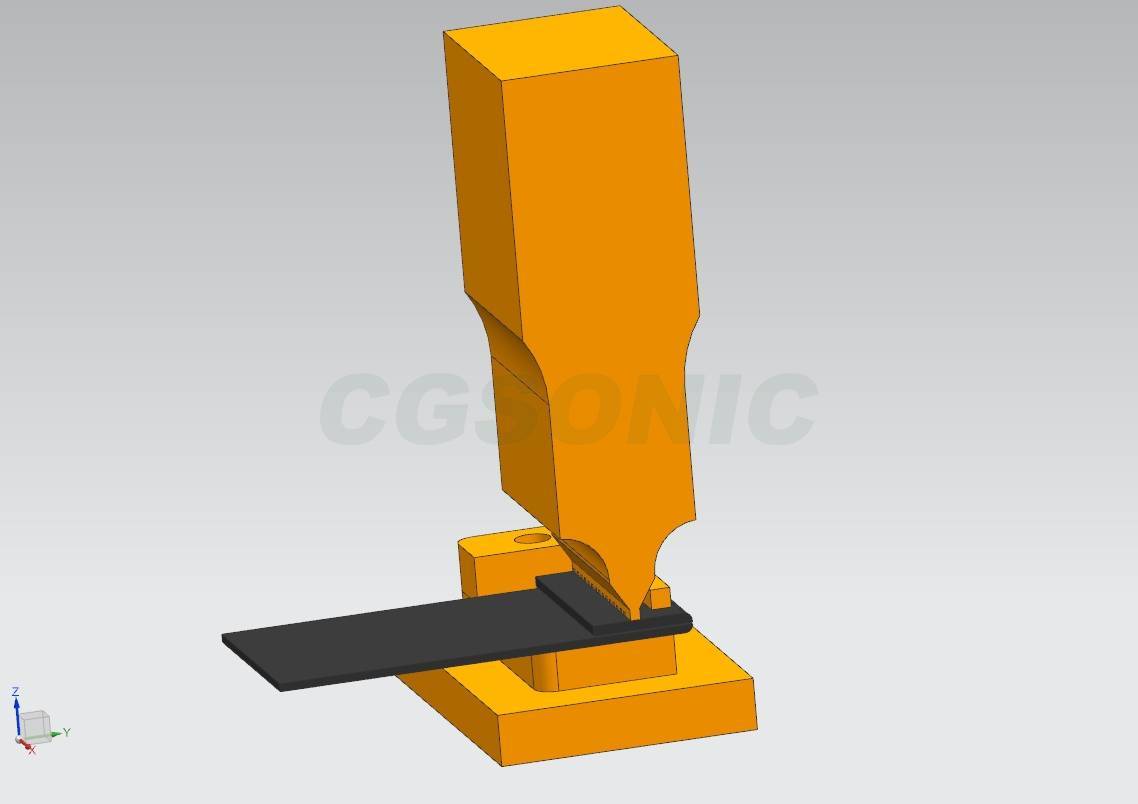
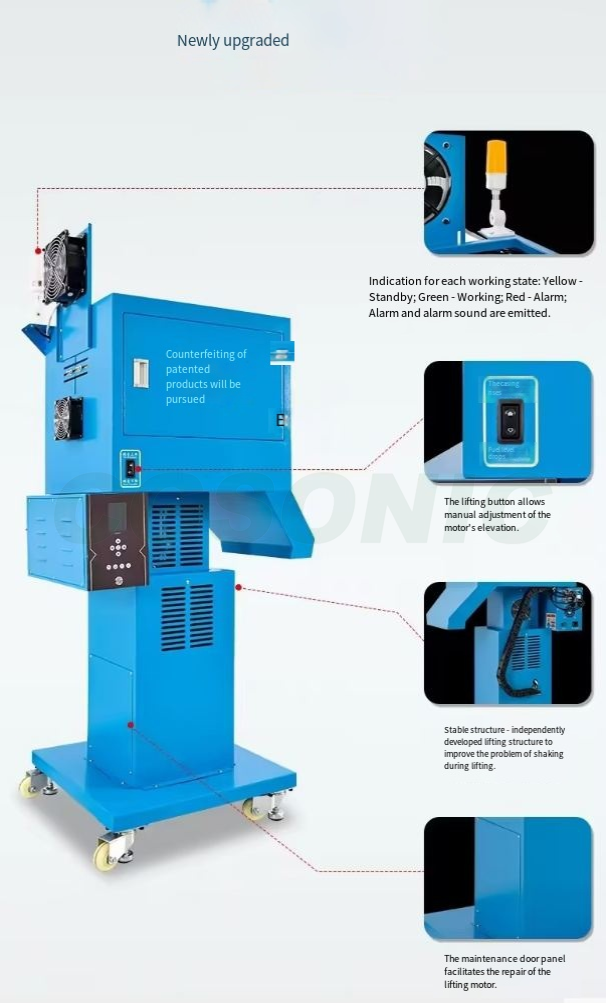
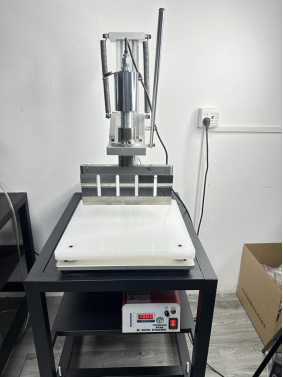
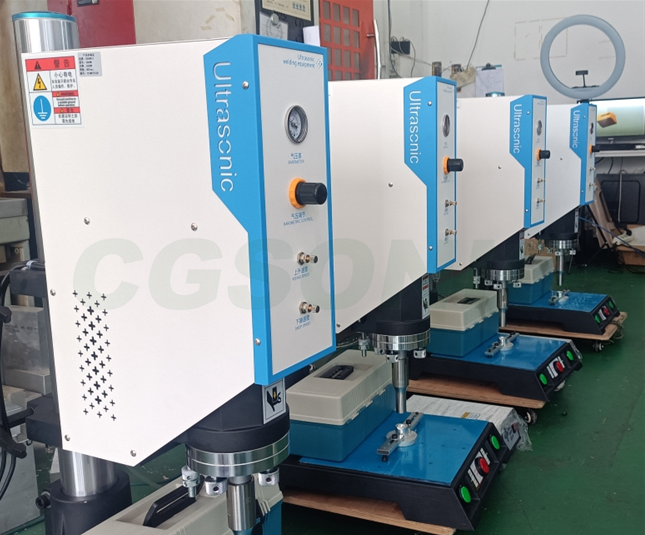
Ultrasonic food cutting is a cold, low-pressure slicing technology. An ultrasonic generator converts mains power into a high-frequency electrical signal, typically 20 kHz or 40 kHz. A piezoelectric transducer converts that signal into mechanical vibration; a booster (amplitude transformer) scales the amplitude; and a food-grade titanium blade delivers micro-amplitude vibration — usually 10–60 µm — into the product. Because the blade oscillates tens of thousands of times per second, a low-friction separation layer forms between the blade face and the food. The product separates under almost no pressure, with no sawing, no tearing and no meaningful heat build-up. That single physical difference is the root cause of nearly every waste and yield advantage that follows.
System components
- Ultrasonic generator — converts 50/60 Hz mains power into 20/40 kHz high-frequency electrical energy.
- Piezoelectric transducer — turns electrical energy into mechanical vibration.
- Booster / amplitude transformer — adjusts vibration amplitude to match the product.
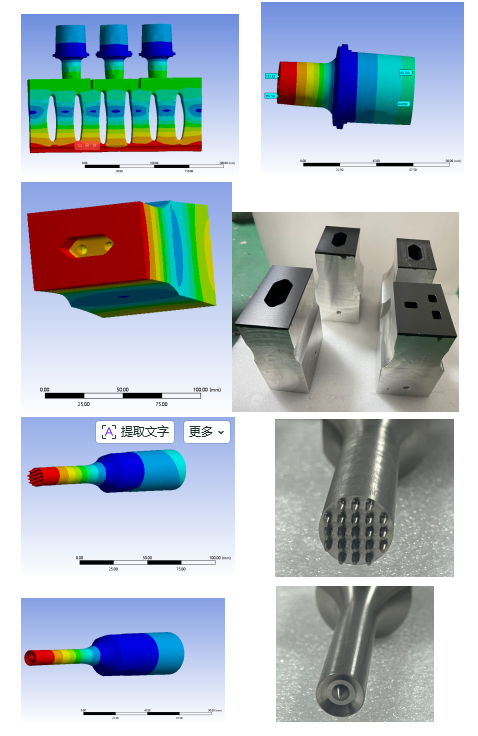
- Food-grade titanium blade (sonotrode/cutting horn) — delivers vibration to the product; corrosion-resistant, easy to sanitize.
- Automation frame / servo handling — ensures repeatable portion size, cutting speed and indexing.
2.Why Traditional Cutting Creates Waste: Five Root Causes
Before measuring the benefit, it helps to locate where the loss actually comes from. On most bakery, dairy, confectionery and frozen food lines, waste concentrates in five places.
✅ Compression deformation
A static blade has to push the product apart. Soft, aerated or layered items collapse under that pressure, and the deformed pieces cannot be sold as premium grade.
✅ Adhesion and smearing re to the blade. Residue smears across the next cut face, producing dirty, off-spec surfaces that get rejected in QC.
✅ Wide kerf and crumb loss
Band saws and thick blades remove a measurable strip of product on every cut and turn it into crumbs or sawdust. On high-value ingredients, kerf loss alone can consume several percent of raw material.
✅Portion weight deviation
Manual and semi-mechanical slicing produce overweight and underweight portions. Overweight portions give away margin; underweight portions fail label compliance. Both end as rework or scrap.
✅Over-freezing and cleaning downtime
Many plants deep-freeze soft desserts before cutting purely to stop sticking. That costs energy and damages texture, while start-up and blade-cleaning stops generate extra off-spec product every time the line restarts.
3.Six Mechanisms: How Ultrasonic Cutting Cuts Waste and Raises Yield
High-frequency vibration breaks the adhesion between the blade and sticky food such as cream, mousse, soft cheese, nougat and caramel fillings. Almost no residue stays on the titanium blade, so smeared, deformed and dirty-surface rejects fall sharply. For cake plants, an ultrasonic cake cutter keeps cream cut faces clean instead of smeared. Fewer blade-cleaning stops also mean less downtime waste and less start-up scrap after every reset.
Narrow kerf loss: higher raw-material utilization
A traditional saw blade removes a wide kerf and converts sellable food into crumbs. The ultrasonic titanium blade is extremely thin, so kerf loss stays at a very low level and more raw material becomes sellable portion instead of trim waste. For premium cheese, chocolate, nougat and frozen desserts, even a one-percent waste reduction delivers a remarkable return on investment.
No crushing or tearing: protect layered and aerated structure
Multi-layer cakes, tiramisu, brownies, cereal bars, filled confectionery, sandwiches and puff pastry tend to collapse, shift layers or squeeze out filling under conventional cutting pressure. Ultrasonic slicing separates food with vibration energy instead of force, so layers stay aligned, the aerated texture survives and the original shape holds. The result is fewer broken, leaking and disqualified portions.
Consistent portion weight and dimensions: fewer off-spec rejects
Paired with servo automation, ultrasonic cutting delivers repeatable cut dimensions and uniform portion weight. Manual cutting and ordinary mechanical slicing routinely produce overweight and underweight pieces that fail QC. Stable portion control directly lowers the non-conforming rate, reduces giveaway, and makes downstream packaging and labeling far smoother.
Wider process window: less over-freezing, less secondary loss
Many soft desserts must be deeply frozen before conventional cutting to avoid sticking, which consumes extra energy and risks texture damage. Ultrasonic food cutting works reliably at mildly chilled temperatures. Plants can shorten blast-freezing time, avoid quality degradation from excessive freezing, and cut secondary quality loss while saving refrigeration energy.
Less manual sorting and rework: lower human secondary damage
Clean, uniform cuts mean far fewer defective pieces requiring manual inspection and rework. Sorting labour drops, and the probability of operators damaging products while handling rejects falls at the same time.
4.Where the Yield Gain Comes From, by Product Category
The dominant waste mechanism differs by product, so the yield gain shows up in different line items. Use the table below as a diagnostic checklist when you audit your own line.
| Product Category | Main Waste Under Traditional Cutting | Primary Yield Gain from Ultrasonic Cutting |
| Cream / mousse cake | Cream smearing on cut face, blade sticking, shape collapse | Clean cut face, no sticking, intact shape |
| Multi-layer cake, tiramisu | Layer shifting, filling squeeze-out | Layers aligned, no leakage |
| Cheesecake, soft cheese | Blade dragging, rough surface, heavy kerf loss | Smooth cut surface, minimal kerf |
| Nougat, caramel, marshmallow | Severe adhesion, deformed pieces, frequent stops | Continuous cutting, low adhesion |
| Brownie, cereal bar, energy bar | Crumbs, edge breakage, weight deviation | Narrow kerf, clean edge, stable weight |
| Frozen cake, ice cream dessert | Deep-freeze energy cost, cracking, texture damage | Mild-chill cutting, no cracking |
| Sandwich, pizza, filled protein bar | Compression flattening, filling displacement | Zero-pressure separation, filling stays in place |
5.Ultrasonic Food Cutting VS Traditional Cutting
| Comparison Dimension | Traditional Cutting (Knife / Wire / Band Saw) | Ultrasonic Food Cutting |
| Cutting force | Compression and sawing, high pressure | Micro-amplitude vibration separation, near-zero pressure |
| Friction & sticking | High friction; cream and filling stick to blade | Ultra-low friction separation layer, no sticking |
| Kerf loss | Wide kerf, heavy crumb and sawdust waste | Ultra-thin titanium blade, minimal kerf loss |
| Layer integrity | Collapse, layer shift, filling squeeze-out | Layers intact, aerated texture preserved |
| Portion accuracy | Large deviation, overweight/underweight rejects | Servo-controlled repeatability, tight weight tolerance |
| Heat impact | Friction heat, risk of melting chocolate or cream | Cold cutting, negligible heat build-up |
| Cleaning downtime | Frequent blade cleaning stops | Long continuous runs, less downtime waste |
| Scrap rate & yield | High scrap rate, unstable qualified product rate | Lower reject rate, typically +1%–4% yield |
| Hygiene | Blade residue accumulates, higher contamination risk | Food-grade titanium, quick strip-down and sanitizing |
6. Food Products Suitable for Ultrasonic Cutting
- Bakery: mousse cake, cream cake, cheesecake, Swiss roll, tiramisu, brownie, sheet cake, toast, puff pastry. Our ultrasonic cake cutter is optimized for exactly these high-throughput bakery lines.
- Confectionery & snacks: chocolate, nougat, marshmallow, energy bar, cereal bar, filled candy.
- Dairy: soft cheese, processed cheese blocks, cream cheese portions.
- Frozen food: frozen cake, ice cream dessert, frozen baked goods.
- Ready-to-eat: sandwich, pizza, filled protein bar.
7.How to Calculate the ROI of a Yield Improvement
Yield improvement is only convincing when it is expressed in money. Use this four-step formula: (1) record your current daily output and overall qualified product rate as a baseline; (2) estimate the post-conversion yield from sample cutting tests; (3) multiply the reduced reject count by the unit cost of raw material plus processing; (4) subtract the annualized equipment cost to get net annual saving, then divide by the investment to get the payback period.
8. Implementation Checklist for Food Plants
- Run a sample cutting test on your real product at your real line temperature, and record the cut-face quality before and after.
- Define the product temperature window — most products cut best in a mildly chilled state, not deeply frozen.
- Select frequency and amplitude (20 kHz for thicker/tougher products, 40 kHz for fine, delicate, high-precision portions).
- Integrate with servo indexing, conveyor and portion-control automation to lock in repeatable dimensions.
- Establish a baseline for kerf loss, scrap rate and qualified product rate before installation, so the improvement is measurable.
- Write a blade strip-down, cleaning and sanitizing SOP that fits your HACCP or food hygiene system.
- Train operators on amplitude setting, blade inspection and vibration-system start-up checks.
9. FAQ
Q: Does ultrasonic food cutting heat up food or melt cream and chocolate?
A: Normal ultrasonic cutting is a cold cutting process. Vibration energy concentrates on the separation interface, and heat build-up is negligible when the system is correctly tuned and not run continuously at excessive amplitude. It will not melt chocolate coatings or cream fillings — this is one of the core advantages of an ultrasonic cake cutter over friction-based sawing.
Q: How much can ultrasonic food cutting improve yield?
A: It depends on product type, recipe and your original cutting process. Most bakery, dairy and confectionery plants see a 1%–4% yield gain after switching to ultrasonic food cutting. For high-value products such as premium cheese, chocolate and frozen desserts, the absolute saving per percentage point is much larger, so the return is especially attractive.
Q: Is the ultrasonic cutting blade food-grade and easy to clean?
A: Yes. The cutting blade is made of food-grade titanium alloy, which resists corrosion and does not react with acidic or fatty food. It can be disassembled quickly for washing and sanitizing, and it complies with the hygiene requirements of food processing lines.
Q: Can one ultrasonic cutting machine handle both frozen and sticky products?
A: In most cases yes. By changing the blade geometry and adjusting frequency and amplitude, a single ultrasonic food cutting machine can run frozen desserts, sticky nougat, cream cakes and soft cheese on the same frame. Confirm the range with a multi-product sample test before purchase.
Q: What is the payback period for an ultrasonic food cutting machine?
A: For medium and high-volume lines, the payback is typically driven by three savings: higher yield, less giveaway from overweight portions, and lower energy and labour cost. Plants running premium products at volumes above roughly 10,000 pieces per day often recover the investment within 12–24 months; use the four-step calculation in Section 7 with your own numbers.
Q: Does ultrasonic cutting change the taste, texture or shelf life of food?
A: No. Because the process is low-pressure and near-cold, the internal structure, moisture and flavour of the product are preserved. Cleaner cut faces can even support shelf life, since torn surfaces and crumbs expose more area to oxidation and microbial contamination.
Q: Can an existing production line be retrofitted with ultrasonic cutting?
A: Yes. Most retrofit projects keep the existing conveyor and packaging equipment and add an ultrasonic cutting station with generator, transducer, booster and titanium blade, plus a servo indexing unit. The critical checks are line speed matching, product height clearance and the cleaning access around the cutting zone.
10. Final Summary
Raw material waste and unstable yield are two of the largest cost drains in food processing. Ultrasonic food cutting delivers clean, low-pressure, low-friction slicing for soft, sticky, layered and frozen products. It reduces kerf loss, eliminates sticking and smearing, stabilizes portion accuracy and protects internal structure — helping manufacturers maximize usable raw material, lower the reject rate and improve line profitability.
If you are evaluating an ultrasonic food cutting solution for a bakery, dairy, confectionery or frozen food line — including our most popular ultrasonic cake cutter — contact our team for sample cutting tests and process consultation. Send us your product type, target portion weight and line speed, and we will return a cutting report with a yield estimate.