





Ultrasonic Food Cutting: A Buyer’s Technical Guide
Ultrasonic Food Cutting: A Buyer’s Technical Guide
1. Quick Answer
Ultrasonic food cutting uses high-frequency mechanical vibration, commonly around 20 kHz or 35 kHz in the configurations discussed in this guide. The vibrating blade can reduce continuous contact and cutting compression, which may help reduce sticking, crumbs and deformation in suitable food products. Actual performance depends on product formulation, temperature, dimensions, blade geometry, amplitude, cutting speed and operating conditions. Application testing on the customer's actual product is recommended before final equipment selection.
2. Conventional Cutting Problems
Pain Point 1 — Blade sticking
EN: Soft and sticky products such as cheese, butter, caramel, chocolate and nut-based products can adhere to conventional blades. The resulting cleaning frequency and production interruptions depend on product temperature, formulation and cutting conditions.
Pain Point 2 — Crumbs and rough edges
EN: Layered cakes, sandwich bread, frozen pastries and filled products may compress or fracture during conventional cutting. The amount of crumbs and edge damage varies with product structure, temperature and blade condition.
Pain Point 3 — Product deformation
EN: Soft mousse, cheesecake, frozen desserts and some chocolate products can deform when the blade applies excessive lateral or downward force. The actual deformation level should be measured on the customer's product.
3. How Ultrasonic Food Cutting Works
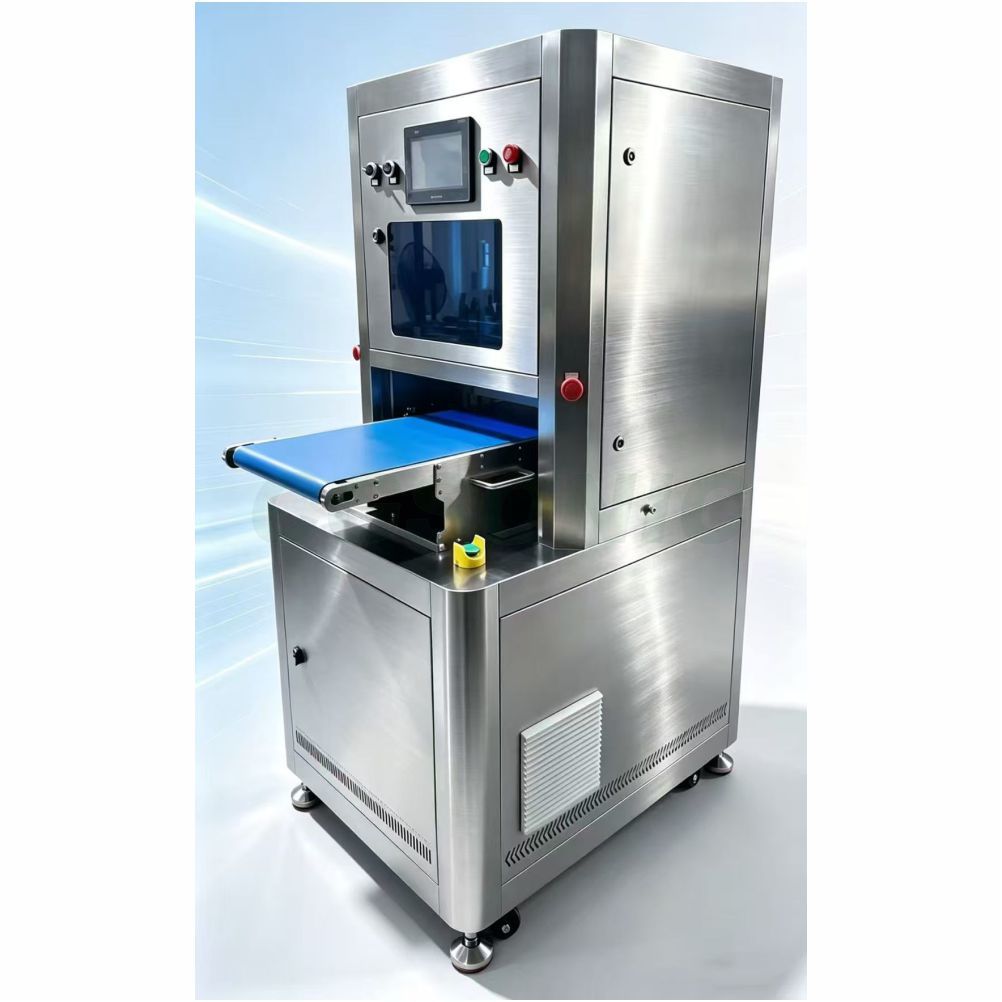
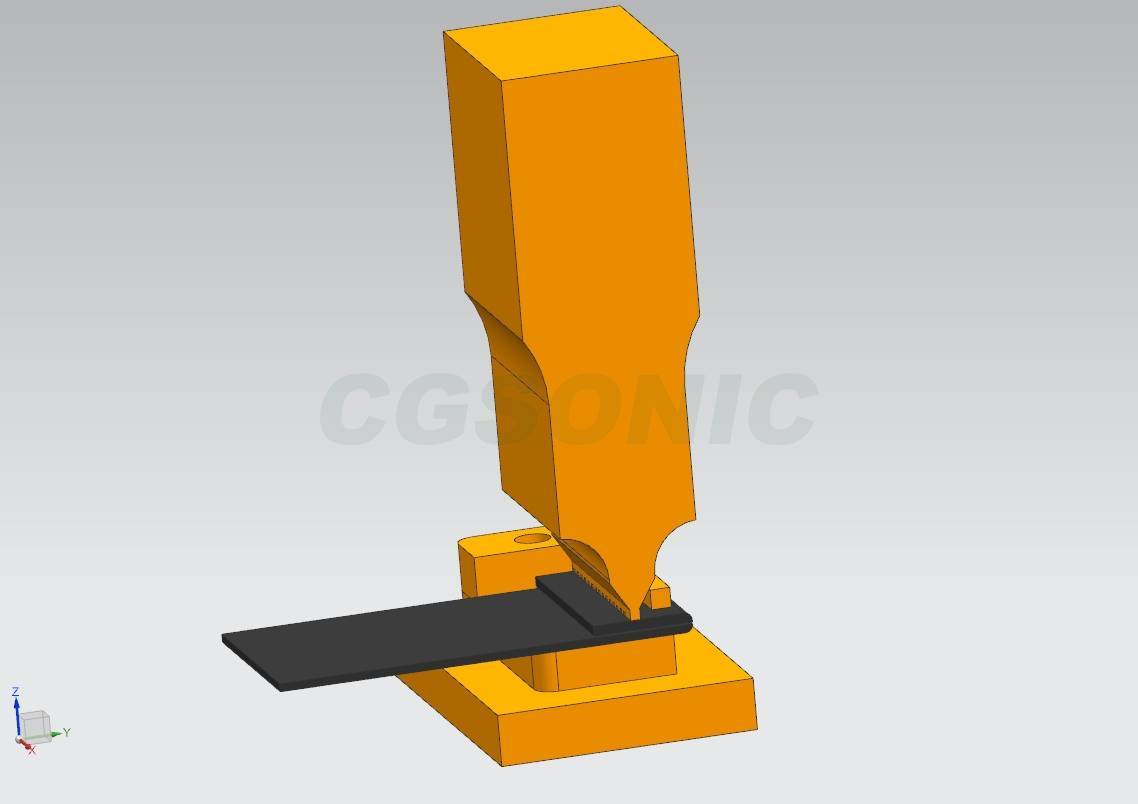
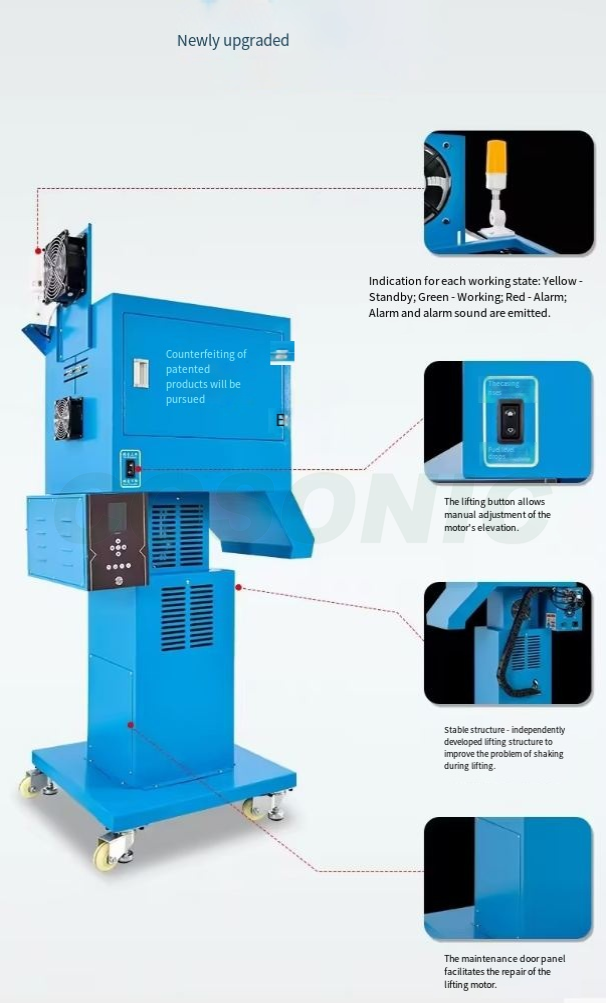
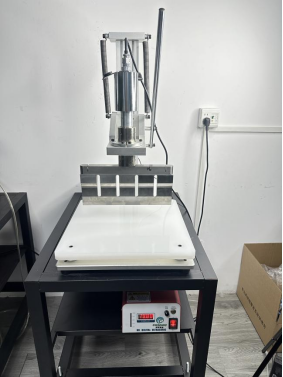
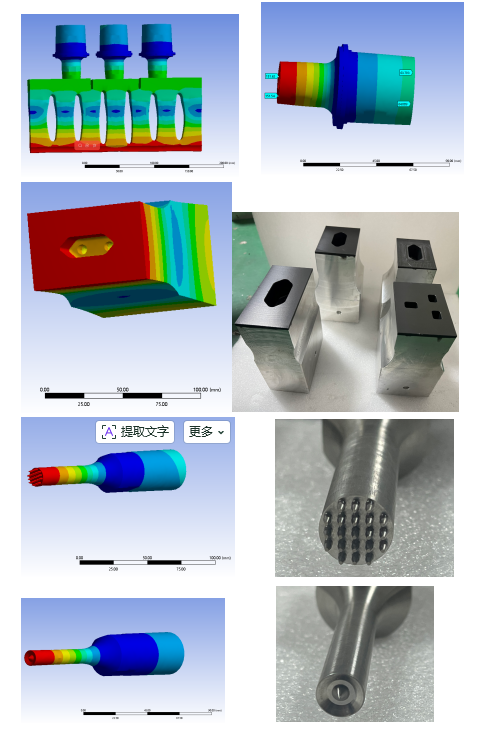
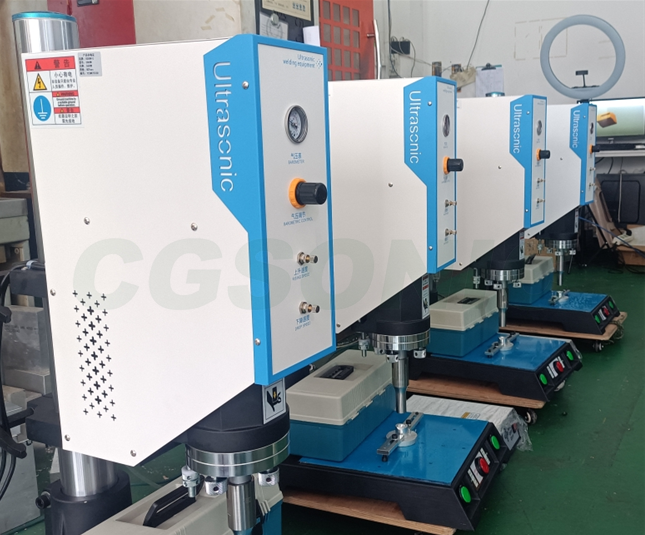
EN: A typical ultrasonic cutting system includes a generator, piezoelectric converter, optional booster and vibrating cutting blade. The generator drives the converter at the selected operating frequency. Mechanical vibration is transferred through the acoustic stack to the blade. During cutting, the vibrating blade can reduce continuous blade-product contact and the force required to separate the product. The practical result depends on blade geometry, amplitude, frequency, product properties and cutting speed.
Important technical note
EN: The previous version described a 'micro air layer' and stated that friction was reduced to a fraction of conventional cutting. Unless these mechanisms have been demonstrated by your own test data or a traceable technical source, they should not be presented as quantified facts. This revision therefore uses the more defensible wording 'reduce continuous contact and cutting friction'.
4. Seven Practical Advantages
1. Reduced blade sticking
EN: High-frequency vibration can reduce adhesion in suitable sticky products. The degree of improvement should be verified with the actual formulation and temperature.
2. Cleaner cutting
EN: Reduced compression can help maintain cleaner cross-sections in soft, layered and filled products. 'Zero crumbs' should not be promised without a defined test method.
3. Reduced deformation
EN: For soft products, the lower mechanical compression associated with ultrasonic cutting may help preserve shape and height. Measure deformation before making a numerical performance claim.
4. Product range expansion
EN: Potential applications include cakes, mousse, cheese, butter, chocolate, confectionery, frozen foods and bars. Suitability is product-specific rather than universal.
5. Cleanable cutting design
EN: Titanium or stainless-steel cutting components can be used depending on the machine design. Food-contact material declarations and applicable compliance documents should be confirmed for the actual configuration.
6. Potential waste reduction
EN: If testing confirms fewer crumbs and less deformation, yield can improve. The financial benefit should be calculated from the customer's actual production volume, material cost and measured cutting loss.
7. Automation integration
EN: Ultrasonic cutting stations can be integrated with conveyors, positioning systems, encoders and robotic handling when the mechanical, electrical and control interfaces are compatible. Integration scope must be specified for each line.
5. Application Matrix
The following matrix is a starting point, not a final specification. Frequency selection must be confirmed by product testing.
|
Product |
Typical condition to verify |
Initial frequency |
Key result to test |
Key variables |
Recommendation |
|
Layered / mousse cake |
Product temperature, layer structure, thickness |
20 kHz |
Clean vertical cut, layer integrity |
Amplitude, blade geometry, speed |
Sample test |
|
Soft cheesecake / tiramisu |
Temperature, filling viscosity |
20 kHz |
Collapse and smear |
Blade geometry, speed |
Sample test |
|
Cheese |
Hardness, fat content, temperature |
20 kHz |
Sticking and edge quality |
Amplitude, speed |
Sample test |
|
Butter block / cube |
Temperature, block size |
20 kHz |
Smearing and complete cut |
Blade thickness, speed |
Sample test |
|
Chocolate / filled chocolate |
Product temperature, shell/filling structure |
20 kHz |
Cracking, smear, deformation |
Amplitude, blade geometry |
Sample test |
|
Candy / nougat / fudge |
Hardness and stickiness |
20–35 kHz |
Break quality and shape |
Amplitude, speed |
Application test required |
|
Frozen pastry / pizza |
Product temperature, frozen hardness |
20 kHz |
Shatter and edge damage |
Blade geometry, speed |
Application test required |
|
Frozen meat / fish block |
Temperature, hardness, product dimensions |
20 kHz |
Portioning quality |
Blade strength, speed |
Application test required |
|
Nut / energy / protein bar |
Binder, hardness, moisture |
20–35 kHz |
Crumb and shape retention |
Amplitude, blade geometry |
Application test required |
|
Sandwich / filled bread |
Bread softness, filling viscosity |
20 kHz |
Filling squeeze-out |
Speed, blade geometry |
Application test required |
6. How to Select 20 kHz vs. 35 kHz
EN: Frequency should not be selected from the food name alone. The correct configuration depends on product hardness, structure, dimensions, required cutting speed, blade geometry and required amplitude. The 20 kHz and 35 kHz values in this guide should therefore be treated as starting points for application testing rather than universal rules.
7. ROI & Waste Reduction
EN: The previous version stated a 3–8% cutting-loss range and a 6–12 month payback period. These figures should only be published if they are supported by your own production records or a traceable external study. Without that evidence, use an application-specific calculation instead.
Recommended ROI calculation
Annual material saving = Annual production × Current cutting-loss rate × Measured reduction in cutting loss × Material cost
Annual labor saving = Reduced cleaning/handling hours × Loaded labor cost per hour
Annual downtime benefit = Recovered production hours × Contribution margin per production hour
Estimated payback period = Total project investment ÷ Annual quantified benefit
All inputs should be measured or supplied by the customer. Example calculations should be clearly labeled as examples, not guaranteed results.
8. Automation Line Integration
EN: Typical integration points may include inline cutting after extrusion or forming, conveyor cutting with encoder synchronization, and robotic loading/unloading. Before confirming a retrofit, the supplier and buyer should define conveyor width and speed, product positioning accuracy, installation space, electrical supply, PLC/I/O or communication requirements, safety guarding, and any pneumatic requirements.
9. What We Need for an Application Test
- Product name and formulation
- Product dimensions and target cut size
- Product temperature during cutting
- Daily operating hours
- Target cuts per minute or throughput
- Current cutting method and blade type
- Current problems: sticking, crumbs, deformation, filling squeeze-out
- Photos or short videos of the current cutting process
- Available conveyor, PLC and encoder information
10. FAQ
Q: Can ultrasonic cutting eliminate blade sticking?
EN: It can significantly reduce sticking in suitable products, but it is not appropriate to guarantee zero adhesion for every formulation. Product temperature, fat/sugar content, moisture, blade geometry, amplitude and cutting speed should be tested.
Q: Will ultrasonic cutting heat the product?
EN: Ultrasonic cutting is generally used as a cold-cutting process, but local temperature rise depends on operating conditions. For temperature-sensitive products, measure product temperature before and after cutting under continuous production conditions.
Q: How long does an ultrasonic blade last?
EN: There is no universal service-life number. Blade life depends on product hardness, operating hours, cutting frequency, amplitude, blade geometry and cleaning conditions. Define sharpening and replacement criteria through application testing and service records.
Q: Is ultrasonic cutting suitable for food-safety controlled production?
EN: The machine configuration should be evaluated against the customer's applicable food-contact and hygiene requirements. Confirm material declarations, surface/material specifications, cleaning procedures and any required certifications before purchase.
Q: Can it be integrated into an existing production line?
EN: Potentially, provided that the mechanical, electrical and control interfaces are compatible. A retrofit assessment should include conveyor dimensions and speed, product positioning, encoder/PLC signals, installation space, safety guarding and utility requirements.
11. Contact / Application Evaluation
EN: If you are evaluating ultrasonic cutting for bakery, dessert, chocolate, confectionery or frozen-food production, provide the product dimensions, product temperature, current cutting method, current cut-quality problems, target throughput and photos or samples. The engineering team can then evaluate the suitable frequency range, blade geometry and integration approach. Final specifications should be confirmed after application testing.