





Ultrasonic Food Cutting vs Traditional Knives: Capacity & Quality Comparison
Ultrasonic Food Cutting vs Traditional Knives: Capacity & Quality Comparison
Ultrasonic food cutting wins on cut quality, yield rate and uptime; traditional knives win on upfront cost for very simple, low-throughput tasks. If you cut sticky, soft, layered or frozen foods and want a stable, automatable, low-waste line, ultrasonic food cutting is the better choice. If you only cut firm, dry products at low volume and price is the only factor, traditional knives can still be sufficient. This page compares the two methods across finished quality, production capacity and total cost.

Round 1 — Finished Product Quality
✅ Ultrasonic Food Cutting
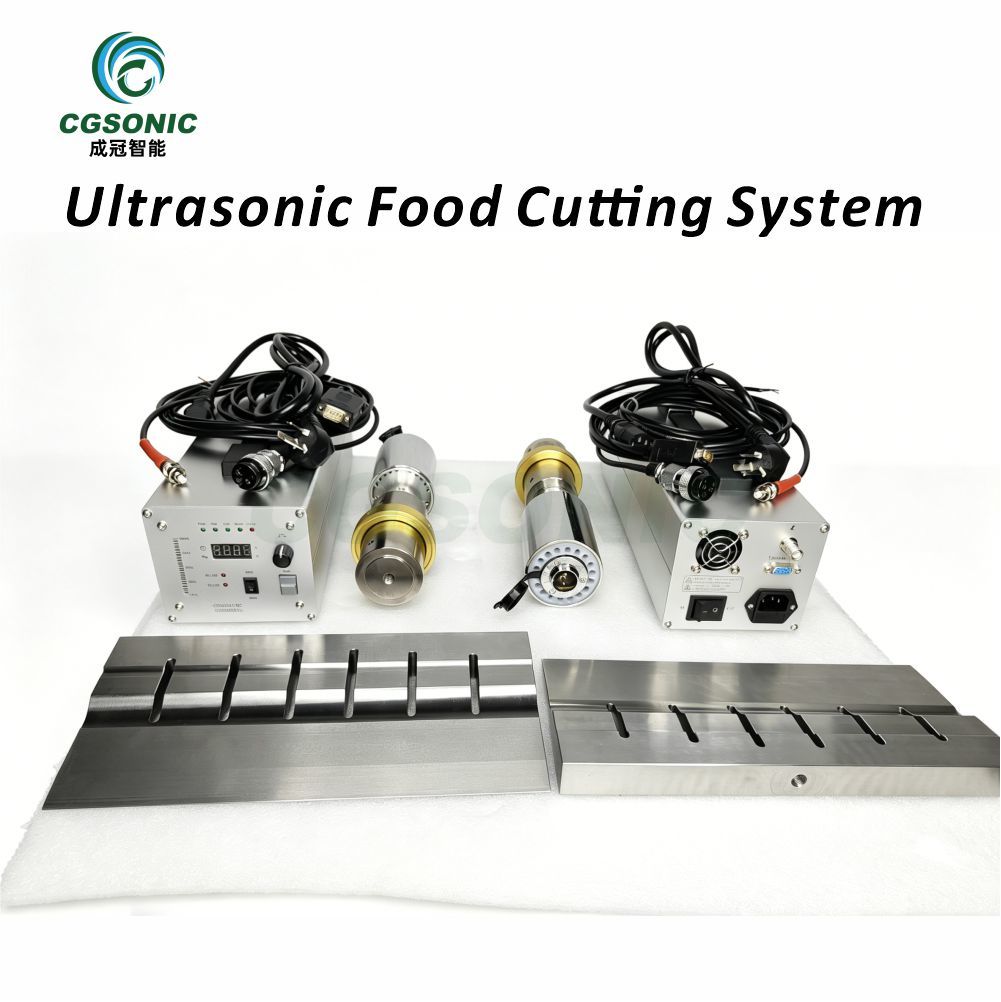
Cut surface is flat and smooth with no burrs, crumbs or stringing. Food hardly sticks to the blade. Layered pastries, chocolate and frozen desserts keep their shape without compression deformation. Dimensional consistency is high, yield rate rises sharply, defective-product waste drops, and the better visual presentation supports a higher price point.
❌ Traditional Knife Cutting
Cuts by physical compression, which easily squashes soft or multi-layer food. Cutting edges come out uneven and generate plenty of crumbs. Material sticks to the blade, causing dragging and stringing. Dimensional deviation is common and appearance is unstable, which directly hurts retail sales.
Round 2 — Production Capacity
✅ Ultrasonic Food Cutting
Fewer stops for blade wiping and material cleaning means longer continuous running time. Cutting speed stays stable and fits automated production lines. Cutting quality holds up over long hours, and blade replacement is far less frequent — reducing downtime and raising overall line capacity.
❌ Traditional Knife Cutting
Material sticks to the blade easily and forces regular shutdowns for cleaning. Blades wear fast and must be frequently removed, replaced and polished. Cutting quality degrades after long processing, so operators must slow the line down. Maintenance downtime eats up labor hours, drags total output and raises labor cost.
Round 3 — Total Cost of Ownership
The sticker price of traditional knives is lower, but total cost of ownership (TCO) tells a different story. Ultrasonic cutting carries a higher upfront investment, yet recovers it through higher yield rate, less raw-material waste, fewer changeovers and lower labor — usually within 6–12 months on lines that previously lost 3–8% of material to cutting waste. Traditional knives, meanwhile, keep consuming blade purchases, sharpening labor and downtime cost for as long as they run.
Head-to-Head Comparison Table
Use this table to compare the two cutting methods dimension by dimension. Copy it into your sourcing or line-upgrade decision document.
|
Dimension |
Ultrasonic Cutting |
Traditional Knives |
|
Cut surface quality |
Flat, smooth, no burrs or crumbs |
Uneven, crumbs and stringing |
|
Sticking to blade |
Almost none, no cleaning stops |
Heavy sticking, frequent stops |
|
Product deformation |
No compression, shape held |
Compressed, easily collapsed |
|
Dimensional consistency |
High, stable yield rate |
Deviation common, unstable |
|
Continuous runtime |
Long, supports non-stop lines |
Short, needs periodic cleaning |
|
Blade / consumable life |
Long life, rarely replaced |
Fast wear, frequent replacement |
|
Cutting speed stability |
Stable over long hours |
Degrades, forced speed-down |
|
Labor cost |
Low — less cleaning & handling |
High — cleaning, sharpening, downtime |
|
Automation compatibility |
Ready for conveyor & robotic lines |
Hard to automate stably |
|
Food material range |
Sticky, soft, layered, frozen |
Limited, poor on sticky food |
|
Upfront investment |
Higher |
Lower |
Beyond the Two Rounds: Extra Advantages
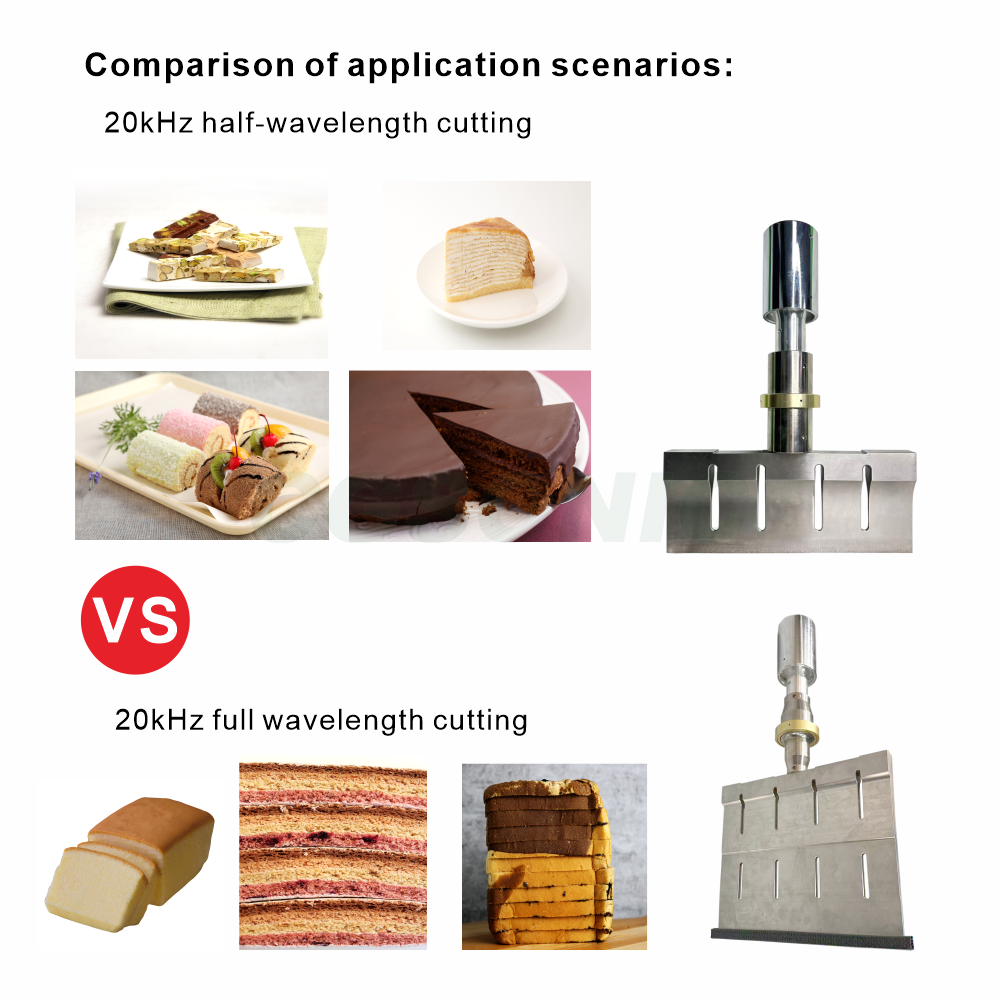
Ultrasonic cutting handles cakes, cheese, nougat, chocolate, frozen meat and many other sticky, soft or deformable foods. Its lower cutting resistance does less damage to the internal structure of the product — so the cut face stays clean and the interior texture stays intact. Traditional knives have limited material adaptability, so very sticky foods are almost impossible to cut at stable production speed.
When Traditional Knives Are Still the Better Choice
An honest comparison matters. Traditional knives remain a reasonable choice when: (a) your product is firm, dry and non-sticky, such as biscuits or dry baked goods; (b) your batch volume is very small and the line runs only occasionally; (c) upfront budget is the single deciding factor and quality requirements are low; (d) the cut is a rough portioning step where surface finish is not critical. In these cases, ultrasonic cutting would be over-specified.
How to Decide: A 4-Question Filter
- Q1 Is your product sticky, soft, layered or frozen?
- — If yes, ultrasonic cutting has a decisive edge.
- Q2 Do you need a stable, high-throughput or automated line?
- — If yes, ultrasonic cutting wins on uptime and integration.
- Q3 Is yield rate or waste a real cost for you?
- — If cutting loss is over 3%, the ROI case is usually strong.
- Q4 Is your volume small and your product firm and dry?
- — If yes, traditional knives may still be enough.
If you answer 「yes」 to Q1–Q3, ultrasonic food cutting is very likely your better option, and the payback comes from yield and labor — not just from a nicer-looking cut.
FAQ
Q1:Is ultrasonic food cutting more expensive than traditional knives?
A1:The upfront investment is higher — an ultrasonic cutting system costs more than a set of blades. But total cost of ownership is often lower, because ultrasonic cutting delivers a higher yield rate, less material waste, fewer blade changes and less cleaning labor. On lines losing 3–8% of material to cutting waste, the payback is typically 6–12 months.
Q2:Can ultrasonic cutting replace traditional knives on every line?
A2:No. Ultrasonic cutting is the better choice for sticky, soft, layered or frozen foods and for high-throughput or automated lines. For firm, dry products at very low volume with low quality requirements, traditional knives remain a reasonable and cheaper option. The right answer depends on your product and volume.
Q3:Does ultrasonic cutting really reduce downtime?
A3:Yes, in two ways. First, non-sticky blades mean far fewer cleaning stops. Second, ultrasonic blades wear much more slowly than mechanical blades, so blade replacement and sharpening downtime drops sharply. Together these usually translate into several extra production hours per week on a typical line.
Q4:Which foods benefit the most from ultrasonic cutting?
A4:Sticky, soft, layered or frozen foods benefit the most: layered cakes and mousse, soft cheese, butter, chocolate and filled chocolate, nougat, energy bars, frozen pastries, frozen meat blocks, and sandwich bread. These are exactly the products where traditional knives cause the most sticking, crumbs and deformation.
Talk to Us
Upgrade from traditional knives to ultrasonic food cutting and say goodbye to sticky blades, crumbs and deformation — with less waste, higher capacity and better finished quality. Send us your product photos, material and target throughput, and our engineers will recommend a line-upgrade plan and arrange a sample cut on your actual product.