







Ultrasonic Transducer Overheating: Causes & Step-by-Step Troubleshooting Guide
Ultrasonic Transducer Overheating: Causes & Step-by-Step Troubleshooting Guide
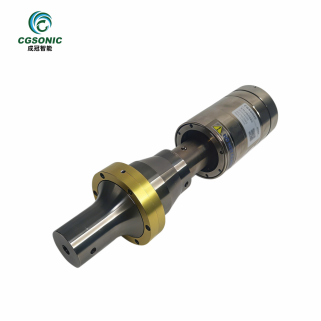
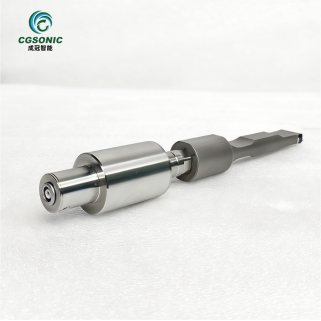
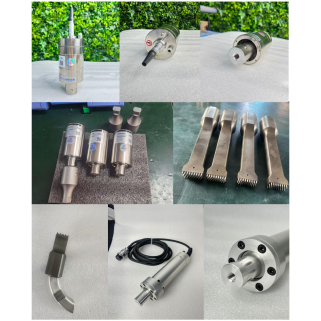
Ultrasonic transducer overheating is one of the most common failures on ultrasonic welding and nylon webbing cutting machines. A slight temperature rise is normal, but severe overheating reduces energy conversion efficiency, cracks the piezoelectric ceramics, shortens service life and can even burn out a portable ultrasonic welding machine in the middle of a production run. This guide explains how hot is too hot, the six main causes of ultrasonic transducer overheating, a six-step troubleshooting checklist, and how to decide between repair and replacement.
1. How Hot Is Normal? When a Warm Transducer Becomes a Problem
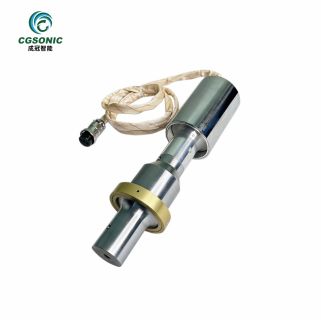
An ultrasonic transducer converts electrical energy into mechanical vibration, and no conversion is 100% efficient — part of the lost energy always becomes heat. As a working rule, a healthy transducer runs about 20–30°C above ambient temperature and feels warm but still touchable. Ultrasonic transducer overheating becomes a fault when the housing is too hot to touch after a short run, when temperature keeps climbing instead of stabilising, or when you can smell resin, insulation or burnt varnish near the transducer.
Why does it matter so much? A transducer that runs hot converts less electrical energy into vibration, so weld quality drifts long before anyone notices the temperature. Ceramic rings lose their piezoelectric properties as temperature rises, amplitude drops, operators compensate with longer weld time, and the extra energy becomes even more heat. Caught early, ultrasonic transducer overheating is a ten-minute fix; ignored, it is a cracked stack and a stopped line.
|
Condition |
Typical reading |
Judgement |
|
After normal intermittent welding |
20–30°C above ambient, stable |
Normal |
|
Warm housing, still touchable |
40–55°C surface |
Acceptable, monitor |
|
Too hot to touch after short run |
Above 60–70°C surface |
Abnormal overheating |
|
Temperature keeps climbing, smell of varnish |
Rising trend, no plateau |
Stop machine immediately |
2. Six Main Causes of Ultrasonic Transducer Overheating
Most cases of ultrasonic transducer overheating trace back to one of six causes. Knowing which one you are facing tells you whether the fix is a tuning adjustment, a torque wrench, or a replacement transducer.
✅ Cause 1: Off-resonance and impedance mismatch
The frequency of the ultrasonic generator deviates from the transducer resonance point, or the impedance matching network is not properly tuned. A large share of the delivered power is reflected back instead of doing work, and reflected power turns into heat. This is the top cause of ultrasonic transducer overheating in webbing welding and cutting duty, because generators are often re-tuned by hand after horn changes.
✅ Cause 2: Loose fastening structure
The pre-stress bolt between the transducer and the horn (amplitude transformer) works loose. The joint faces micro-slip against each other during continuous vibration, and friction heat adds directly to the transducer stack.
✅ Cause 3: Aging, cracking or debonding of piezoelectric ceramics
Damaged piezo ceramic rings show high dielectric loss. Electrical energy can no longer be converted into vibration normally and is released inside the transducer as heat. Once ceramics are cracked or debonded, ultrasonic transducer overheating gets worse run by run and usually ends in replacement, not repair.
✅ Cause 4: Overload and improper duty cycle
Long-time continuous full-power operation exceeds the rated power and working cycle of the stack. Heat accumulates faster than the housing can dissipate it. This is very common in continuous nylon webbing cutting, where operators hold the trigger for long uninterrupted pulses.
✅ Cause 5: Poor heat dissipation
A failed cooling fan, dust blocking the air ducts, or a closed installation without airflow traps heat around the transducer. Even a healthy stack will overheat if the cooling path is blocked.
✅ Cause 6: Abnormal load and dry running
Firing the ultrasonic stack without stable workpiece contact — dry running — reflects the ultrasonic energy straight back into the transducer, and temperature rises within seconds. Always confirm the workpiece is clamped and in full contact before triggering.
|
Cause |
Typical symptom |
Risk if ignored |
|
Off-resonance / impedance mismatch |
High reflected power, unstable amplitude, heat rises quickly from start-up |
Ceramic damage, generator overload |
|
Loose pre-stress bolt |
Heat at joint face, buzzing noise, power drop |
Thread wear, stack failure |
|
Cracked / debonded ceramics |
Heat after every run, worse each time, weak output |
Permanent transducer loss |
|
Overload / bad duty cycle |
Heat only during long continuous runs |
Shortened transducer life |
|
Poor heat dissipation |
Machine overall hot, dusty vents, fan silent |
Cascading electronic failures |
|
Dry running / abnormal load |
Rapid heat within seconds of firing |
Instant ceramic cracking |
In the field these six causes rarely appear alone, and that is why ultrasonic transducer overheating is so often misdiagnosed. A loose pre-stress bolt raises the impedance, the generator drifts off resonance trying to hold amplitude, reflected power goes up, the stack gets hotter, the bolt loosens a little more. By the time someone measures the temperature, the root cause is three steps back in the chain — which is exactly why the checklist in the next section runs in a fixed order instead of starting from the hottest part.
3. Six-Step Troubleshooting Checklist
Work through the steps below in order. Each step either clears one cause of ultrasonic transducer overheating or points you to the next check, so a two-person job can usually be finished within one hour.
|
Step |
Check item |
Tool / method |
Action |
|
1 |
Visual inspection: burning smell, discoloration, loose transducer-horn bolt, damaged cables |
Eyes and nose; torque wrench |
Retighten bolt to factory torque standard; replace damaged cables |
|
2 |
Cooling system: dust in air ducts, fan operation, ventilation clearance |
Brush / compressed air; fan test |
Clean dust, replace failed fan, keep airflow space, switch to intermittent mode |
|
3 |
Frequency and impedance tuning of the generator |
Generator auto-tune / manual tune |
Re-match generator, calibrate resonant frequency, reduce reflected power |
|
4 |
Load test with standard workpieces |
Standard nylon webbing rolls |
No dry running; reduce amplitude or output power if heating persists |
|
5 |
Electrical performance test |
Impedance analyzer |
Check impedance curve; repair or replace if ceramics are cracked or debonded |
|
6 |
Horn (amplitude transformer) condition |
Visual + resonance check |
A cracked, fatigued or deformed horn also causes abnormal heating; inspect together |
✅ Step 3 in detail: retuning the generator
Retuning is where most troubleshooting wins come from, because off-resonance operation is the most frequent cause of ultrasonic transducer overheating. Run the generator's auto-tune routine with the horn mounted and the machine at operating temperature, then check the displayed resonant frequency against the transducer nameplate. A resonance shift of more than a few hundred hertz from the rated value usually means something mechanical has changed — a loose bolt, a worn horn or a tired stack.
✅ Step 5 in detail: reading the impedance curve
An impedance analyzer draws the transducer's impedance curve around resonance. A healthy curve shows one clean, sharp minimum at the rated frequency with low dynamic impedance. A flattened or shifted curve, extra dips, or a rising minimum impedance all indicate ceramic damage or debonding — the point where ultrasonic transducer overheating turns from a maintenance issue into a replacement decision.
4. Operating Practices That Prevent Overheating
Most ultrasonic transducer overheating is preventable with disciplined daily habits. The four practices below cost nothing and cover the majority of field failures we see on portable ultrasonic welding machines used for webbing.
- Respect the duty cycle: weld and cut intermittently, and give the transducer a cool-down pause between long jobs instead of holding continuous full-power pulses.
- Never fire without a workpiece: dry running reflects energy back into the stack and is the fastest way to crack ceramics.
- Keep the cooling path clean: check the fan and air ducts weekly, especially in dusty workshops.
- Schedule impedance testing: test the transducer impedance curve monthly or quarterly and keep records, so a drifting curve is caught before it becomes heat and cracks.
One habit deserves special mention on portable machines: bolt torque. Every horn change disturbs the pre-stress on the stack, and a joint that was perfect last month can be loose today. Retighten the transducer-horn bolt to the factory torque value after every horn change, and spot-check it weekly on machines that run two shifts or more. Combined with the duty-cycle discipline above, this single routine removes the two most common mechanical causes of ultrasonic transducer overheating.
5. Repair or Replace?
EN: Not every hot transducer is dead. The decision depends on what the inspection in Step 5 finds. Use the table below as a rule of thumb before ordering a spare.
|
Findings |
Diagnosis |
Recommendation |
|
Impedance curve normal, heat traced to tuning or loose bolt |
Mechanical / tuning issue |
Repair on site: retune, retighten, retest |
|
Curve drifts but ceramics intact |
Aging or mild mismatch |
Repair: professional re-matching and re-test |
|
Ceramics cracked or debonded, dielectric loss high |
Permanent ceramic damage |
Replace the transducer; do not keep running |
|
Horn cracked or deformed with normal transducer |
Horn fatigue, not transducer |
Replace the horn; keep transducer |
Whatever the outcome, keep a maintenance record for every transducer: date, measured resonant frequency, minimum impedance, and the workpiece it was running. When ultrasonic transducer overheating returns months later, the log shows immediately whether the stack has been drifting gradually or was damaged suddenly. For continuous webbing lines, holding one tested spare transducer per generator size turns a potential production stop into a fifteen-minute swap.
6. Why Portable Webbing Machines Overheat Faster Than Benchtop Units
On webbing welding and cutting duty, the machine form decides how much thermal margin you actually have. A handheld unit packs the same stack into a much smaller housing with less mass to absorb heat, often with a single small fan, and the operator controls the pulse by hand — which means the trigger stays pressed far longer than any programmed weld time. Benchtop machines run closed-loop pressure and time control with a fixed duty cycle, so the stack is cooled between cycles by design rather than by operator discipline.
|
Machine form |
Typical power |
Cooling |
Typical overheating pattern |
|
Handheld / portable webbing welder |
100–800 W |
Housing mass + small fan |
Heats up when trigger held continuously; cools fast when paused |
|
Benchtop spot welder |
800–2000 W |
Fan + programmed duty cycle |
Heats up when duty cycle is overridden or vents blocked |
|
Continuous webbing cutting line |
Per application |
Forced air / water where specified |
Slow heat build-up over hours, shows as output drift first |
This is why most ultrasonic transducer overheating reports come from portable machines used in continuous webbing work: the failure is not the transducer, it is the mismatch between a handheld duty cycle and a continuous production rhythm. If the job genuinely needs uninterrupted long seams, the honest fix is a machine with a higher rated power and a defined duty cycle, not a hotter-running transducer.
7. Professional Tips from Shenzhen Chengguan
For portable ultrasonic welding machines used for nylon webbing welding and cutting, do not run long continuous pulses — intermittent triggering is the single most effective habit against ultrasonic transducer overheating. Perform regular impedance testing and maintenance, and keep a log for each machine.
If the transducer still heats sharply after tuning and inspection, shut down the machine immediately to prevent secondary damage to the ceramics and the generator. Contact us if you need replacement ultrasonic transducers, impedance testing support, or complete portable ultrasonic welding solutions for webbing processing.
FAQ
Q1: What is the normal temperature rise of an ultrasonic transducer?
Normally the transducer runs 20–30°C above ambient temperature and stays warm but touchable. If it is too hot to touch after a short run, or the temperature keeps climbing, it is abnormal ultrasonic transducer overheating and should be checked with the six-step checklist.
Q2: Can an overheated ultrasonic transducer be repaired?
It can be repaired if the problem is only impedance mismatch, loose bolts or blocked cooling. If the piezoelectric ceramic is cracked or debonded, replacement is usually required, because ceramic damage cannot be reliably restored in the field.
Q3: Why does my transducer only overheat during long continuous runs?
That pattern points to duty cycle overload. The stack dissipates heat during pauses; long uninterrupted full-power pulses accumulate heat faster than it can escape. Switch to intermittent working mode and, if the job demands long seams, reduce amplitude or upgrade to a higher-rated machine.
Q4: Does the horn condition affect transducer temperature?
Yes. A cracked, fatigued or deformed horn changes the acoustic load on the transducer and causes abnormal heating even when the stack itself is healthy. Always inspect the horn together with the transducer, and replace worn horns on schedule.