





What are the ultrasonic welding process methods?
01
Fusion welding method
The frictional heat generated by ultrasonic vibration melts the joint surfaces of two plastic pieces, and then pressure is applied to join them together, achieving a weld strength comparable to that of the original materials.
02
Riveting and Welding Method
An ultrasonic welding head is pressed against the protruding tip of a plastic product, causing it to heat up and melt instantly to form a rivet shape, thus achieving mechanical riveting of different materials.
03
Burial
By transmitting ultrasonic energy and appropriate pressure through the welding head, metal parts (such as nuts, screws, etc.) are forced into the pre-drilled plastic holes and fixed at a certain depth.
04
Molding
Similar to riveting, a concave welding head is used to press against the outer ring of a plastic product, causing the plastic to melt and form a shape that covers the metal object. This method is often used for fixing and molding electronic products and speakers.
05
Spot welding
This method allows for point-to-point welding of two plastic pieces without the need for pre-designed weld lines, making it suitable for large workpieces or workpieces where weld lines are difficult to design.
06
Cutting and sealing
Using the principle of ultrasonic vibration, chemical fiber fabrics are cut, resulting in clean cuts without cracking or fraying.
07
Linear Vibration Friction Welding
The plastic is melted by the frictional heat generated at the contact surfaces of two workpieces to be welded. This method is suitable for the reciprocating movement of one workpiece on another surface under a certain pressure.
08
Track-type vibration friction welding
The upper workpiece moves along a track at a fixed speed, generating heat that causes the welded parts of the plastic parts to reach their melting point, and then solidify and join together.
09
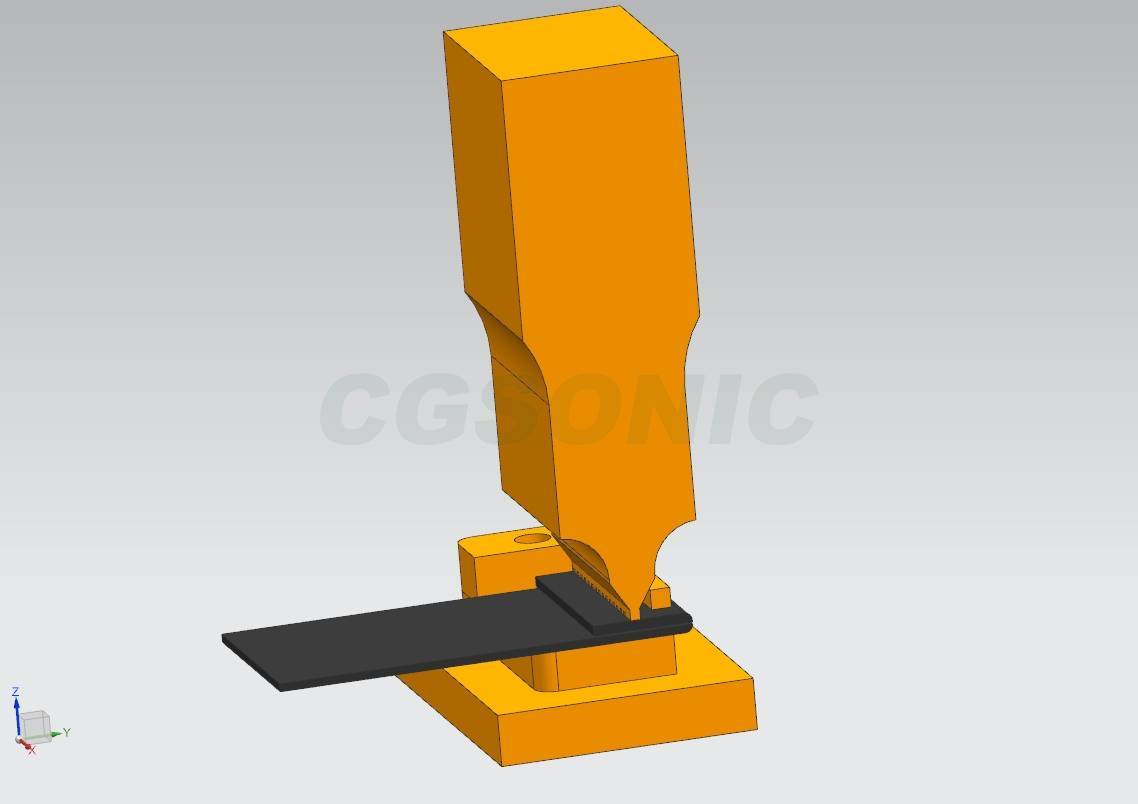
Ultrasonic Metal Welding
Solid-state welding is achieved by using the mechanical vibration energy of ultrasonic frequencies to connect similar or dissimilar metals without involving current transmission or high-temperature heat sources.
These methods each have their own advantages and are suitable for different materials and products. Ultrasonic welding technology is widely used in many industries such as automotive, electronics, medical, and packaging due to its advantages such as speed, energy saving, high fusion strength, good conductivity, no sparks, and near-cold processing.