





What details of automotive electronics are being changed by ultrasonic welding?
In these subtle details that are not easily noticeable to the naked eye, ultrasonic welding technology is quietly changing the manufacturing logic and performance boundaries of automotive electronics.
- Wire Harness Connection: From "Physical Contact" to "Atomic Fusion"
Automotive wiring harnesses are the neural network of the entire vehicle, undertaking the dual mission of power transmission and signal communication. In traditional manufacturing processes, terminals and wires
are often connected by crimping, relying on mechanical deformation to squeeze copper wires together. This connection method inevitably leaves tiny voids between the copper wires. These voids are not only a source
of increased resistance but can also become a cause of signal distortion.
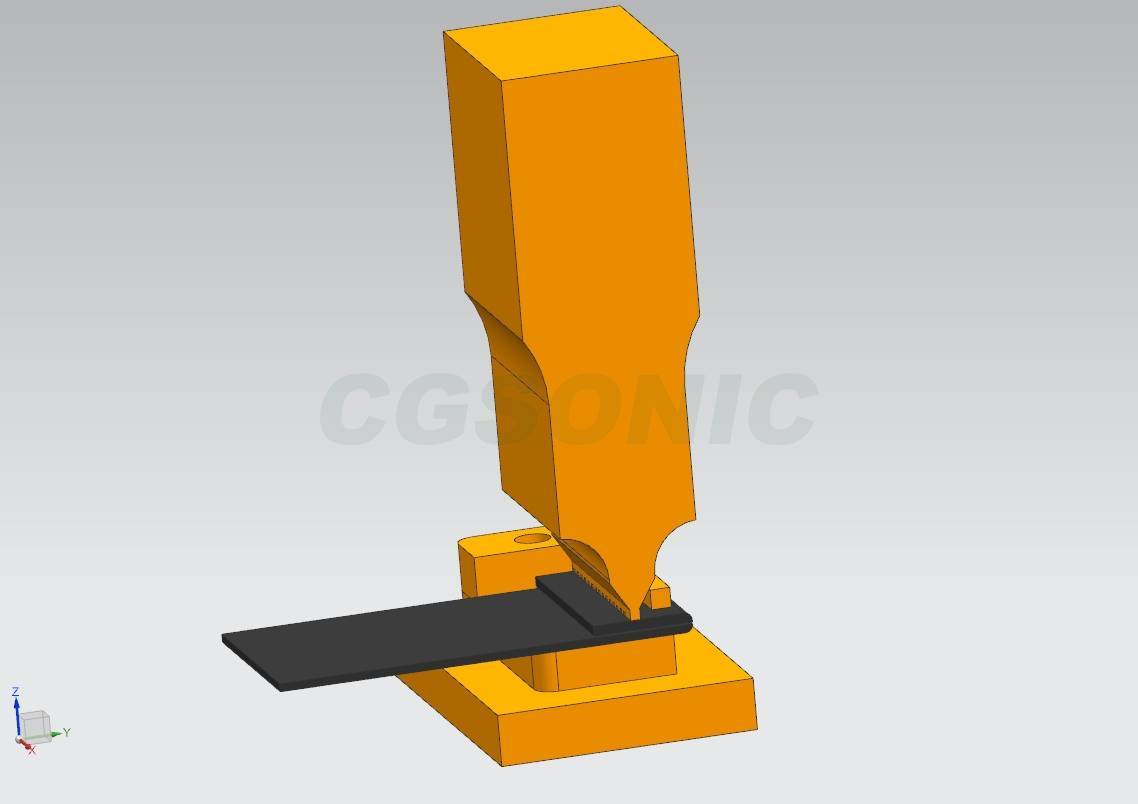
Ultrasonic welding has changed this. Under the combined action of high-frequency vibration and pressure, the copper wire and the terminal no longer make simple physical contact, but achieve atomic-level fusion. The
resistance at the welding interface approaches zero, allowing signals to pass through without attenuation.
More importantly, this solid-state connection method requires no solder or flux, eliminating the potential corrosion of wires by chemical residues and ensuring that the wiring harness maintains stable conductivity
throughout the vehicle's entire lifespan.
- Sensor Packaging: Building a Reliable Barrier for Precision Components
The advent of the era of autonomous driving has made sensors such as LiDAR, millimeter-wave radar, and cameras the eyes of cars. These precision optical devices are extremely sensitive to the environment; even the
slightest moisture infiltration or metal splashes can lead to a decrease in recognition accuracy or even malfunction.
Ultrasonic welding is becoming a key process for the packaging of these sensors. Taking LiDAR as an example, its metal casing needs to achieve an ultra-high level of airtightness while protecting the delicate internal
chips and lenses from heat damage.
Ultrasonic welding produces no melting or spatter during the process, eliminating the possibility of metal particles contaminating the internal optical surfaces. The weld seam is dense and uniform, and its airtightness
remains stable throughout the product's lifespan, providing a solid guarantee for the long-term reliable operation of the sensor.
- Headlight Manufacturing: Enabling Purer Light Penetration
Intelligent vehicle lights are evolving from lighting tools to information interaction interfaces. The emergence of matrix LED headlights, laser headlights, and projection headlights has placed unprecedented precision
demands on vehicle lighting manufacturing processes.
Ultrasonic welding controls the fusion process at the molecular level, keeping the fluctuations in light transmittance within an extremely small range. Complex curved lampshades that previously required adhesive
bonding can now be seamlessly joined through precision welding, ensuring both airtightness and allowing pure light to pass through.
In the harsh tests of high temperature and high humidity, the ultrasonically welded headlight module demonstrated excellent environmental adaptability, and its sealing reliability far exceeded that of traditional processes.
- Interior Components: Quality Enhancement Hidden in the Details
Seemingly simple components inside a car, such as the dashboard, center console, cup holders, and car logo, also involve considerations regarding the connection process. Traditional processes often use adhesives or
mechanical fasteners. Adhesives not only introduce the problem of volatile organic compounds, but their bonding strength also decreases over time and with environmental changes.
The changes brought about by ultrasonic welding in these details are greater durability and a cleaner in-vehicle environment. A strong bond is achieved between plastic parts and between plastic and metal trim through
molecular-level fusion, eliminating the need for chemical solvents and completely removing the source of volatile substances.
The car logos embedded in the steering wheel and the decorative parts inlaid in the center console, thanks to the welding process, can withstand long-term vehicle vibrations without loosening, and their appearance is
also smoother and more beautiful.
- Invisible Changes, Perceptible Reliability
Ultrasonic welding alters automotive electronics mostly in places unseen by consumers. It's hidden in wiring harness connectors, under sensor housings, in headlight seams, and behind interior trim strips. But it is precisely
these unseen details that collectively form the cornerstone of modern automotive reliability.
When signals are transmitted accurately in complex electrical systems, when sensors remain stable in harsh weather, when headlights always provide uniform and clear light, and when the air inside the vehicle is always
fresh and clean—these improvements in user experience are all related to that weld seam fused together by high-frequency vibration.