




Why Does an Ultrasonic Welding Horn Need to Be Customized? And How Long Does It Last?
Why Does an Ultrasonic Welding Horn Need to Be Customized? And How Long Does It Last?
Quick Answer
Every ultrasonic welding horn is a tuned half-wave resonator, not a generic off-the-shelf tool. It must be custom-designed to match your product's geometry, the machine's frequency, the required amplitude distribution, and the mounting interface. A horn normally needs to be redesigned when the new product changes the weld-line geometry, contact area, required amplitude distribution, material behavior, or mounting/interface conditions.. Lifespan depends on material and duty: an aluminum alloy horn typically lasts 50,000–500,000 weld cycles, a titanium horn 3–5 times longer, and a hardened steel horn for metal welding lasts longest — but real-world life is driven by power level, part design, cooling, and maintenance.
What an Ultrasonic Horn Actually Does
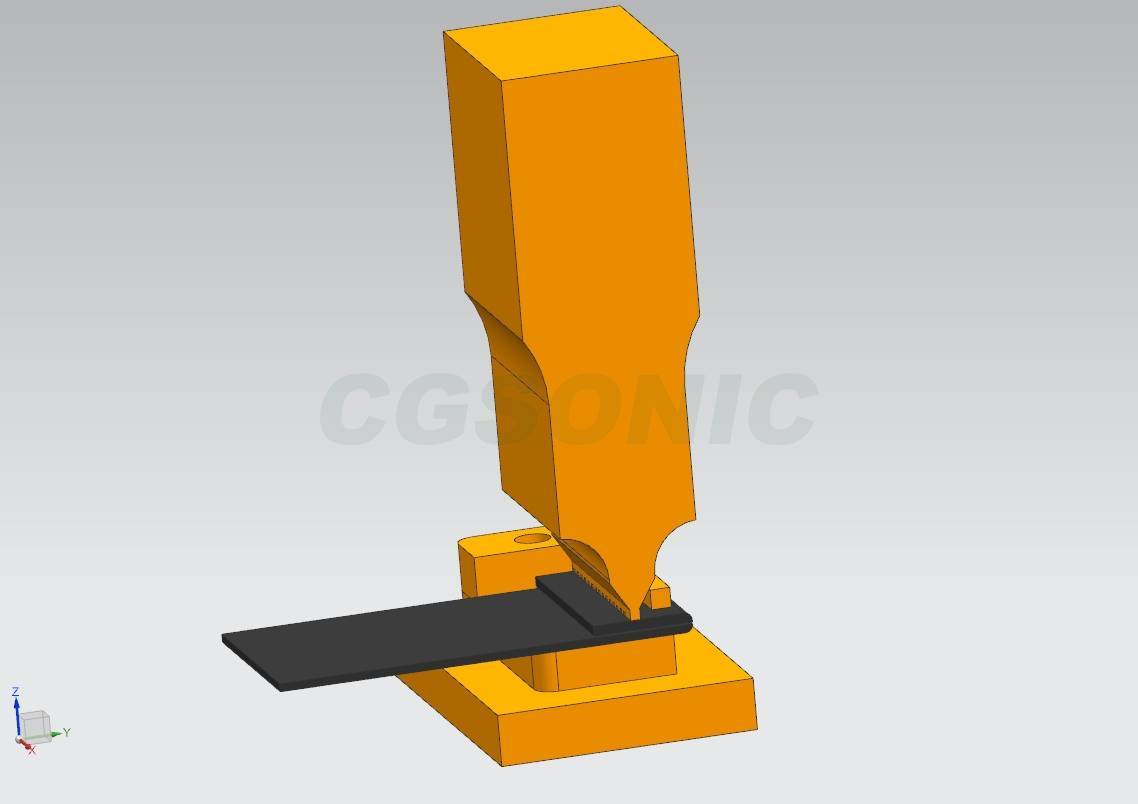
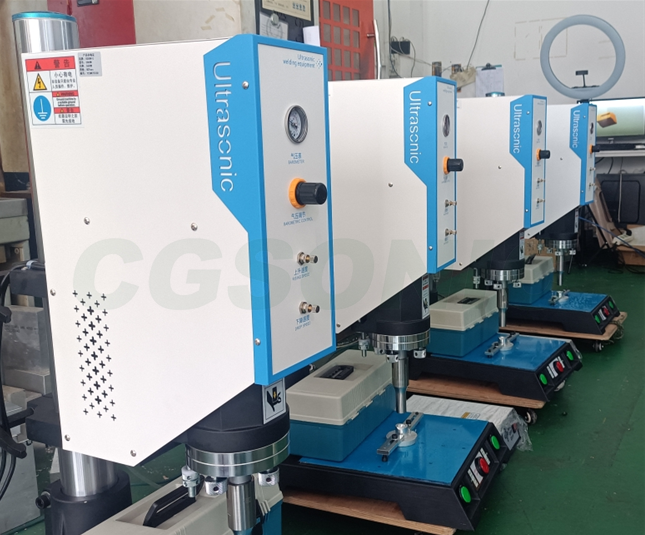
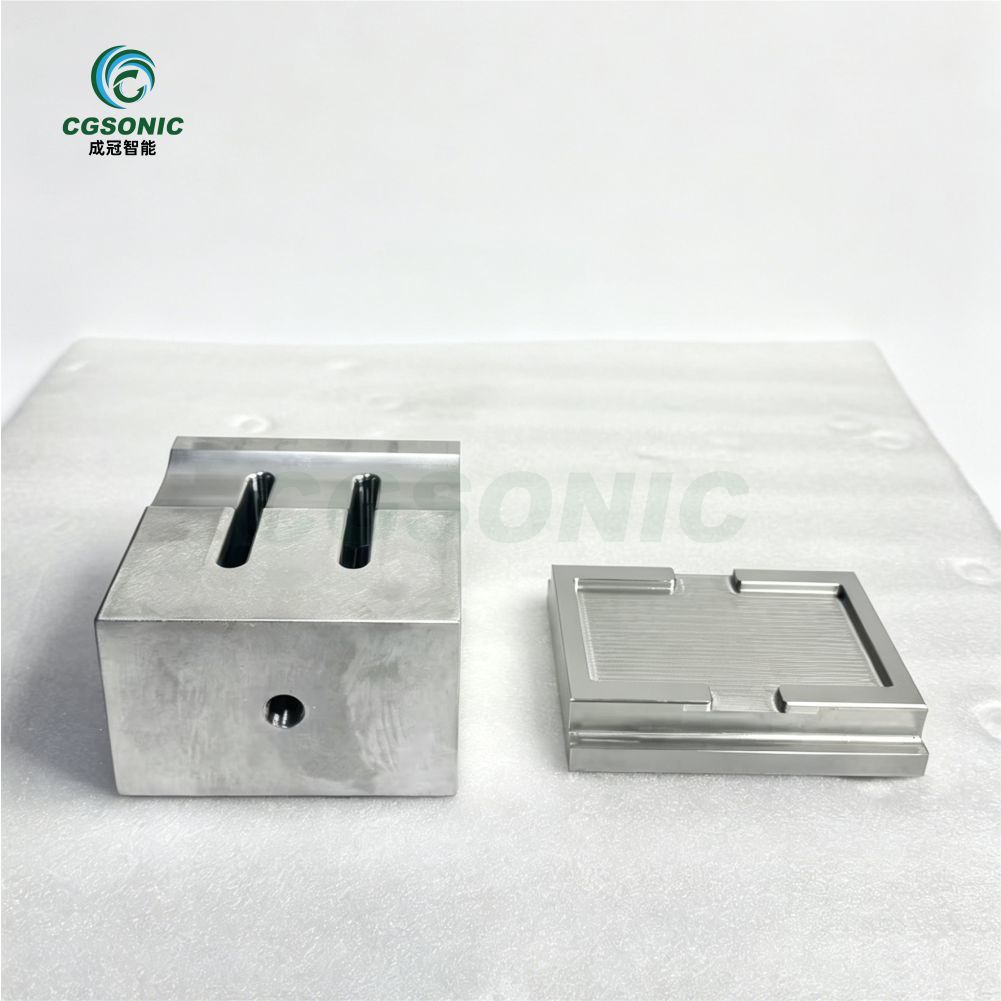
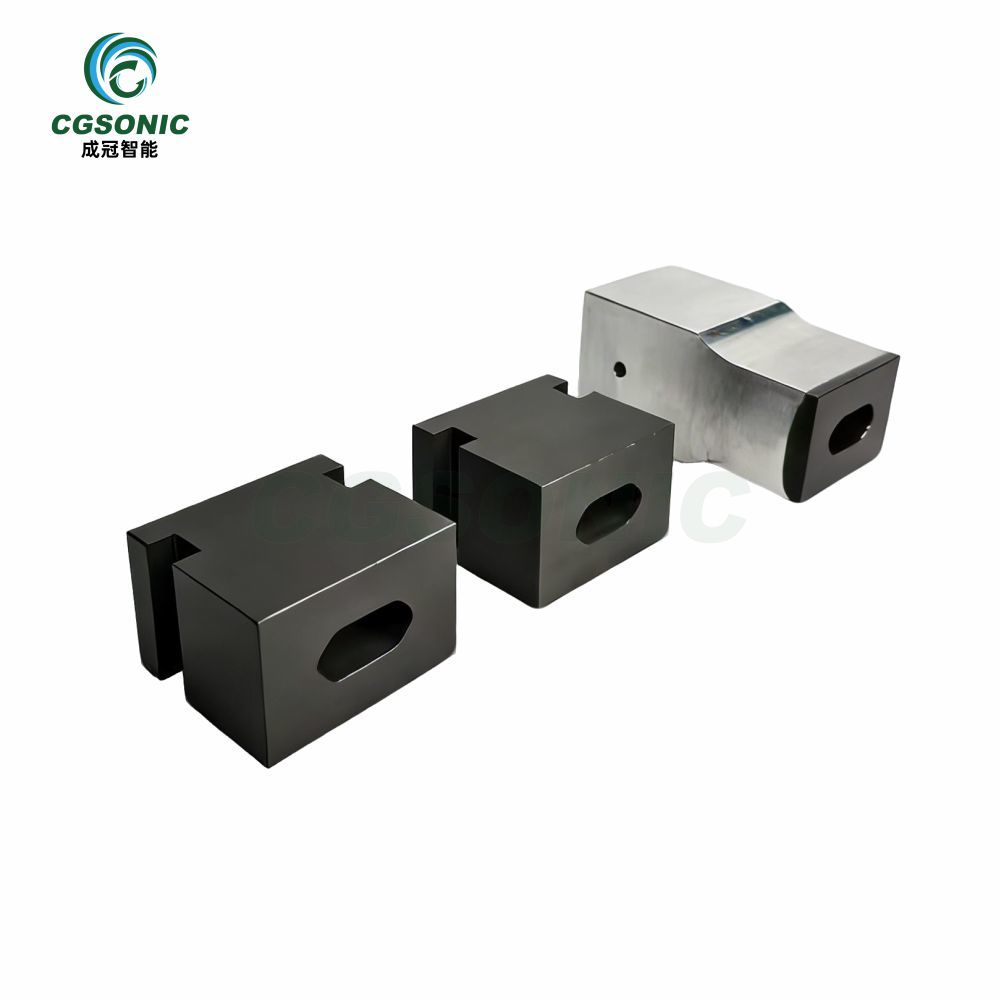
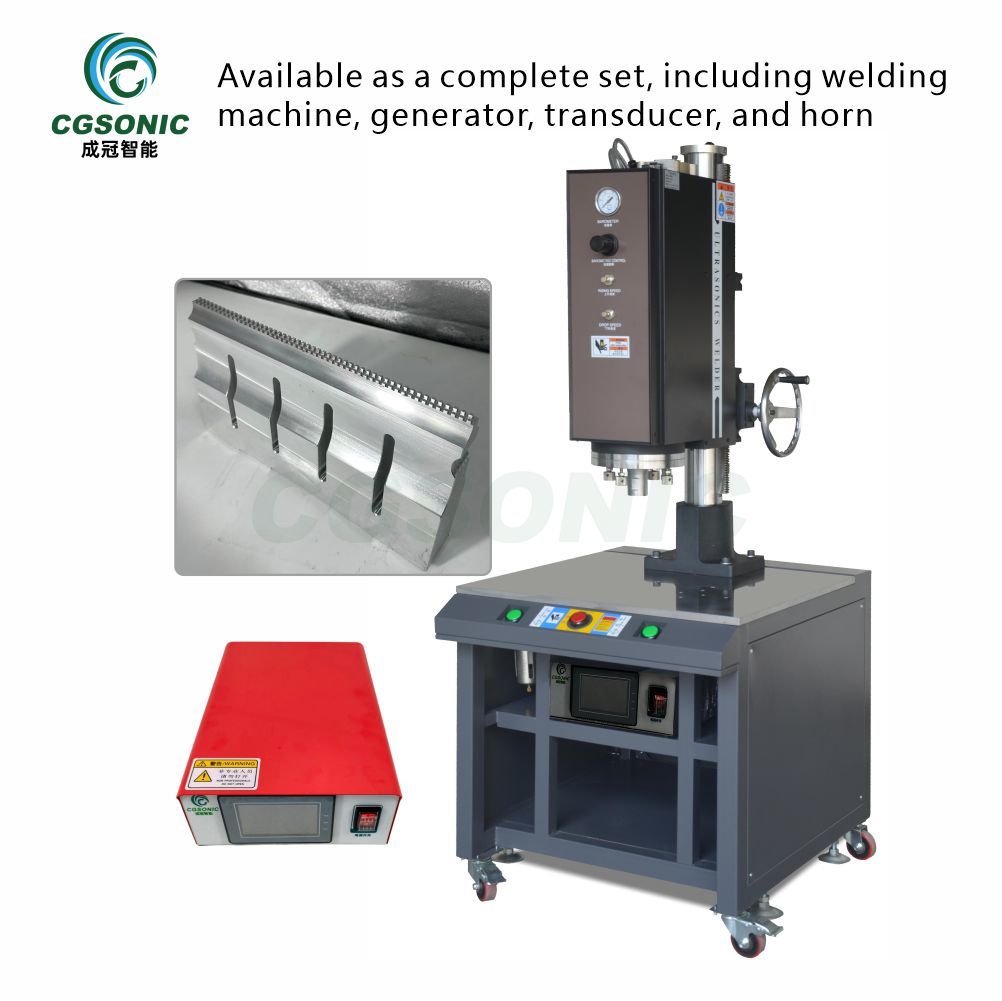
The horn (also called a sonotrode) is the metal tool that touches your part. It takes the mechanical vibration generated by the converter, amplifies it to the working amplitude, and delivers it into the joint in a controlled pattern. The reason a horn requires engineering is that its geometry affects resonance, amplitude distribution, load transfer, and contact with the part.
- It is a resonator. A horn is machined to resonate at exactly the machine's frequency (20 / 35 / 40 kHz). Half a wavelength too long or too short and it will not vibrate efficiently.
- It shapes the amplitude. Slotting, stepping and contouring redistribute amplitude evenly across the weld face. A horn that delivers uneven amplitude welds one corner and under-welds the other.
- It carries the load. The horn transfers all the welding force into the part, so its geometry must be stiff enough to resist bending and fatigue.
Five Reasons Every Horn Must Be Customized
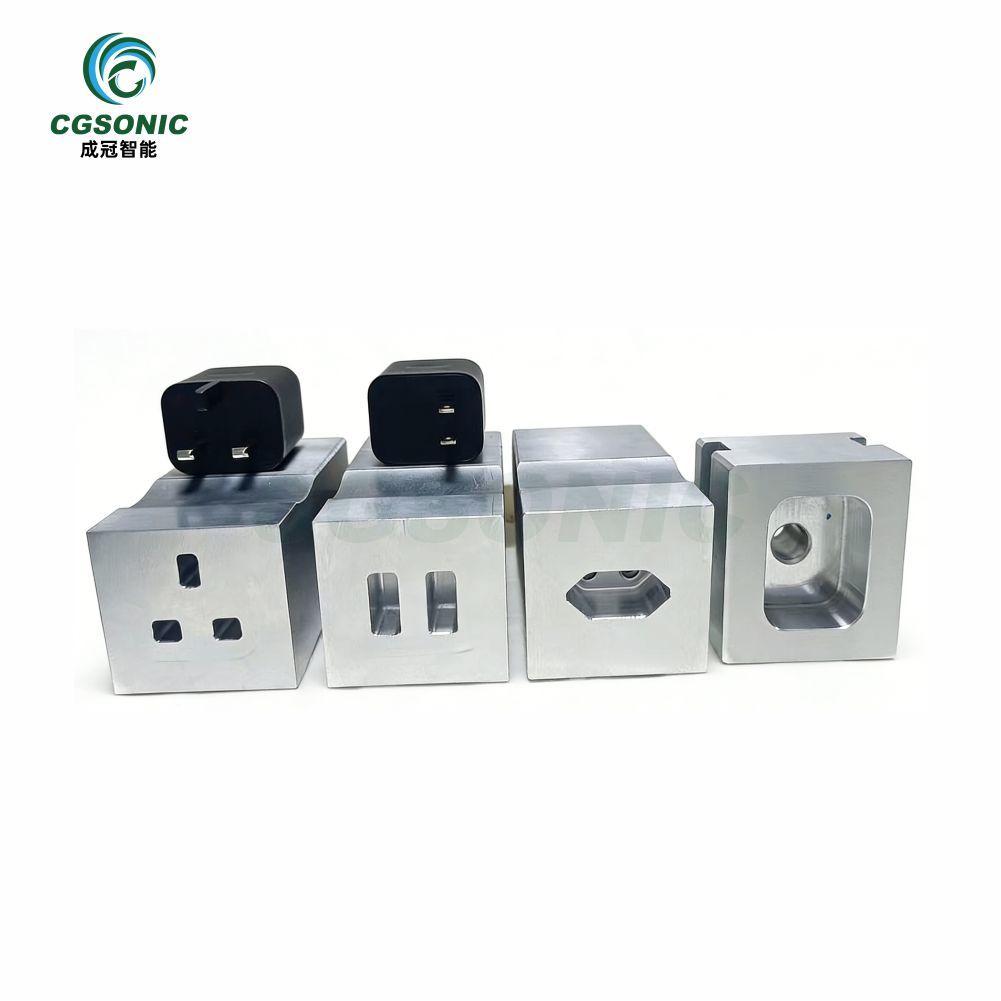
Product Geometry Is Unique
The weld face must follow the actual contour, ribbing and wall thickness of your part. Two products from the same family — a 30 mm filter cap and a 90 mm filter housing — need completely different horn faces, because the weld line, the support structure and the deformation behavior are different.
Frequency Tuning Is Locked at Design Time
A horn's resonant frequency is determined by its material, length and mass distribution. Once machined, it cannot be retuned on the bench — the only way to change it is to remove or add material in a controlled way, which is itself a custom design step. This is why each horn is designed for one machine frequency and cannot be moved between a 20 kHz and a 40 kHz system.
Amplitude Must Be Distributed Evenly
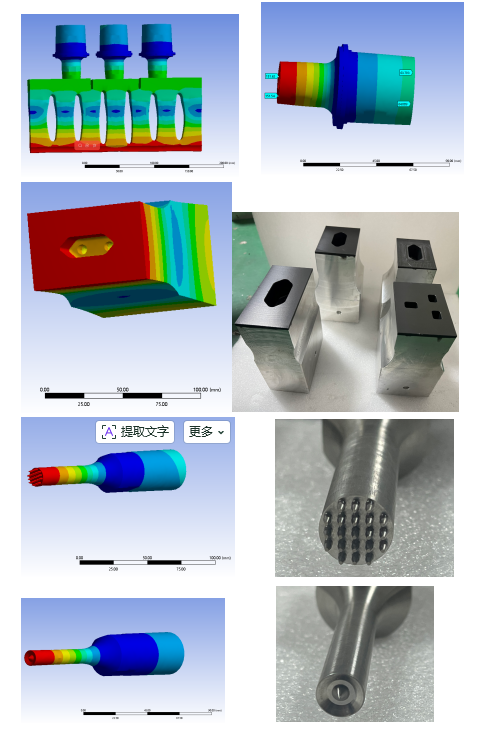
Uniform weld quality means uniform amplitude at every point of the weld face. A horn designed for a small round part will deliver a hot spot if it is applied to a long narrow part, and a horn built for a long part will under-weld a small one. Amplitude profiling is calculated per product, using modal analysis and, in many shops, verified with a laser vibrometer.
Interface and Fixture Fit
The horn threads onto the booster with a specific stud size and torque. Its weight and centre of gravity must stay within the machine's and fixture's limits. A heavier horn needs a stronger support column, and an off-centre horn puts torque on the converter. Getting the interface right is part of the custom design, not an afterthought.
Material and Process Requirements Differ
Welding abrasive glass-filled nylon, a cosmetic ABS cover, or a copper wire harness calls for different tip materials, coatings and surface finishes. A polished tip for cosmetic parts, a carbide insert for abrasive filled plastics, and a hardened steel tip for metal welding are separate custom designs — even if the mounting dimensions are identical.
How Long Does an Ultrasonic Horn Last?
There is no single number, because the horn is a fatigue-loaded part. Use this table as a planning benchmark, not a guarantee.
|
Horn Material |
Typical Lifespan| |
Best For |
Notes |
|
Aluminum alloy (7075-T6) |
50,000–500,000 cycles |
Plastics, nonwovens |
Light, low cost, wears faster |
|
Titanium alloy (Ti-6Al-4V) |
200,000–2,000,000 cycles |
High-power, abrasive parts |
3–5× aluminum life, higher cost |
|
Hardened tool steel |
500,000+ cycles |
Metal welding |
Heaviest, best wear resistance |
|
Ceramic / carbide insert tip |
Varies by coating |
Wear-prone contact points |
Extends tip life significantly |
Translate cycles into calendar time with your own cycle time. A plant running 3,000 welds per day, 300 days a year, consumes 900,000 cycles per year — so a titanium horn may last one to two years, while an aluminum horn in the same slot could need replacing within the year.
Six Factors That Shorten Horn Life
- Excessive amplitude. Running the horn above its design amplitude accelerates fatigue at the slots and the base.
- Over-tightened or loose stud. Wrong stud torque either stretches the threads or lets the joint fret, and both damage the horn base.
- Poor stack alignment. A converter–booster–horn stack that is not coaxial loads the horn in bending.
- Abrasive or glass-filled material. Filled nylon and similar compounds erode the weld face quickly.
- Insufficient cooling. Continuous duty without air cooling raises horn temperature, and hot aluminum loses stiffness.
- Dropping or mishandling. A single drop onto a hard floor can crack a horn internally without any visible damage.
Five Warning Signs the Horn Needs Replacement
Replace or rework the horn as soon as you see any of these. Continuing to run a failing horn risks damaging the converter and the booster too.
- Falling amplitude at the same power setting — the horn no longer resonates efficiently.
- Visible cracks, chips or a pitted weld face, especially near slots.
- Rising scrap rate or weld strength drifting down with no process change.
- Overload alarms that trip earlier and more often than before.
- A frequency reading that has drifted from the tuned value shown on the horn's certificate.
How to Extend Horn Lifespan
- Re-cut the weld face on schedule. Light refacing restores flatness and removes surface fatigue before it becomes a crack.
- Keep stud torque to spec, and check it at every rebuild.
- Air-cool the stack on high-duty cycles, and let it return to ambient between long runs.
- Verify the stack is coaxial, and For applications where rotational balance or dynamic behavior is relevant, the horn design and manufacturing process should include the appropriate balance and resonance checks specified by the application.
- Store horns in a padded rack. Treat them as Store horns in a protected rack to prevent impact damage, contamination and deformation of the weld face.
Custom Horn vs Standard Horn
|
Aspect |
Custom Horn头 |
Standard / Stock Horn |
|
Fit to product |
Exact geometry match |
Approximate only |
|
Weld quality |
Uniform amplitude, consistent welds |
Risk of hot spots and weak joints |
|
Lifespan |
Optimized, longer |
Shorter when mismatched |
|
Lead time |
1–4 weeks (design + machining) |
Off the shelf |
|
Upfront cost |
Higher |
Lower |
|
Best for景 |
Production and critical parts |
Trials and rough prototyping |
FAQ
Q1:Can I use a stock horn for a new product to save time?
A1:Only for rough feasibility trials. A stock horn rarely matches your weld line, so results will not reflect what a production horn can achieve. Never qualify a product or set process parameters on a stock horn.
Q2:How often should I inspect an ultrasonic horn?
A2:Inspect visually and check amplitude at every shift change, and re-measure frequency monthly. High-duty lines should have the weld face refaced every 100,000–300,000 cycles depending on material.
Q3:Why does a horn lose amplitude over time?
A3:Fatigue cracks and surface wear reduce the horn's ability to resonate at design amplitude. A cracked slot or a work-hardened base is the usual cause. Refacing or re-tuning can restore it; a crack means replacement.
Q4:Does horn weight affect welding performance?
A4:Yes.Horn mass is one of the mechanical design constraints. The machine structure, actuator capacity and tooling support must be checked against the complete moving assembly. column and can slow the machine's downstroke. Weight is one of the design constraints, which is why titanium horns are used where stiffness-to-weight matters.
Talk to Us
If you need a custom horn designed and machined for a specific part, send us your product drawings, material and target cycle time. Our engineers can run modal analysis, propose the horn material and geometry, and deliver a prototype horn with a frequency test certificate.