When it comes to buying equipment or services for syringe assembly, it's really about more than just comparing cycle times or getting the lowest quote. Welding the syringe parts, for example, can impact things like leak resistance, how well the dimensions hold up, whether the materials are compatible, and ultimately, patient safety. So, a smart buying decision starts with knowing exactly what your process needs — not just falling for pretty brochures or slick marketing pitches.
In this guide, I’m sharing seven practical tips to help you evaluate suppliers, welding methods, and inspection systems. For starters, it’s important to check whether ultrasonic, laser, or thermal welding is the best fit for your chosen polymer and component design. Don’t just take their word for it—ask for sample weld results, strength testing data, dimensional measurements, and proof that their process has been validated. And traceability matters a lot — make sure each batch links back to specific materials, machine settings, operators, and inspection records. Honestly, those tiny details can make a huge difference.
You’ll also want to pay close attention to the supplier’s experience. A really capable partner can clearly explain how they handle energy transfer, fixture design, flash control, and even failure analysis — no jargon, just plain language. Keep in mind, welding electronics is quite different from Electronic Component Welding, even though both require precision and automation. It’s easy for someone inexperienced to get that mixed up and be misled.
Moreover, a good supplier should discuss things like cleaning procedures, packaging conditions, maintenance routines, and operator training. Sometimes, independent testing can uncover weak seals that might look fine just by visual inspection. But let’s be honest — no checklist can cover everything. Real-world production can surprise you with warped parts, resin inconsistencies, or unexpected tool wear. Be ready to review and adjust as needed.
In the end, the best purchasing process balances technical evidence, open communication, and realistic performance goals. It’s about protecting quality while keeping an eye on costs, delivery schedules, and future production needs. So, take a close look at the details and don’t hesitate to ask better questions — that’s what makes the difference.
Before choosing a supplier, define the syringe component requirements in measurable terms. The World Health Organization estimates that about 16 billion injections are administered worldwide each year. That scale makes small welding defects important. Specify component geometry, resin grade, wall thickness, dimensional tolerances, and sterilization method. State whether the assembly must withstand ethylene oxide, radiation, or steam exposure. These conditions can change joint strength and clarity.
Ask for target values, not vague promises. Define leak limits, burst pressure, pull strength, weld width, and acceptable cosmetic defects. ISO 7886-1 addresses single-use syringe performance, while ISO 10993 supports biological evaluation of patient-contacting materials. For Dissimilar Materials Welding, identify every polymer and additive before testing. Different melting ranges may create weak interfaces. A clean-looking joint can still fail after aging.
Require a documented welding window covering temperature, pressure, vibration, time, and fixture alignment. Request capability data from representative production lots, not one successful sample. A supplier should explain inspection frequency, calibration controls, traceability, and revalidation triggers. FDA process-validation guidance emphasizes objective evidence and controlled manufacturing changes. Be specific.
One practical detail is often missed: test assemblies after sterilization and simulated transport. A syringe may pass a bench pull test, then leak after vibration or thermal cycling. I have seen specifications that looked complete but ignored storage time. That gap deserves another review.
Material selection should begin with safety, not price. Polypropylene offers low moisture absorption and broad chemical resistance, making it common for syringe bodies. Polyethylene can provide flexibility, but its lower stiffness may affect dimensional control. Polycarbonate is rigid and clear, yet some chemicals can trigger stress cracking. Small compatibility tests matter.
Check the fluid path, stopper, hub, and barrel together. A material that performs well alone may react after welding. Look for extractables, particulate generation, odor, and color changes after exposure. COC and COP can support clarity and dimensional stability, but their welding window may be narrower. Elastomers need separate attention. They may soften, swell, or leave residue near the joint.
Ultrasonic Welding Equipment must match the selected polymer and component geometry. Energy directors, welding pressure, amplitude, and hold time can change joint strength. In production reviews, I have seen clean-looking joints fail after aging tests. That result was easy to miss. Measure burst strength, leak rate, pull force, and microscopic flash. Test samples after sterilization and temperature cycling. Do not rely on one attractive prototype. A supplier’s material data is useful, but actual molded parts reveal more. I still question early results when wall thickness varies by only a few tenths of a millimeter.
When buyers evaluate welded syringe components, manufacturing precision should be checked before price. A connector may look clean, yet a slight bore offset can disturb fluid movement. Measure critical dimensions with calibrated gauges, not visual inspection alone. Check weld bead width, wall thickness, and concentricity against approved drawings. Small deviations matter. In my experience, rejects often begin with tolerances that seemed harmless on paper. The lesson is easy to miss.
Component fit deserves equal attention. Assemble the barrel, tip, seal, and plunger using production samples. The plunger should move smoothly, without sticking or unexpected looseness. Inspect the joint under magnification for gaps, burn marks, or uneven compression. Ask suppliers for inspection records, material certificates, and leak and pressure test results. A reliable supplier can explain sampling plans and measurement uncertainty clearly. If answers remain vague, pause the purchase.
For applications involving Consumer Electronics Welding, the same discipline applies to miniature fluid or thermal-control assemblies. Tight spaces expose poor alignment quickly. Request first-article samples and repeat-fit testing across several batches. Temperature cycling can reveal a joint that passes room-temperature inspection. Do not trust one successful assembly. It is tempting to accept a near fit when schedules tighten, but that choice may create field failures. I have made that compromise before; it saved hours initially and cost more inspection later. Record every deviation, even the embarrassing ones.
For syringe component buyers, welding quality is only half the decision. Sterilization and packaging must protect the weld until use. WHO’s Global Patient Safety Report 2024 estimates that one in ten patients experiences harm during healthcare delivery. More than half of this harm is considered preventable. A weak sterile barrier can create avoidable risk.
Tip: Ask for sterilization validation, not a marketing statement. Review cycle development, biological indicators, residual limits, and load configuration. EO processing requires documented aeration results. Gamma and electron-beam processing require dose mapping and material compatibility data. Steam may distort polymers or reduce seal performance. Test evidence matters more than attractive samples.
Tip: Check packaging against ISO 11607-1 and ISO 11607-2. Request seal-strength results, microbial-barrier testing, aging studies, and distribution simulation. ASTM F88 can assess seal strength. ASTM F1929 can help detect channel leaks in porous packaging. Confirm whether the supplier tests complete assemblies, not only flat coupons. That difference is easy to miss.
The uncomfortable part is that a validated welding process may still fail after sterilization. Inspect real production lots, including corners, ports, and protective caps. Ask how many samples failed during development. Honest answers are useful. Perfect records can deserve more questions, not fewer. Packaging changes also require documented revalidation, especially after resin, pouch, or sterilization-cycle changes.
Sterilization method selection affects polymer compatibility, weld strength, dimensional stability, and packaging design. The chart shows typical industrial process-temperature windows that buyers should verify during supplier qualification.
Buyers should request documented validation to ISO 11135 for ethylene oxide, ISO 11137 for radiation sterilization, ISO 17665 for moist heat, ISO 11737 for bioburden and sterility testing, and ISO 11607 for sterile barrier packaging. Actual cycle parameters must be validated for the specific syringe component, material, weld design, and package configuration.
When buying welded syringe components, verify the supplier’s quality system before reviewing price. A polished certificate is not enough. Ask whether the facility follows a documented medical-device quality system, such as ISO 13485, where applicable. Confirm that welding procedures are validated for the exact material, joint design, and production speed.
Request records from process qualification, operator training, and equipment calibration. A Professional Welding Machine should maintain stable energy, pressure, and timing during every cycle. Inspect sample parts under magnification. Look for incomplete fusion, burn marks, particles, and uneven seams. Leak testing and tensile testing should use defined acceptance limits. Numbers matter. Ask how rejected components are isolated and recorded.
Regulatory compliance also requires traceability. Each production lot should connect to raw materials, machine settings, inspection results, and release approval. Check whether the supplier can provide controlled drawings, change notifications, and retention records. Confirm that testing supports the destination market’s requirements, because rules differ between regions. I have seen buyers accept a strong first sample without checking later batches. That gap matters. An on-site audit can reveal practical weaknesses, such as handwritten adjustments or expired calibration labels. Do not guess. Review objective evidence, question unusual results, and document every open issue before approving the supplier.
| No. | Buyer Tip | What to Verify | Objective Evidence | Practical Acceptance Criteria | Why It Matters |
|---|---|---|---|---|---|
| 1 | Confirm the welding process is defined | Identify whether the joint uses ultrasonic, laser, thermal, solvent, or another validated welding method. Review the approved process window, including energy, time, pressure, temperature, alignment, and tooling controls. | Process specification, approved work instructions, equipment qualification records, calibration certificates, and production trial data. | Critical parameters are documented with upper and lower limits, measurement units, revision control, and defined responses to out-of-limit results. | An undefined or unstable process can produce weak, distorted, leaking, or cosmetically unacceptable syringe joints. |
| 2 | Check material compatibility | Verify resin type, grade, additives, colorants, moisture condition, and compatibility between the syringe barrel, tip, plunger, needle hub, gasket, or other welded components. | Material certificates, lot traceability, supplier declarations, resin identification, and applicable biocompatibility or chemical-characterization reports. | Materials match the approved drawing and bill of materials; no unapproved substitutions, mixed lots, visible contamination, or incompatible surface treatments are present. | Material mismatch may reduce weld strength, create extractables, cause stress cracking, or affect compatibility with medicines and sterilization methods. |
| 3 | Validate weld strength and leak integrity | Review tensile, pull-off, burst, pressure-decay, vacuum-decay, dye-penetration, or other tests appropriate to the component design and intended use. | Test methods, sample sizes, acceptance limits, raw data, capability studies, and statistically supported validation reports. | Acceptance limits are established from design requirements and risk analysis; every production lot receives the inspections or tests specified in the control plan. | A visually acceptable weld can still fail under pressure, handling, transport, sterilization, or normal syringe operation. |
| 4 | Inspect dimensional and cosmetic quality | Check critical dimensions, concentricity, flash, burn marks, particles, sink marks, deformation, incomplete fusion, blockage, and functional fit with mating parts. | Controlled drawings, inspection plans, calibrated gauges, coordinate or optical measurement records, defect samples, and first-article inspection results. | Measurements comply with drawing tolerances and functional requirements; cosmetic limits use clear reference photographs or approved defect standards. | Dimensional variation can affect dose delivery, plunger movement, needle attachment, assembly force, and user safety. |
| 5 | Verify a quality management system | Assess whether the manufacturer operates a documented quality system suitable for medical-device components, including document control, training, nonconformance handling, corrective action, and supplier control. | Current ISO 13485 certificate where applicable, audit reports, quality manual or procedures, training records, CAPA records, and change-control procedures. | The certificate scope covers the relevant manufacturing activities and site; records demonstrate traceable investigation and documented corrective actions. | A robust quality system reduces recurring defects and supports traceability, complaint handling, and regulatory submissions. |
| 6 | Review regulatory and biocompatibility requirements | Determine the destination-market requirements and confirm that component materials, manufacturing aids, residues, and finished assemblies are evaluated for the intended patient and device contact conditions. | Applicable regulatory matrix, risk-management file, biological-evaluation plan, relevant ISO 10993 assessment, sterilization compatibility data, and declarations of conformity when required. | Documentation identifies the intended use, contact type and duration, test rationale, applicable jurisdiction, and any restrictions or conditions of use. | Compliance obligations vary by product classification and market; evidence must support the complete finished device rather than relying only on a component claim. |
| 7 | Control cleanliness, packaging, and change notification | Verify particle-control practices, handling conditions, packaging integrity, shelf-life controls, sterilization status when applicable, and the supplier’s procedure for notifying buyers of process or material changes. | Cleanliness specifications, environmental-monitoring records, packaging validation, seal-integrity results, expiry or retest information, and a signed quality agreement. | Packaging protects components through shipping and storage; lot, date, quantity, status, and traceability information are legible and complete. | Contamination, damaged packaging, or unannounced changes can compromise sterility, performance, validation status, and regulatory approval. |

Buyer note: Acceptance criteria should be agreed in the drawing, purchase specification, quality agreement, and validation documents. Regulatory requirements depend on the intended use, device classification, contact conditions, and target market.
Assess Supplier Capacity, Lead Times, and Customization Options
Verify real capacity, not advertised capacity. Ask for machine lists, shift patterns, current utilization, and backup equipment. Deloitte’s 2024 Smart Manufacturing Survey found that 86% of manufacturers view smart production investment as essential for competitiveness. However, automation does not guarantee available production slots. Request recent capacity records and sample production schedules.
Separate every lead time. Quotation, tooling, prototypes, validation, and full production require different timelines. McKinsey’s 2023 supply-chain research reported that 95% of companies experienced supply-chain challenges. Build contingency time into your plan. Ask how the supplier handles material shortages, maintenance, and engineering changes. A promised date without assumptions is weak evidence.
Test customization depth before approval. Confirm weld location, component diameter, wall thickness, materials, tolerances, and fixture design. Request dimensional studies and destructive-test results.
Review traceability. Lot records, operator training, equipment calibration, and change-control procedures should be accessible.
Check whether prototypes use production-intent equipment. A hand-built sample may hide scaling problems.
Ask about minimum order quantities and forecast flexibility.
Audit quality systems, including ISO 13485 alignment and process validation. I have seen attractive samples fail during volume trials. That risk deserves a written mitigation plan.
A low purchase price for welded syringe components can be misleading. The real cost begins after the quotation is approved. Buyers should calculate tooling, welding fixtures, sample production, inspection, packaging, freight, and storage. That price is incomplete.
Ask how much operator time each component requires. A weld that needs manual alignment may add seconds to every unit, and seconds become labor costs quickly.
Check the expected defect rate, too. Leaks, weak joints, and cosmetic rejects can consume material and delay production. One overlooked inspection step may cost more than the original component savings.
Maintenance also matters. Welding electrodes, sensors, clamps, and cleaning supplies need replacement schedules.
Request test data for joint strength, dimensional stability, and leak performance under actual production conditions. Confirm whether the supplier can support process qualification and controlled changes. These details improve reliability. They are not always included in a standard quote.
Our first estimate was wrong once. We counted unit price and freight, but ignored fixture changes during a product revision. That mistake affected both timing and budget.
Buyers should model three scenarios: expected volume, low volume, and urgent replenishment. Include rejected parts and technical support hours. A spreadsheet with realistic assumptions is more useful than a polished quotation. Costs can shift. Review them again before signing.
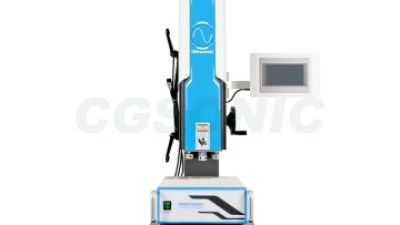
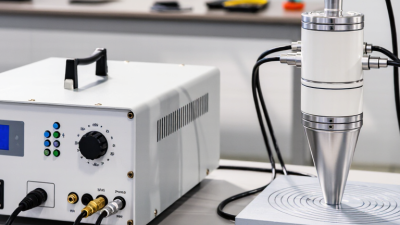
Servo ultrasonic Plastic Welding machines improve precision, speed, and production efficiency by combining controlled motion with high-frequency ultrasonic energy. Their servo systems accurately manage welding position, depth, pressure, and travel distance, helping manufacturers maintain consistent results across large production batches. This precise control reduces variation, prevents over-welding or insufficient bonding, and supports the stable assembly of components with different shapes and dimensions.
The ultrasonic energy output remains steady throughout each welding cycle and can be adjusted to suit different plastic materials, part designs, and joint requirements. Operators can preset key welding parameters, store multiple process programs, and quickly recall them when changing products. This intelligent operation simplifies setup, reduces manual adjustment, and supports a more automated production workflow while improving repeatability and product quality.
Fast vibration transmission allows parts to be joined in a short cycle, minimizing waiting time between operations and increasing overall throughput. Compared with slower joining methods, ultrasonic welding requires limited consumables and can produce clean, reliable bonds with efficient energy use. The combination of accurate servo movement, stable energy delivery, programmable controls, and rapid cycle times helps production lines reduce defects, shorten processing time, and make better use of equipment and labor.
Polypropylene offers low moisture absorption and broad chemical resistance. Polyethylene is more flexible, but less rigid. Polycarbonate is clear and stiff, yet some chemicals may cause cracking. Small compatibility tests remain essential.
Yes. Test the barrel, stopper, hub, and fluid path together. Welding can change material behavior. Check for swelling, softening, odor, residue, color change, and particles. One material may look safe alone.
Measure burst strength, leak rate, pull force, and visible flash. Inspect joints under magnification. Test parts after sterilization and temperature cycling. A clean prototype can still fail later.
Confirm stable energy, pressure, amplitude, and hold time. The equipment must suit the polymer and joint geometry. Review validated settings for the exact production speed. Do not trust attractive samples alone.
Request process qualification, operator training, equipment calibration, and inspection records. Lot records should connect materials, machine settings, results, and approvals. Ask how rejected parts are isolated. Missing records are a warning.
Review the supplier’s documented medical-device quality system, where applicable. Confirm controlled drawings, change notifications, and record retention. Check requirements for the destination market. Certificates alone are not enough.
Ask for machine lists, shift patterns, current utilization, and backup equipment. Request recent capacity records and sample production schedules. Automation does not guarantee open production slots. Capacity claims need evidence.
Separate quotation, tooling, prototype, validation, and production timelines. Ask about material shortages, maintenance, and engineering changes. Add contingency time. A promised date without assumptions is weak evidence.
Confirm weld location, diameter, wall thickness, materials, tolerances, and fixture design. Request dimensional studies and destructive-test results. Check whether prototypes use production-intent equipment. Hand-built samples may hide scaling problems.
Do not approve based on one strong sample or a polished certificate. Review later batches, aging results, and volume-trial performance. A small wall-thickness variation can matter. I would question early results again.
Choosing the right supplier for Welding Of Syringe Components requires more than comparing quoted prices. Buyers should first define the required dimensions, connection method, application environment, and performance standards. Material selection should then be reviewed for safety, chemical compatibility, strength, and long-term durability. Manufacturing precision is equally important, since accurate dimensions and consistent component fit can support reliable assembly and reduce production issues. Buyers should also examine the supplier’s sterilization methods, packaging protection, inspection procedures, and documentation to ensure product quality and regulatory readiness.
A complete supplier evaluation should include production capacity, lead times, communication efficiency, and the ability to provide customized designs or specifications. It is also essential to assess quality control throughout the manufacturing process, from incoming materials to final inspection. Finally, the total cost should include tooling, testing, packaging, logistics, quality management, and potential replacement expenses rather than focusing only on the initial unit price. A systematic evaluation can help buyers secure dependable syringe components and establish a more stable, cost-effective supply chain.