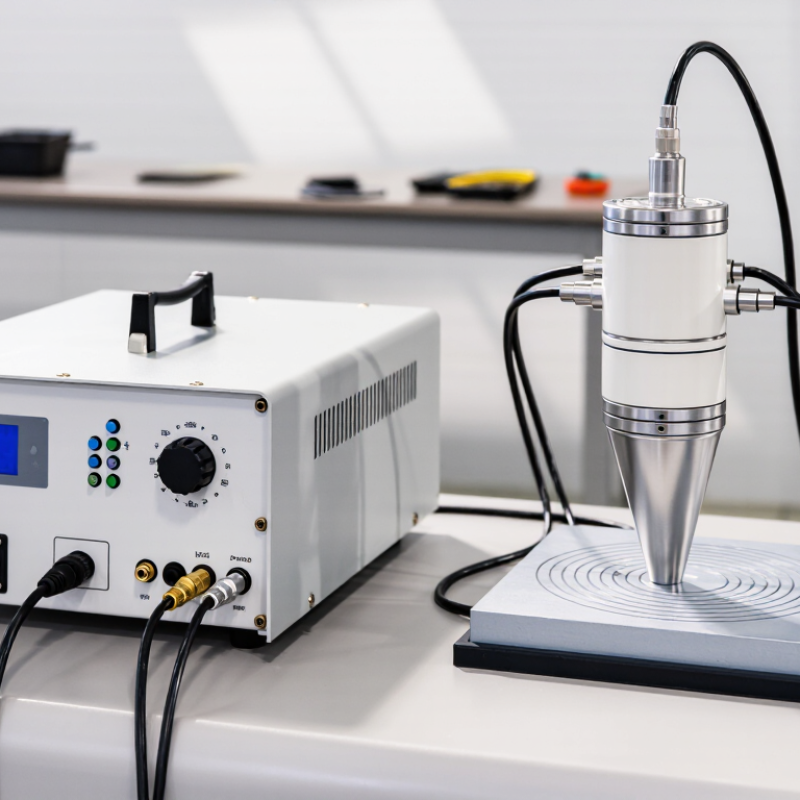
An Ultrasonic Generator basically takes electrical power and turns it into high-frequency signals that a transducer uses. That transducer then converts these signals into tiny mechanical vibrations. In cleaning machines, these vibrations cause small pressure changes in liquids—kind of like making tiny bubbles or bursts. In welding setups, they help deliver precise amounts of energy right where you need it. Just to clarify, the generator itself isn’t vibrating; it’s the electronic unit that supplies and modulates that signal.
J. David N. Cheeke, who wrote the book *Fundamentals and Applications of Ultrasonic Waves*, explains the physics behind all this stuff. To sum it up simply: “Ultrasound is just mechanical vibration moving through a material.” This isn’t just technical mumbo jumbo—it’s important to understand. Factors like frequency, amplitude, load, and how well everything’s coupled together play a huge role in how well it works. Sometimes, the display might show everything’s fine, but if the transducer’s worn out or connections are loose, the results can be way off. So, real-world equipment definitely needs regular inspection—no guessing needed.
When it comes to welding, the link between the Ultrasonic Horn And Generator really matters. The generator gives the electrical signal, and the transducer plus horn transfer those vibrations directly to the material being worked on. Sometimes, you might hear a faint buzz, notice warmth near the converter, or see welds that aren’t consistent. Those little clues are worth paying attention to. Setting things up properly makes all the difference, and so does the type of material you're working with. This whole overview breaks down the main parts, how energy flows through the system, and what kind of limits you might face for reliable operation. But here’s a little word of caution: even though ultrasonic equipment might seem straightforward, matching the right components and settings takes some care and experience.
What an Ultrasonic Generator Is
An ultrasonic generator is an electronic device that produces high-frequency electrical signals. It supplies the energy required for ultrasonic equipment to operate. Think of it as the system’s control center. It creates controlled vibration.
The generator converts ordinary electrical power into a rapid alternating signal, often between 20 and 40 kilohertz. This signal travels to a transducer, which changes electrical energy into mechanical vibration. Piezoelectric materials commonly perform this conversion. The generator can also regulate frequency, voltage, power, and timing. These controls help maintain stable operation when the load changes. The generator does not create ultrasonic waves alone. The transducer, horn, or other mechanical parts complete the process.
In practical use, the generator may support cleaning, welding, cutting, or laboratory processing. During setup, technicians often watch the display while listening for unusual buzzing. A stable reading usually indicates better energy transfer, but it is not absolute proof. Temperature, pressure, tool shape, and material condition can affect performance. That detail is easy to overlook. A neat diagram can make ultrasonic systems seem simple, while real equipment is less predictable. Correct matching between the generator and transducer remains essential. Otherwise, excessive heat or weak vibration may appear. Careful testing still matters.
The Main Components of an Ultrasonic Generator
An ultrasonic generator converts electrical energy into controlled high-frequency vibration. Its main components must work as one system. The power supply provides stable DC energy, while the oscillator creates the operating frequency, often between 20 and 40 kHz for industrial cleaning. A power amplifier then increases the signal without excessive distortion.
The matching network adjusts electrical impedance between the amplifier and transducer. This step matters because poor matching wastes energy as heat. The piezoelectric transducer changes electrical pulses into mechanical vibration. In practical installations, the transducer is bonded to a metal tank, horn, or sonotrode. Sensors may monitor temperature, current, and frequency drift. Cooling hardware becomes important during long production cycles.
A 2024 report from Grand View Research valued the global ultrasonic cleaning market at over USD 1.8 billion in 2023, reflecting demand for more controlled cleaning systems. Yet market growth does not guarantee perfect process results. Liquid depth, fixture design, and contamination type still change performance.
Tips: Check the generator’s rated frequency against the transducer before operation. Measure current during warm-up. A sudden increase may indicate poor coupling or mechanical damage. Keep cables short and shielded where possible. This is often overlooked. IEC 61326-1 also highlights electromagnetic compatibility for measurement and control equipment, but field conditions can be harsher than laboratory tests. Record operating temperature, load changes, and cleaning time. Those notes reveal faults that specifications may miss.
How Electrical Energy Becomes Ultrasonic Vibrations
What Is an Ultrasonic Generator and How Does It Work?
How Electrical Energy Becomes Ultrasonic Vibrations
An ultrasonic generator converts mains electricity into a controlled, high-frequency signal. In an Ultrasonic Cleaning Generator, that signal drives piezoelectric transducers bonded to a tank. The transducers rapidly expand and contract, sending pressure waves through the cleaning liquid. A 2016 technical review in Ultrasonics Sonochemistry describes how these waves can create cavitation: tiny bubbles form, then collapse near the surface being cleaned. That action helps loosen soil from small grooves and recessed areas. Common cleaning systems operate around 20–40 kHz; lower frequencies tend to produce more forceful bubble collapse, while higher frequencies suit finer features.
A practical detail matters: generator output is not the same as cleaning performance. Liquid temperature, detergent, loading, and transducer placement all affect the result. You may hear a steady tank hum, but that sound alone cannot confirm uniform activity. I still find wattage easy to overvalue. A crowded basket can shadow parts of the tank, even when the displayed power looks adequate. Calibration and a simple foil test can help reveal uneven cavitation, though foil results are not a complete performance measurement.
Tips: Keep parts submerged and spaced apart. Degas fresh liquid before cleaning, then check the bath temperature. Small adjustments can make a noticeable difference.
How Frequency and Power Shape Ultrasonic Output
An ultrasonic generator supplies an alternating electrical signal to a transducer, which converts it into mechanical vibration. Frequency sets how rapidly that vibration repeats. In liquid cleaning, higher frequencies generally create smaller cavitation bubbles, while lower frequencies can produce more forceful bubble collapse. The best choice depends on the object, liquid, and task. Small parts with fine details may benefit from higher-frequency operation. A sturdy component with heavy soil may need a different balance. There is no universal setting.
Power affects vibration amplitude and the energy delivered to the process. More power can increase cleaning action, but excessive power may heat the liquid, damage delicate surfaces, or make performance less stable. Watch the bath temperature and listen for changes in sound; these are useful clues, not precise measurements. The Ultrasonic Generator Transducer pairing also matters: mismatched components can waste energy or create uneven output. In practice, operators often adjust frequency and power gradually, then check results on a representative part. It is tempting to treat the displayed wattage as the whole story. It isn’t. Tank shape, liquid depth, loading, and transducer placement all influence the sound field, and small setup differences can change the outcome.
How Ultrasonic Generators Connect to Transducers
An ultrasonic generator supplies high-frequency electrical energy to a transducer through a cable and matched output circuit. The transducer’s piezoelectric elements convert that signal into mechanical vibration. In a cleaning tank, the vibration travels through the tank wall and liquid, producing pressure changes that can form and collapse tiny bubbles. Small details matter: cable length, electrical connections, and the transducer’s mounting can all affect delivered energy. Resonance is the key.
A High Power Ultrasonic Generator does not guarantee stronger or more uniform cleaning by itself. The generator must track the transducer’s resonant frequency as temperature and load change. Otherwise, excess heat or unstable output may result. A useful measurement reference is IEC 61161:2013, which specifies ultrasonic power measurement in liquids over a frequency range of 0.5–25 MHz. That range is above many common industrial cleaning systems, so it should not be treated as a direct performance benchmark for them. Check the operating frequency and manufacturer’s test method before comparing figures. The neat diagram is helpful, but real installations are less tidy.
Common Uses and Operating Considerations of Ultrasonic Generators
An ultrasonic generator converts electrical energy into a high-frequency signal that drives a transducer. The transducer creates mechanical vibration, which can produce cavitation in a liquid. In an Ultrasonic Generator Box, control circuits regulate the signal for the connected transducer and process. Suitable settings depend on the equipment, materials, and task. One setting rarely fits all.
Common uses include cleaning metal tools, mixing liquids, and joining compatible plastic components. In a cleaning tank, tiny bubbles form and collapse around submerged parts, helping dislodge residue from narrow grooves. UltraSonic Welding instead uses vibration and pressure to join materials; it does not rely on liquid cavitation. Results vary with part shape, surface condition, and process settings. That variation is easy to underestimate.
Operating conditions matter. Keep the generator within its specified load and provide adequate ventilation, since heat can shorten component life. Check cables and connections for wear, and keep the tank fluid at the recommended level. Avoid placing delicate parts directly against a vibrating surface unless the equipment instructions allow it. More power is not automatically better; excessive intensity may damage sensitive items or create uneven results. Operators should record settings and inspect test pieces, then adjust cautiously. Even careful tuning may need revision when the load or material changes.
What Is an Ultrasonic Generator and How Does It Work?
Idealized 20 kHz output waveform: An ultrasonic generator converts electrical power into a high-frequency alternating signal that drives a transducer. At 20 kHz, one cycle lasts 50 microseconds. The normalized sine wave shown here illustrates one ideal cycle; real output can vary as the generator adjusts to the transducer and operating load.
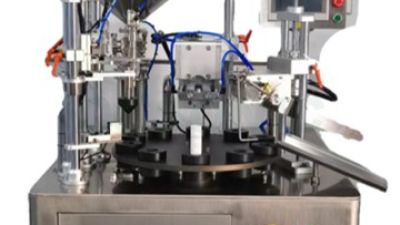
Ultrasonic Turntable Filling and Sealing: An Outline Informed by Grand View Research’s Packaging Machinery Market Report
Packaging machinery market analysis increasingly emphasizes higher throughput, consistent quality, and automation that can adapt to demanding production schedules. In this context, an ultrasonic multi-station turntable filling and sealing machine offers a practical approach for manufacturers handling ointment, cosmetic, and other hose-packaged products. Its design combines several production steps in one coordinated system, helping reduce manual handling and maintain a steady flow from empty tube to finished package.
The rotary platform moves tubes through automatic loading, quantitative filling, ultrasonic sealing, and discharge inspection. By integrating these operations, the machine supports continuous, largely unmanned production and can improve efficiency by more than 30%, depending on the line and operating conditions. Ultrasonic sealing is designed to create strong, consistent seals without introducing heat-related damage to the product; suitable configurations can reach approximately 200–500 pieces per minute. Sealing performance and output depend on tube material, package dimensions, and product characteristics, so equipment settings should be matched to the intended application. The result is a streamlined filling and packaging process focused on speed, accuracy, and reliable seal quality.
Conclusion
An Ultrasonic Generator is an electronic device that converts electrical power into high-frequency signals used to create ultrasonic vibrations. Its main components typically include a power supply, control circuitry, and output connections. Together, these parts regulate the signal and deliver energy to a compatible transducer.
The generator’s electrical signal causes the transducer to vibrate, turning electrical energy into mechanical motion at ultrasonic frequencies. Frequency affects the character of the vibrations, while power influences their intensity; both must suit the application and connected equipment. In operation, the generator and transducer work as a coordinated system, with secure connections and appropriate settings helping provide stable output. Ultrasonic generators are used in applications such as cleaning, processing, and inspection. Good operating practices include following equipment specifications, monitoring performance, and avoiding excessive power or unsuitable frequency settings.


 1Durch die gruppenweite Einführung und Harmonisierung unseres integrierten Managementsystems (IMS) werden alle bestehenden Unternehmens-, Qualitäts-, Umwelt- und Energiepolitiken durch diese Unternehmenspolitik ersetzt. Der Slogan „Textil hat Zukunft – auch in De