The 2026 Top Composite Material WeldingSuppliers Guide takes a fresh look at how quickly the joining market is changing. These days, Composite Material Welding is getting a lot of buzz — mainly because manufacturers are after lighter structures, faster cycle times, and more eco-friendly production methods. The biggest opportunities seem to be in thermoplastic composites, where heat and pressure can reliably create consistent joints. On the other hand, thermoset composites need a different approach altogether, and you can't really compare the two directly.
According to MarketsandMarkets, the global market for composite materials might jump from around USD 126 billion in 2023 to more than USD 171 billion by 2028. Key sectors driving this growth include transportation, aerospace, wind energy, and construction, just to name a few. The European Composites Industry Association is also pointing out that automation, emphasis on circularity, and advancements in thermoplastic processing are major trends shaping the industry. These shifts explain why suppliers are investing more in welding tech like ultrasonic, induction, resistance, laser, and hot-gas systems.
But, let's be real—actual production isn’t always smooth sailing.
You need a supplier who offers more than just shiny equipment photos. This guide looks at the whole package: process control, weld monitoring capabilities, tooling accuracy, operator training programs, validation data, and ongoing support. Companies like Branson, Herrmann Engineering, KUKA, Leister, Forward Engineering, and Telsonic each bring different strengths to the table when it comes to equipment and integration. Still, keep in mind that supplier performance can vary widely depending on the material grade, fiber orientation, joint design, and how much you're producing.
And don’t forget about standards and testing—these are still crucial. Tests like ASTM D5868 and ISO 527 can help assess mechanical properties, but sometimes internal specs are needed too. No matter what, there’s no substitute for actual trial runs using your real laminate, pressure conditions, and production tolerances. That part can be pretty uncomfortable—published claims often look impressive on paper, but the real results in the factory might differ due to tooling wear, moisture conditions, or operator tweaks. So, this guide balances market insights with practical evaluation tips, but it also makes clear: further testing is always a must.
Composite Material Welding: Definition, Scope, and Core Technologies
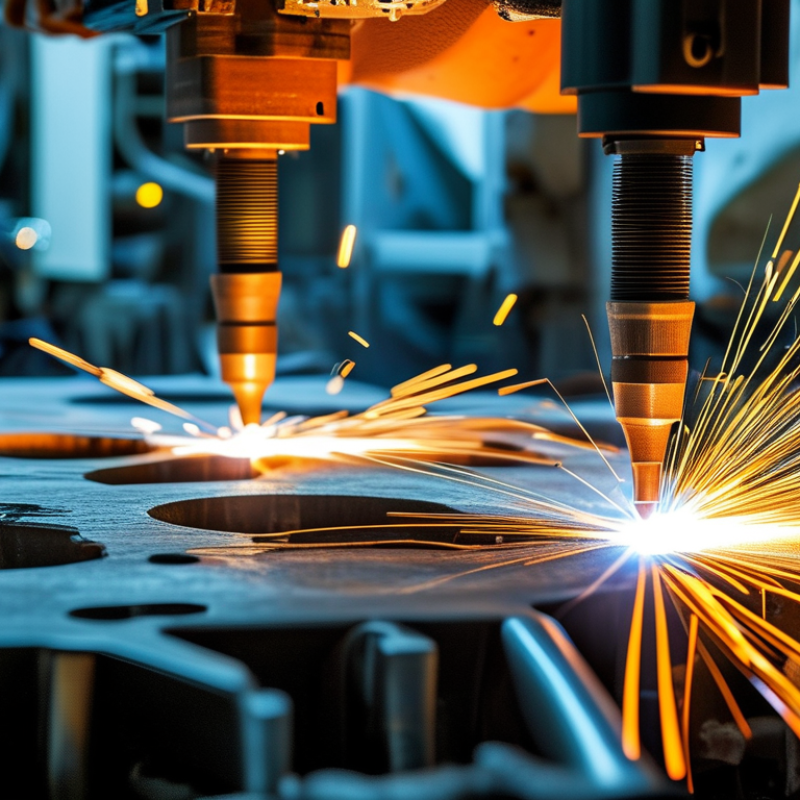
Composite material welding joins compatible thermoplastic parts through heat, pressure, or both. Unlike thermoset laminates, thermoplastics can soften repeatedly, enabling fusion-based repairs and production.
Core methods include hot-plate, ultrasonic, induction, laser, and resistance welding. Each method controls heat differently.
MarketsandMarkets’ 2024 composites market analysis projects strong growth through 2029, driven by lightweight structures and electric mobility.
The report highlights thermoplastic composites as a fast-developing segment. Their use extends across vehicle panels, battery enclosures, aircraft interiors, fluid tanks, and industrial piping.
However, weld quality depends on fiber orientation, resin chemistry, surface cleanliness, and cooling speed. Small voids can weaken a joint.
Tips: Test the actual laminate, not only the resin datasheet. Record temperature, pressure, energy, and cooling time.
High Hardness Material Welding needs extra caution because hardness may reduce surface conformity and increase stress concentration. A polished edge can still hide poor bonding. ISO 527 tensile testing and ISO 14125 flexural testing help verify performance, but they do not replace joint-specific fatigue testing. I have seen apparently clean welds fail after repeated loading. That result deserves review, not excuses.
Key Applications and Industries Using Composite Material Welding
Composite material welding is gaining attention in 2026 because lightweight structures face tougher service demands.
The process joins thermoplastic composites with controlled heat, pressure, or ultrasonic energy. It can create cleaner seams than mechanical fasteners. Field experience shows that joint design matters as much as equipment.
A thin aerospace panel may need precise energy control.
A water-treatment pipe may require deeper, more consistent fusion.
Transportation is a major application. Electric vehicle battery covers, aircraft interior panels, rail components, and marine housings use welded composites to reduce weight and corrosion risk.
In construction, welded composite sheets support ventilation ducts, façade elements, and chemical-resistant enclosures. Medical equipment makers also use the process for lightweight carts, fluid-handling parts, and protective housings. Renewable energy projects apply it to nacelle covers, cable channels, and service platforms.
Quality teams should verify weld strength, surface preparation, temperature records, and fatigue performance. A smooth seam can still hide weak bonding.
Tips:
Match the welding method to the resin system. Clean and dry every contact surface. Test sample joints under real temperature and vibration conditions. Keep process records for traceability. Do not assume one setting fits every thickness. That mistake is common. Pilot trials may feel slow, but they can expose warping, contamination, or uneven pressure before production. Independent inspection should guide approval for safety-critical applications.
Supplier Capabilities, Certifications, and Quality Control Standards
2026 Top Composite Material Welding Suppliers Guide
A capable composite welding supplier controls heat, pressure, travel speed, and surface preparation. These variables need documented windows, not verbal promises. Ask for process qualification records, equipment calibration logs, and operator training evidence. Suppliers should offer thermoPlastic Welding methods, including ultrasonic, resistance, induction, or laser systems. They also need inspection skills for voids, misalignment, weak bonds, and fiber distortion. Practical experience matters. A clean sample can hide unstable production conditions.
Certification supports confidence, but it cannot replace technical review. The ISO Survey 2023 reported 1,265,216 ISO 9001 certificates worldwide. That scale shows quality systems are common, yet certificates do not prove every weld. For aerospace or other high-risk work, check whether the supplier follows sector-specific quality systems, controlled document changes, material traceability, and nonconformance procedures. Request test data using relevant ASTM or ISO methods. Review strength, failure mode, thermal cycling, and repeatability results. The weak point is often measurement discipline. Some suppliers inspect only finished parts, which may be too late.
Tips: Ask for three recent process records. Compare production data with qualification data. Verify calibration dates. Require lot-level traceability. Visit the welding cell if possible. Look for clean fixtures, labeled materials, and visible work instructions. A thoughtful audit may reveal small gaps, and those gaps deserve honest discussion.
Comparing Welding Methods, Equipment, Materials, and Service Models
Selecting a composite welding supplier requires more than comparing machine prices. Methods must match the resin, reinforcement, joint geometry, and production volume. Ultrasonic welding suits small thermoplastic parts, while induction and resistance welding support larger carbon-fiber assemblies. Hot-plate welding remains practical for simpler profiles. Laser welding offers clean, localized heating, but alignment becomes unforgiving.
MarketsandMarkets’ 2024 Advanced Composites report projects growth from USD 39.3 billion in 2024 to USD 54.4 billion by 2029. This expansion increases demand for repeatable joining systems. Suppliers should provide temperature, pressure, displacement, and energy records, not only attractive cycle-time claims. For PEEK, PPS, PEI, or reinforced polyamide, material drying and surface preparation can decide joint strength. A damp polymer can quietly ruin a perfect-looking weld.
Equipment selection also affects Electronic Component Welding, where heat exposure and particulate control matter. A strong supplier offers fixtures, process development, destructive testing, and operator training. Contract welding may reduce capital costs during pilot production, while equipment ownership supports higher control later. The best service model depends on forecast accuracy.
I would question any supplier promising universal settings. Composite layups vary. Fiber orientation changes heat flow. Joint design still matters. ISO 21368 provides useful guidance for bonded and welded composite structures, but factory validation remains essential. Reports can show market direction; they cannot replace a cross-section inspection, peel test, or production trial.
2026 Supplier Selection Checklist and Procurement Considerations
Selecting a welding supplier for composite production requires more than comparing hourly rates. Grand View Research’s 2024 Composite Materials Market Report estimates global demand at over USD 100 billion. That scale increases pressure on suppliers to prove repeatable quality. Request welding procedure specifications, operator qualifications, equipment calibration records, and recent batch data. For Dissimilar Materials Welding, examine thermal expansion, surface preparation, galvanic risks, and heat distortion. Ask for sample coupons using your actual material combination.
Supplier capacity also matters. The 2024 Welding Equipment Market report by MarketsandMarkets forecasts growth from roughly USD 16 billion in 2024 to more than USD 21 billion by 2029. Growth can hide weak production controls. Check whether the supplier owns suitable fixtures, non-destructive testing tools, and controlled storage areas. Review lead times, inspection records, corrective-action history, and traceability from incoming material to final weld. A low quote can look efficient. It may not be.
Tips: Build a weighted checklist before requesting bids. Give quality and process capability higher scores than price. Require three reference projects with comparable thicknesses and joint designs. Test a pilot lot before signing long-term terms. Document acceptance limits clearly. I would also challenge optimistic delivery promises; real production often includes rework, fixture changes, and delayed test results.
Ultrasonic Welding Machines for PSA, Trading & Pokémon Card Slabs: MarketsandMarkets Industry Report Insights
The expanding market for ultrasonic welding reflects a wider shift toward clean, automated, and repeatable sealing processes. Industry analysis of the ultrasonic welding equipment sector identifies electronics, packaging, medical products, and precision consumer goods as major application areas, with automation and high-throughput production supporting a projected high-single-digit compound annual growth rate during the forecast period. These trends are also relevant to collectible-card protection, where transparent cases must be sealed consistently without adhesives, excess heat, or visible surface damage.
An ultrasonic welding machine designed for graded card slabs, sports trading cards, collectible game cards, and coin cases uses controlled ultrasonic energy to join compatible plastic components. The process creates a tamper-evident, dust-resistant enclosure while preserving product visibility and reducing dependence on manual sealing. Adjustable welding parameters can help manufacturers and specialty packagers accommodate different case dimensions, material thicknesses, and production volumes. Industry reports on advanced manufacturing further emphasize shorter cycle times, lower material waste, and improved process repeatability as practical advantages of ultrasonic joining. For card-storage applications, this combination supports secure presentation, efficient batch processing, and consistent protection throughout handling, transport, and long-term display.
Conclusion
This guide to 2026 Top Composite Material Welding Suppliers explains the fundamentals of Composite Material Welding, including its definition, operational scope, and core technologies used to join advanced composite structures. It reviews key applications across transportation, renewable energy, construction, marine engineering, and industrial manufacturing, emphasizing how welding solutions can improve structural performance, production efficiency, and long-term reliability.
The guide also presents practical methods for evaluating suppliers in 2026. It covers technical capabilities, certifications, quality control systems, equipment, compatible materials, welding methods, and service models such as standard production, customized fabrication, and technical support. A detailed supplier selection checklist helps procurement teams compare experience, testing procedures, process consistency, delivery capacity, documentation, after-sales service, total cost, and compliance requirements. The goal is to support informed purchasing decisions and identify reliable partners capable of delivering safe, repeatable, and cost-effective composite welding solutions.


 1Durch die gruppenweite Einführung und Harmonisierung unseres integrierten Managementsystems (IMS) werden alle bestehenden Unternehmens-, Qualitäts-, Umwelt- und Energiepolitiken durch diese Unternehmenspolitik ersetzt. Der Slogan „Textil hat Zukunft – auch in De