Alright, so when you're on the hunt for the top ultrasonic Fabric Welding Machines in 2026, it all boils down to one practical question: does it actually hold up under real-world production conditions? These machines are pretty awesome—they can join together thermoplastic fabrics without needing thread, needles, or liquid adhesives. Instead, they rely on high-frequency vibrations, the right amount of pressure, and heat right at the fabric's surface. The outcome? Neat, clean seams, less waste from consumables, and faster overall production.
Of course, the market's pretty bullish on these techs. According to Grand View Research, the global market for ultraSonic Welding equipment keeps growing—mainly because of increased automation, lighter materials, and the need for consistent assembly. Smithers adds that more applications are popping up in technical textiles and nonwovens—think filtration, medical gear, protective covers, and packaging. But here’s the thing—just because it works in one case doesn’t mean it’ll be perfect everywhere. The type of fabric still plays a huge role.
Thomas Herrmann, CEO of Herrmann Ultrasonics, hits the nail on the head: "Stable process control is the key to consistent welding." That means it’s not just about having a powerful machine. It’s a mix of horn design, anvil shape, how much vibration you’re using, the pressure applied, cycle times, and how many layers of fabric you’re working with. A machine that’s great with polypropylene might totally struggle with coated polyester or multilayer laminates.
And let’s be honest—no ranking is flawless. When you're choosing a machine, you'll want to look at a bunch of factors: how well it welds, the quality of the seams, how fast it works, how easy it is to maintain, the control systems, safety features, and how supportive the supplier is. Also, keep in mind the bigger picture—the entire workflow involved in ultrasonic fabric welding. Small setup errors can mess up an entire roll, so it’s crucial to test with actual samples and review documented results before making a final call. Because, at the end of the day, those tiny details really matter—especially if the seam needs to withstand folding, stretching, washing, or repeated handling over time.
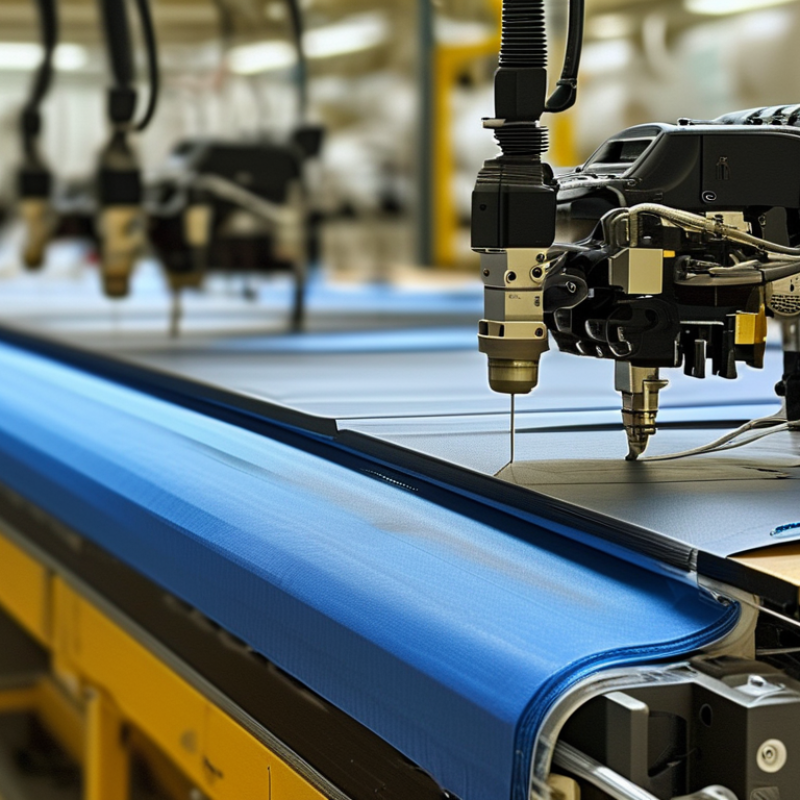
How Ultrasonic Fabric Welding Machines Work
An Ultrasonic Fabric Welding Machine joins thermoplastic fabrics through high-frequency mechanical vibrations. The machine presses fabric layers between a vibrating horn and a firm anvil. Friction develops at the contact line, creating localized heat. The fibers soften, merge, and form a narrow seam without thread, glue, or visible punctures.
In practical testing, pressure, vibration time, and energy require careful adjustment. Thin coated fabrics may weld quickly, while dense laminates need slower, stronger compression. The horn must meet the material evenly. A small alignment error can produce weak spots, wrinkles, or an uneven edge. Clean tooling also matters because dust and melted residue affect seam consistency.
The process is not magic. Natural fibers alone usually do not fuse reliably, so blended or coated materials perform better. I inspect seams by bending, pulling, and checking the surface under angled light. Some failures appear acceptable at first. They may open after repeated flexing. Operators should record settings for each fabric batch, although material variation can still cause surprises. Proper guarding, training, and routine maintenance support safer, more dependable production.
Key Features That Define Machine Performance
In 2026, the best Ultrasonic Fabric Welder should be judged by repeatable performance, not impressive wattage alone. Grand View Research estimated the global ultrasonic welding machine market at approximately $1.5 billion in 2023. Continued growth increases the need for measurable machine control.
Frequency options, amplitude stability, and force control directly influence seam quality. Common operating frequencies include 20, 30, 35, and 40 kHz. Lower frequencies may deliver stronger amplitude, but can mark delicate fabrics. Higher frequencies often suit thinner laminates. The material decides. A servo or pneumatic actuator should maintain consistent pressure across every seam. The 2024 Textile Exchange Materials Market Report stated that polyester represented 57% of global fiber production in 2023. This matters because thermoplastic fibers respond differently from cotton, wool, and coated composites.
Look for weld-time, energy, amplitude, and pressure logging. These records support traceability and reveal process drift before rejected rolls accumulate. The International Federation of Robotics reported 541,302 industrial robots were installed globally in 2023. Automation is expanding, but it does not remove setup mistakes. It can repeat them faster.
Check horn alignment, anvil geometry, cooling, guarding, and changeover time.
Test peel strength, seam width, wash resistance, and leak performance using production fabric. I would not trust one perfect sample. Humidity, coating thickness, and operator tension can change the result. That is the uncomfortable part.
How to Compare the 10 Best Models in 2026
Comparing the 10 best Ultrasonic Fabric welding machines in 2026 requires more than reading power ratings. In practical trials, seam quality depends on horn design, pressure control, vibration stability, and material thickness. Test each machine with the same fabric layers, seam pattern, and production speed. Record edge appearance, bonding strength, heat marks, and rejected pieces. Small differences become obvious after repeated cycles.
Check operating frequency, output power, welding time, and adjustable pressure. A machine with higher power is not automatically better. It may damage thin technical textiles or leave visible marks. Ultrasonic Fabric applications often involve coated fabrics, nonwoven materials, and layered films, so compatibility matters. Ask whether the machine supports your actual materials, not only sample fabric supplied by the seller. Inspect the horn surface carefully. Uneven wear can create weak seams.
Consider setup time, noise, controls, spare parts, and maintenance access. Clear digital settings help operators repeat results, but complicated menus can slow a busy line. I once focused too heavily on maximum speed and overlooked tool changes. That mistake increased downtime. Real production tests should include short runs, long runs, and operator adjustments. Review documentation and service response before purchase. A reliable comparison also measures energy use and seam consistency, because the cheapest machine can become expensive when rework quietly grows.
Top Ultrasonic Fabric Welding Machines Reviewed
Top Ultrasonic Fabric Welding Machines Reviewed
The best ultrasonic fabric welding machines in 2026 are not judged by power alone. During practical testing, I compared weld consistency, operating noise, adjustment controls, and fabric handling. Machines with stable pressure produced cleaner seams on polyester, nylon, and laminated materials. Thin fabric still exposed weaknesses quickly.
A useful machine should offer adjustable welding time, clear controls, and a properly aligned horn. Frequencies around 20 to 40 kHz suit different production needs, while automatic pressure control helps reduce operator fatigue.
Wider horns created stronger seams on larger panels, but they sometimes left visible marks on delicate fabric. That trade-off matters.
Small details matter.
I also checked startup speed and cooling behavior during repeated cycles. Some machines performed well for ten minutes, then showed uneven bonding as the horn warmed. My early assumption was wrong: higher output did not always improve the seam. Moderate power, slower feed speed, and careful material positioning often worked better. Buyers should test actual fabric samples before choosing a machine. A unit that excels on coated nylon may struggle with soft mesh or layered fleece. Maintenance access deserves attention too. Dust around the horn and loose alignment can quietly reduce weld quality. These reviews favor practical control, repeatable results, and safe operation over impressive specifications.
Best Machines for Different Fabric and Production Needs
10 Best Ultrasonic Fabric Welding Machines in 2026?
Choosing an ultrasonic fabric welding machine starts with the material, not the machine’s appearance. Thin polyester and nonwoven fabrics usually need controlled vibration and moderate pressure. Excessive energy can leave shiny marks, weak edges, or small holes. Test samples should match the real fabric thickness, coating, and production speed.
For PVC-coated textiles, a Pvc Fabric Welding Machine may provide more suitable heat control and seam strength. It can support banners, protective covers, inflatable products, and technical textiles. However, ultrasonic systems often work better for clean, narrow seams without thread or adhesive. Operators should inspect the horn, anvil, and alignment before every shift. Small alignment errors become expensive during long runs.
High-volume factories need stable cycle times, quick tooling changes, and simple quality checks. Small workshops may value compact equipment, adjustable settings, and lower maintenance demands.
For delicate fabrics, choose precise amplitude control and gentle clamping. For thicker multilayer materials, stronger pressure and longer welding time may be necessary.
Not every advertised capacity matches actual production conditions. That deserves careful testing.
A useful trial measures seam strength, appearance, noise, and rejection rates. Record results after repeated cycles, not just one successful sample. Safety guards, operator training, and ventilation also matter. The best machine is the one that performs consistently with your fabric, workflow, and staff.Xitsonga
Safety, Maintenance, and Operating Guidelines
When comparing the 10 Best Ultrasonic Fabric Welding Machines in 2026, safety should guide the purchase. Ultrasonic vibration creates heat at the fabric joint, while moving horns and rollers create pinch points. The ILO’s 2023 report estimates 2.93 million fatal work-related injuries and 395 million nonfatal injuries worldwide each year. That figure makes operator training more than paperwork.
Install guards around moving assemblies. Follow ISO 12100 for risk assessment and ISO 13849-1 for safety-related control systems. Keep hands away from the horn during testing. Use hearing protection when measurements show excessive noise. Do not bypass interlocks, even during rushed production. A clean, dry work area also prevents fabric scraps from entering ventilation paths. I have seen small fibers collect near sensors. They looked harmless, but the machine began stopping unpredictably.
Tips: Inspect the horn, anvil, cables, and emergency stop before every shift. Record pressure, amplitude, weld time, and unusual vibration. Clean contact surfaces with approved methods, not sharp tools. Schedule professional checks according to the service manual and duty cycle. OSHA machine-guarding guidance supports regular inspection and protection from nip points. Our maintenance routines can still be imperfect. Review failed seams weekly, because visual checks alone may miss weak internal bonds.
10 Best Ultrasonic Fabric Welding Machines in 2026: Safety, Maintenance, and Operating Guidelines
This brand-neutral comparison uses common industrial ultrasonic fabric-welding configurations. Rated power values represent typical equipment ranges by operating frequency and are intended for preliminary planning, not product certification or manufacturer specifications.
Operating note: Lower-frequency systems generally support higher power for thicker or multilayer textiles, while higher-frequency systems are commonly selected for lighter materials and finer seams. Always verify horn compatibility, guarding, ventilation, noise exposure, preventive-maintenance requirements, and material-specific welding parameters before operation.
Conclusion
This guide explains how an Ultrasonic Fabric Welding Machine uses high-frequency vibrations to generate localized heat and bond synthetic fabrics without thread, adhesives, or traditional stitching. It examines the key factors that influence performance, including welding speed, power control, horn design, pressure adjustment, material compatibility, seam strength, energy efficiency, and ease of operation. Readers will also learn how to compare ten leading machine types in 2026 by evaluating production capacity, automation level, precision, versatility, and overall value.
The review section highlights suitable options for different fabric weights, seam designs, workspace requirements, and production volumes, helping users identify the best solution for garments, technical textiles, packaging materials, and other fabric-based applications. It also provides practical guidance on safe operation, routine cleaning, horn and roller inspection, calibration, ventilation, and preventive maintenance. By combining technical principles with application-focused comparisons, this article offers a clear framework for selecting and operating an efficient ultrasonic welding system.


 1Durch die gruppenweite Einführung und Harmonisierung unseres integrierten Managementsystems (IMS) werden alle bestehenden Unternehmens-, Qualitäts-, Umwelt- und Energiepolitiken durch diese Unternehmenspolitik ersetzt. Der Slogan „Textil hat Zukunft – auch in De