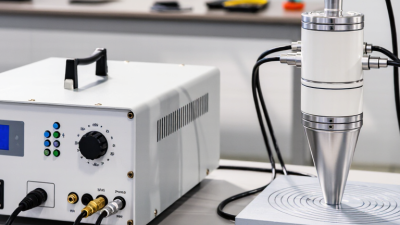
Picking the best China Ultrasonic Horn 20khzisn’t just about comparing prices, photos, or machining promises. A horn is a tuned acoustic component. Material, profile, booster match, amplitude, surface finish—all of that directly affects welding stability. Dr. Stefan Hübner, an Ultrasonic Welding specialist at Herrmann Ultrasonics, once said, “The sonotrode must be designed for the application.” And honestly, that principle still holds up for buyers around the world.
A reliable Chinese supplier should give you frequency reports, dimensional drawings, material certificates, and application testing. Ask whether the Ultrasonic Horn 20khz is made from titanium, hardened steel, or aluminum. Each one behaves differently once production keeps running. Take a close look at the contact face, too. Even small scratches can turn into stress points. And ask for amplitude measurements at the working surface, not just generator settings.
Real testing matters—no way around it.
A serious evaluation should use your actual plastic, joint design, welding pressure, and cycle time. Experienced manufacturers can walk you through resonance tuning, fatigue resistance, and expected service life. They should also be ready to talk about packaging, replacement support, inspection records, and what communication looks like after delivery. That said, no supplier is perfect. Even a nicely machined horn can perform badly if it’s paired with the wrong converter or fixture. That limitation deserves an honest conversation. So global buyers should compare engineering evidence, not fancy wording. Usually, the strongest choice is the supplier who documents performance, welcomes technical questions, and actually improves the design when early results show weaknesses.
What a 20kHz Ultrasonic Horn Is and How It Works
Best China Ultrasonic Horn 20kHz for Global Buyers?
What a 20kHz Ultrasonic Horn Is and How It Works
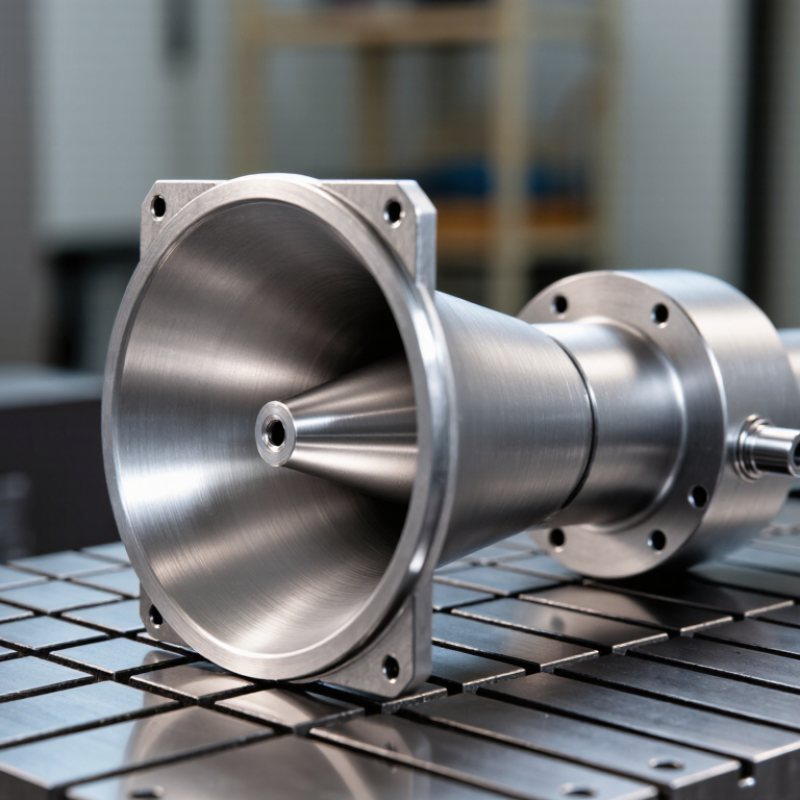
A 20kHz ultrasonic horn is a tuned metal tool for high-frequency vibration. It oscillates 20,000 times per second. The transducer creates vibration, while the booster adjusts amplitude. The horn then transfers that energy into plastic, fabric, or another compatible material.
The contact surface focuses mechanical energy into a small joint area. Friction produces heat, softening thermoplastic interfaces without open flames or added adhesive. Typical horn amplitudes may range from 10 to 50 micrometres, depending on material and tooling design. Frequency alone does not guarantee quality. Joint geometry, pressure, weld time, and material moisture also matter.
A 2024 MarketsandMarkets report estimates the global ultrasonic welding market will grow steadily through 2029, supported by automotive, electronics, and medical-device production. That growth increases demand for repeatable tooling, but published market data rarely explains real workshop problems. Experienced technicians still check frequency drift, surface wear, and fixture rigidity after installation. Small alignment errors can create uneven welds.
Tips: Match the horn to the generator and booster. Ask for amplitude testing data. Inspect the working face regularly. A polished horn is not always a correctly tuned horn. For global buyers, request material certificates, dimensional drawings, balancing records, and test samples before approving production tooling. A practical trial may reveal weaknesses that a catalogue specification hides.
Key Performance Specifications for a 20kHz Ultrasonic Horn
A reliable 20kHz ultrasonic horn starts with accurate frequency control. Check the operating range, usually close to 20,000Hz, and confirm the generator can maintain stable output under load. Frequency drift may cause weak vibration, excess heat, or uneven welds. A practical horn should also provide a clear amplitude rating, often measured in microns. Higher amplitude is not always better. Sensitive plastics may crack when energy is applied too aggressively.
Material selection affects service life. Titanium offers strong fatigue resistance and suits demanding production cycles, while aluminum can reduce cost and overall weight. Inspect the horn’s working face, mounting thread, and contact geometry before ordering. Small surface errors can leave visible marks on components. The horn must match the converter, booster, and generator as a complete system. Ultrasonic Horn And Generator compatibility is more important than a low purchase price. In my experience, many performance problems begin with poor matching rather than defective machining.
Tips: Request a frequency test report, amplitude data, material details, and dimensional drawings. Ask how the horn performs during continuous operation, not only in short tests. Keep a spare plan. Even a well-made horn needs periodic inspection for cracks, wear, and loose connections. One overlooked detail is cooling around the mounting area; heat can slowly change performance and confuse troubleshooting. When comparing suppliers, review technical responses carefully, because vague specifications deserve a second look.
Best China Ultrasonic Horn 20kHz for Global Buyers?
Key Performance Specifications for a 20kHz Ultrasonic Horn
This reference waveform represents one complete 20kHz ultrasonic cycle with a peak displacement amplitude of 30μm. At 20kHz, the period is 50μs. Practical horn designs commonly operate within approximately 20–60μm peak displacement, depending on the transducer, booster, material, geometry, and applied load. In steel, the corresponding acoustic wavelength is approximately 295mm, based on a longitudinal sound velocity of about 5,900m/s.
Materials and Structural Designs Used in Ultrasonic Horns
Best China Ultrasonic Horn 20kHz for Global Buyers?
Material choice controls how a 20kHz ultrasonic horn survives repeated vibration. Titanium offers high fatigue resistance and low density, making it suitable for demanding welding cycles. Hardened steel provides greater surface hardness when abrasive plastics or metal inserts are involved. Aluminum is lighter and easier to machine, but it can lose dimensional stability under high thermal loads.
A 2024 MarketsandMarkets report estimates the global ultrasonic welding market will grow at over 9% annually through 2029. This growth increases demand for horns with predictable amplitude and longer service life. A reliable Ultrasonic Generator 20khz must match the horn’s resonant frequency, not merely display the same number. Even a small mismatch can create heat around the mounting flange.
The structure matters as much as the alloy. A properly tuned horn uses smooth transitions, balanced mass, and carefully positioned amplitude nodes. Sharp corners often become stress risers. Finite element analysis can reveal these weak points before machining, while laser measurement confirms the actual vibration pattern. Industry testing commonly evaluates frequency drift, amplitude uniformity, and fatigue behavior across repeated cycles.
Real workshops are less tidy.
Dust, clamping pressure, and uneven parts can change performance. I would not select a horn from material data alone. Tool geometry, coating thickness, weld force, and cooling conditions deserve equal attention. A polished surface may look precise, yet poor internal tuning can still produce cracked tips and inconsistent welds.
How to Match a Horn with an Ultrasonic Welding System
Best China Ultrasonic Horn 20kHz for Global Buyers?
How to Match a Horn with an Ultrasonic Welding System
Matching a 20kHz horn begins with the complete welding system, not the horn alone. Check the Ultrasonic Transducer 20khz , booster ratio, generator range, and press stroke. Their working frequency should align closely. A small mismatch can create heat, noise, or unstable amplitude. Measure it.
The horn must fit the part’s material, joint design, and available welding space. For glass-filled plastic, use a robust horn body and rounded stress areas. For thin parts, excessive amplitude may leave whitening or surface marks. Compare the required amplitude with the booster setting and horn gain. A 20kHz horn may look suitable, yet its working face can be too large for the joint. Contact pressure also matters. Uneven pressure can produce a weld line on one side and a weak seal on the other.
Ask for a frequency test report, dimensional drawing, material information, and surface treatment details. Confirm the mounting thread and flange dimensions before shipment. Inspect the horn after installation, especially around corners and threaded areas. In practice, a quick resonance scan is valuable. Still, testing only an empty horn can mislead you. The real part changes the load. I have seen a theoretically correct setup perform poorly because the fixture flexed. That mistake is easy to overlook. Run sample welds, record amplitude and pressure, then adjust one variable at a time. Do not chase speed before checking repeatability.
Quality Standards and Testing Criteria for Global Buyers
Best China Ultrasonic Horn 20kHz for Global Buyers?
Quality Standards and Testing Criteria for Global Buyers
A reliable 20kHz ultrasonic horn begins with verified material, accurate machining, and stable resonance. Ask for traceable material certificates and dimensional inspection records. Titanium, aluminum, and hardened steel each suit different loads and welding conditions. The choice should match the converter, booster, amplitude, and application material. Fit matters greatly. A small flange error can create uneven pressure and premature cracking.
During evaluation, request a resonance scan near the operating frequency. The measured result should remain stable under working load, not only during an empty test. Inspect the horn surface for scratches, sharp transitions, pores, and machining marks. These details can concentrate stress. Check amplitude across the working face with calibrated equipment. Uneven readings often reveal poor tuning or internal imbalance. I have seen attractive samples fail after repeated thermal cycles. Appearance is not proof.
Global buyers should review hardness data, tolerances, serial traceability, and final inspection photos. A practical test includes continuous operation, temperature monitoring, and repeated welding cycles. Packaging also deserves attention, especially around the threaded connection and contact surface. Ask how test equipment is calibrated and when it was last verified. Reports can look complete while hiding weak sampling. Our inspection is not infallible, so independent testing remains sensible for large orders. Trial production should confirm weld strength, cycle time, noise, and horn wear before full-scale purchasing.
Supplier Evaluation, Customization, and Purchase Considerations
Choosing the best China ultrasonic horn 20kHz requires more than comparing prices. Evaluate the supplier’s engineering capability, production controls, and communication speed. Ask for material certificates, dimensional drawings, frequency test reports, and inspection records. A reliable supplier should explain how the horn matches your 20khz Ultrasonic Transducer, generator, and welding application.
Customization deserves careful attention. Share your material type, joint shape, operating amplitude, and expected production cycle. Request a simulation or sample test when the horn has complex contours. Check the mounting thread, working surface, cooling method, and replacement tolerance. Small errors can create uneven pressure, noise, or early cracking. A polished surface is not enough.
Tips: Compare at least three suppliers. Ask for a video of frequency testing. Confirm lead time in writing. Review packaging for the horn’s working face. Keep one approved sample for future inspection. A lower quote may hide weaker alloy control or limited after-sales support. I have seen drawings approved too quickly, then revised after trial production. That mistake costs more than careful evaluation. Still, supplier claims should not replace independent measurements, especially when production demands stable daily performance.
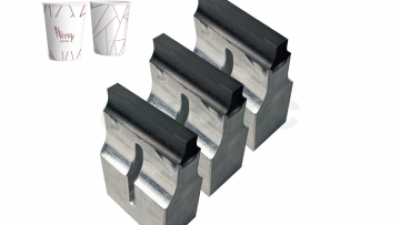
Paper Cup Welding Market Insights: Smithers & Grand View Research Reports on the 20K90X12 Welding Head
Paper cup welding is becoming an increasingly important area within the automated food-packaging industry, as manufacturers seek cleaner, faster, and more consistent alternatives to conventional adhesive bonding. Recent market research coverage highlights the growing demand for compact, high-performance welding components that can support large-scale paper cup production while maintaining reliable sealing quality. Within this trend, the 20K90X12 welding head is designed to serve as a core component for modern ultrasonic welding systems.
Operating at 20 kHz with a powerful 2600 W output, the 220 V welding head delivers high-frequency vibration for precise material joining. Its adaptable design allows integration with various ultrasonic welding machines and supports multiple production stages, including sidewall sealing, bottom attachment, lid assembly, and sealing-ring bonding. The universal voltage configuration also helps manufacturers simplify equipment planning and deployment across different production environments.
By replacing traditional glue-based bonding, the welding head enables chemical-free joining with strong mechanical stability and consistent sealing performance. This can help reduce adhesive-related waste, improve production cleanliness, and support faster operating cycles. Its application is particularly relevant to disposable food containers, catering supplies, and other paper-based packaging products where hygienic construction, structural strength, and dependable automated processing are essential.
FAQS
It is a tuned metal tool that vibrates 20,000 times per second. It transfers mechanical energy into a material joint.
The transducer creates vibration. The booster adjusts amplitude. The horn focuses energy on a small contact area.
It commonly processes thermoplastics, fabrics, and other compatible materials. Material type and joint design must match the horn.
No. Pressure, weld time, joint geometry, moisture, and alignment also affect quality. Frequency is only one factor.
Typical amplitude ranges from 10 to 50 micrometres. The correct value depends on material and tooling design.
Check the transducer, booster ratio, generator range, and press stroke. Their working frequencies should align closely. Measure them.
It may create uneven pressure, surface marks, noise, or weak seals. One side may weld while the other remains loose.
Request material certificates, dimensional drawings, frequency test reports, balancing records, and surface treatment details.
No. A smooth surface does not prove correct tuning. Frequency testing remains necessary.
Real parts change the load. A fixture may flex, even when the empty horn passes testing. Sample welds reveal hidden weaknesses.
Record amplitude and pressure. Adjust one variable at a time. Inspect the working face and threaded areas regularly.
Checking only an empty horn can mislead you. The production part may behave differently under actual pressure.
Conclusion
Choosing the right Ultrasonic Horn 20khz requires a clear understanding of how ultrasonic energy is transferred into a workpiece. This article explains the horn’s operating principle and reviews key specifications such as resonant frequency, amplitude, gain, dimensional accuracy, and vibration stability. It also compares common materials and structural designs, including hardened metal options, customized profiles, and configurations developed for different welding applications.
For global buyers, proper system matching is essential. The horn must be compatible with the generator, converter, booster, tooling interface, and required operating amplitude. The article also outlines practical quality criteria, including frequency testing, surface inspection, balance verification, fatigue resistance, and repeatability checks. In addition, it provides guidance on evaluating suppliers, confirming customization capabilities, reviewing technical documentation, and comparing total purchase value rather than price alone. These considerations can help buyers select reliable tooling, reduce setup problems, and support consistent production performance across international applications.


 1Durch die gruppenweite Einführung und Harmonisierung unseres integrierten Managementsystems (IMS) werden alle bestehenden Unternehmens-, Qualitäts-, Umwelt- und Energiepolitiken durch diese Unternehmenspolitik ersetzt. Der Slogan „Textil hat Zukunft – auch in De